

Aquaculture Equipment Specifications: A Buyer’s Guide
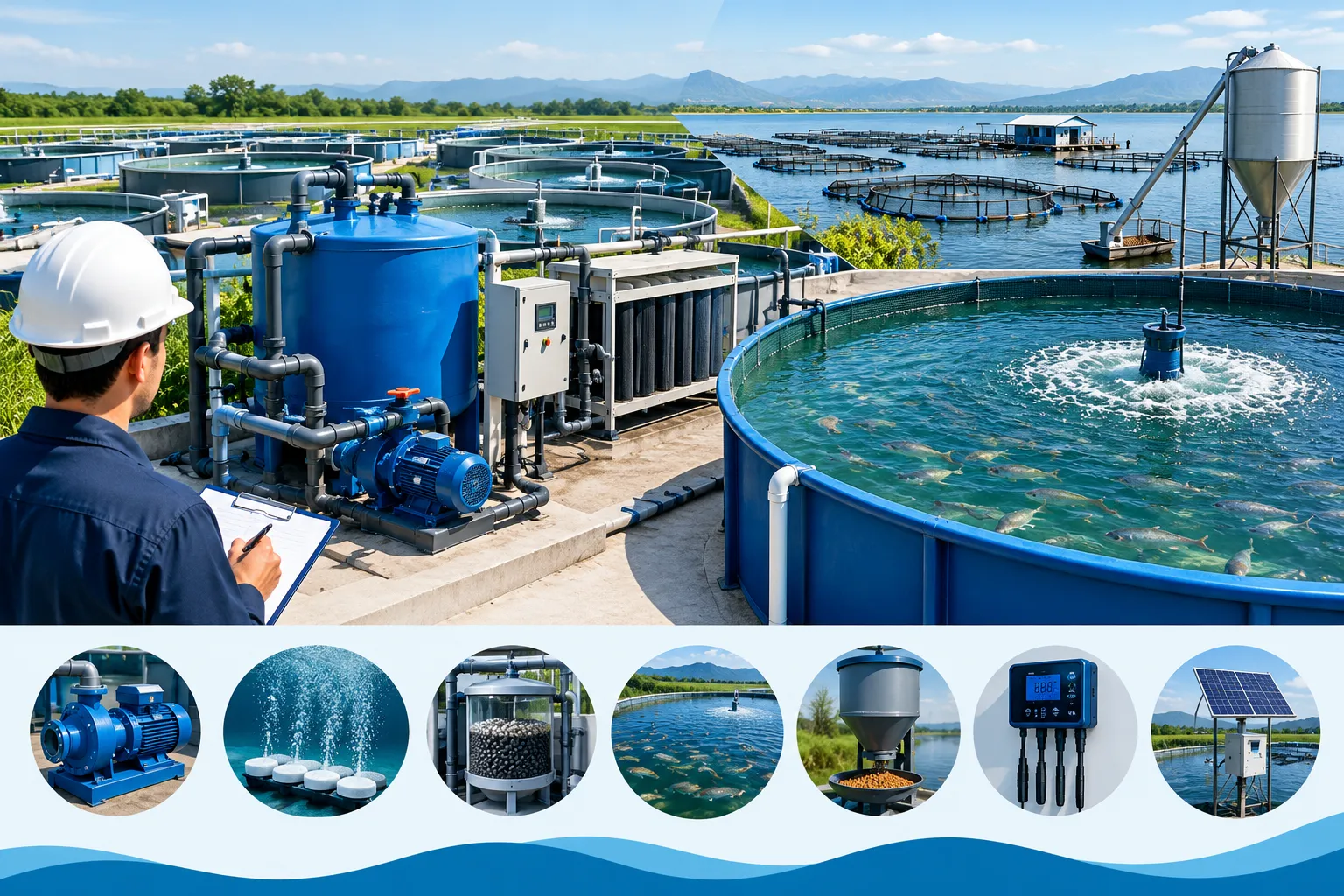
Aquaculture Equipment Specifications: A Guide for Project Buyers
Aquaculture is one of the fastest-growing sectors in modern food production. From small fish farms to large commercial aquaculture facilities, the right equipment plays an essential role in fish health, water quality, production efficiency, and long-term profitability. However, purchasing equipment for an aquaculture project requires more than comparing prices. Buyers must understand technical specifications, system requirements, energy consumption, material quality, installation needs, and ongoing maintenance costs.
Aquaculture equipment specifications help project buyers determine whether a product is suitable for a particular fish species, farming system, production capacity, and operating environment. These specifications may include pump flow rates, aeration capacity, filtration efficiency, tank dimensions, feed delivery rates, sensor accuracy, and equipment power consumption.
Whether you are developing a pond-based fish farm, a hatchery, a cage aquaculture operation, or a Recirculating Aquaculture System (RAS), understanding these details can help you avoid costly purchasing mistakes.
This guide explains the essential aquaculture equipment, technical requirements, selection criteria, supplier evaluation methods, and budgeting considerations that commercial fish farming project buyers should understand before placing an order.
What Are Aquaculture Equipment Specifications?
Aquaculture equipment specifications are the technical details that describe an equipment's design, performance, capacity, materials, operating conditions, and installation requirements. They help buyers compare different products and determine whether specific equipment meets the needs of their aquaculture project.
For example, a water pump specification may include flow rate, total dynamic head, motor power, electrical requirements, and construction materials. An aeration system specification may describe oxygen transfer performance, air delivery capacity, operating depth, and energy consumption.
Common specifications include:
- Capacity: The volume of water, quantity of feed, or production load that equipment can handle.
- Performance: Flow rate, oxygen transfer, filtration efficiency, or measurement accuracy.
- Power requirements: Voltage, phase, motor rating, and energy consumption.
- Material quality: Compatibility with freshwater, seawater, cleaning chemicals, and outdoor conditions.
- Dimensions: Physical size, connection diameter, tank volume, and installation clearance.
- Operating conditions: Temperature range, water depth, salinity, and environmental exposure.
- Maintenance requirements: Cleaning intervals, replacement parts, servicing, and expected service life.
For project buyers, these specifications form the basis of a technical purchasing document. They help ensure that equipment supplied by manufacturers matches the project's engineering design and production objectives.
Types of Aquaculture Equipment Used in Fish Farming
Aquaculture facilities use different types of equipment depending on their production methods, fish species, and water management requirements. Some farms need only basic pumping and aeration equipment, while intensive commercial facilities require integrated filtration, monitoring, feeding, and waste treatment systems.
The main categories include:
- Water circulation equipment: Pumps, pipes, valves, manifolds, and water distribution systems maintain the required water movement throughout the farm.
- Aeration and oxygenation equipment: Paddlewheel aerators, diffused-air systems, blowers, air stones, and oxygen cones help maintain dissolved oxygen levels.
- Water filtration equipment: Mechanical filters, drum filters, settling tanks, biofilters, and protein skimmers remove suspended solids or dissolved waste, depending on the system.
- Fish feeding equipment: Automatic feeders, demand feeders, feed blowers, and feeding control systems distribute feed efficiently.
- Water quality monitoring equipment: Dissolved oxygen meters, pH meters, temperature sensors, salinity meters, and ammonia test kits help operators monitor water conditions.
- Fish handling equipment: Grading machines, weighing systems, nets, pumps, and harvest equipment support routine farm operations.
- Biosecurity and waste management equipment: Disinfection systems, quarantine tanks, sludge collection units, and treatment equipment help control disease risks and manage waste.
Selecting the right combination of these categories is essential for building a reliable aquaculture facility.
Essential Aquaculture Equipment for Commercial Fish Farming Projects
Commercial fish farming requires equipment that can support the intended stocking density, daily feeding requirements, water exchange rate, and harvesting schedule. Equipment should be selected as part of an integrated system rather than purchased independently without considering compatibility.
The essential equipment usually includes:
- Fish tanks, ponds, cages, or raceways.
- Water pumps and circulation pipelines.
- Aerators, blowers, or oxygenation equipment.
- Mechanical and biological filtration systems where required.
- Dissolved oxygen and water quality monitoring instruments.
- Automatic or manual fish feeding equipment.
- Backup power supplies and emergency aeration systems.
- Fish grading, weighing, and harvesting equipment.
- Waste collection and disposal systems.
- Water treatment and biosecurity equipment.
The exact equipment list depends on the farming method. An extensive pond farm may depend primarily on pond preparation, aeration, water management, and feeding equipment. In contrast, an intensive indoor fish farm may require redundant pumps, continuous monitoring, biological filtration, oxygen backup, and automated alarms.
Project buyers should calculate the farm's expected biomass, maximum daily feed demand, peak oxygen demand, and water circulation requirements before finalizing equipment capacity.
Aquaculture Equipment Specifications for Different Farming Systems
Different aquaculture systems have different technical requirements. Choosing equipment based on the wrong farming model can lead to unnecessary expenses, insufficient treatment capacity, or poor fish performance.
- Pond aquaculture: Earthen or lined ponds commonly use paddlewheel aerators, water pumps, inlet screens, drainage structures, and water quality monitoring instruments. Equipment capacity depends on pond area, depth, stocking density, species, and seasonal conditions.
- Flow-through aquaculture: Raceways and flow-through tanks require dependable water supplies, controlled inlet and outlet flow, drainage, and adequate oxygen levels. Water availability and discharge regulations are important purchasing considerations.
- Recirculating Aquaculture System (RAS): RAS facilities reuse treated water through mechanical filtration, biological filtration, circulation pumps, aeration or oxygenation, and often additional treatment processes. These systems require careful engineering and monitoring.
- Cage aquaculture: Floating cages require suitable net materials, mooring systems, anchors, flotation devices, predator protection, and equipment for feeding and fish handling. Site currents, wave exposure, and water depth influence the specifications.
- Hatchery systems: Hatcheries often need reliable water treatment, precise temperature control, gentle water movement, fine filtration, larval feeding equipment, and high-quality monitoring instruments.
- Biofloc aquaculture: Biofloc systems rely on active aeration, water circulation, solids management, and monitoring of dissolved oxygen, pH, alkalinity, and nitrogen compounds. Aeration interruptions can create serious risks.
- Buyers should define the farming system first, then establish the equipment specifications required for its design and operating conditions.
Fish Farming Tanks, Ponds, and Raceway System Specifications
Fish holding structures determine the available culture volume, water movement, stocking capacity, and ease of harvesting. Common options include concrete tanks, fiberglass tanks, polyethylene tanks, lined ponds, earthen ponds, and raceway channels.
- Dimensions and volume: Internal length, width, depth, and usable water volume.
- Structural strength: Resistance to water pressure, soil movement, impact, and expected operating loads.
- Material compatibility: Resistance to corrosion, ultraviolet exposure, cleaning agents, and aquatic environmental conditions.
- Drainage design: Bottom slope, drain position, solids removal, and complete or partial water exchange.
- Water circulation: Inlet placement, outlet design, and the prevention of stagnant zones.
- Fish safety: Smooth surfaces, suitable screen openings, and reduced risk of injury.
- Maintenance access: Space for cleaning, inspection, netting, and equipment servicing.
Raceways generally require controlled water movement and drainage, while circular tanks may be designed to encourage rotational circulation and concentrate solids near a central outlet.
Tank dimensions alone do not determine safe production capacity. Stocking density must also account for species, fish size, oxygen availability, water treatment, waste removal, and operator experience.
For procurement, request drawings, material specifications, tank volume calculations, drain details, and installation instructions. Confirm whether foundations, supports, insulation, fittings, and delivery are included in the supplier's quotation.
Aquaculture Water Pumps and Pumping System Requirements
Water pumps are essential for transferring water between ponds, tanks, filters, reservoirs, and treatment units. In intensive aquaculture facilities, pump failure can quickly affect oxygen supply, water quality, and fish survival.
- Flow rate: The volume of water delivered per unit of time, commonly expressed in cubic metres per hour (m³/h) or litres per minute (L/min).
- Total dynamic head (TDH): The total energy required to move water through elevation differences, pipes, valves, fittings, and equipment resistance.
- Motor power: The rated electrical or mechanical power needed to operate the pump under specified conditions.
- Pump efficiency: The proportion of input power converted into useful hydraulic output.
- Construction materials: Pump housings, impellers, seals, and fasteners should suit the water chemistry, salinity, and operating environment.
- Operating characteristics: Buyers should review the pump curve, minimum and maximum flow conditions, temperature limits, and allowable operating range.
Pump selection must consider the required flow at the actual system head, not just the maximum flow stated in a product advertisement. Pipe diameter, friction losses, filter resistance, and future expansion can all affect performance.
For critical aquaculture operations, consider standby pumps, backup power, accessible isolation valves, and alarms for pump failure. Ask suppliers for certified performance curves where available and verify compatibility with the proposed piping layout.
Aquaculture Aeration Equipment Specifications and Oxygen Requirements
Dissolved oxygen is one of the most important water quality parameters in fish farming. Insufficient oxygen can reduce feeding, slow growth, increase stress, and cause fish mortality.
Common aquaculture aeration equipment includes paddlewheel aerators, surface aerators, diffused-air blowers, air distribution manifolds, fine-bubble diffusers, and oxygen injection systems.
- Oxygen transfer rate under stated test conditions.
- Standard oxygen transfer efficiency or field-relevant oxygen transfer performance.
- Power consumption and energy efficiency.
- Airflow capacity and operating pressure for blower systems.
- Installation depth and recommended operating conditions.
- Resistance to corrosion and environmental exposure.
- Noise, vibration, maintenance access, and replacement-part availability.
Standard oxygen transfer performance does not necessarily equal the oxygen transfer achieved in a working fish pond. Actual performance changes with water temperature, salinity, dissolved oxygen concentration, depth, organic loading, and equipment placement.
Oxygen requirements also vary with fish species, biomass, feeding rate, and water temperature. Therefore, buyers should size aeration equipment using a site-specific oxygen demand calculation rather than a generic rule.
For intensive farms, consider emergency aeration, backup oxygen supplies where appropriate, dissolved oxygen alarms, and automatic start-up systems. Critical equipment should be designed with sufficient redundancy to handle foreseeable failures.
Water Filtration Systems and Aquaculture Filtration Equipment
Water filtration helps remove fish waste, uneaten feed, suspended solids, and other contaminants from aquaculture systems. The appropriate filtration method depends on the farming system, water source, stocking density, and required water quality.
- Mechanical filtration: Drum filters, screen filters, settling tanks, and other solids separation equipment remove particulate matter from water.
- Biological filtration: Biofilters support beneficial microorganisms that convert toxic ammonia into nitrite and then nitrate through biological nitrification. Adequate oxygen, alkalinity, surface area, and water contact are important.
- Fine filtration: Sand filters, cartridge filters, and other fine-particle systems may be used for particular treatment requirements, provided their pressure loss and cleaning needs are addressed.
- Protein skimmers: These devices can remove certain dissolved and fine organic substances, particularly in marine aquaculture systems.
- Disinfection equipment: Ultraviolet (UV) treatment and ozone systems may help manage pathogens or organic contaminants when properly designed and operated. Ozone requires suitable safety controls and residual management.
When purchasing filtration equipment, evaluate hydraulic capacity, solids loading, filter mesh or pore size, head loss, cleaning method, backwash requirements, and maintenance frequency.
Water Quality Monitoring Equipment for Aquaculture Projects
Water quality monitoring equipment allows farm operators to detect changing conditions before they threaten fish health. Reliable measurements support feeding decisions, system adjustments, disease prevention, and production planning.
Essential monitoring instruments include:
- Dissolved oxygen meters: Measure the oxygen available in the water.
- pH meters: Measure the acidity or alkalinity of water.
- Temperature sensors: Track water temperature and support species-specific management.
- Salinity meters or conductivity meters: Measure salinity or electrical conductivity, depending on the instrument.
- Ammonia test kits or analyzers: Help assess ammonia-related risks.
- Nitrite and nitrate test equipment: Supports nitrogen-cycle monitoring.
- Alkalinity test kits: Help evaluate the water's buffering capacity.
- Water level and flow sensors: Monitor hydraulic conditions and water availability.
For automated systems, sensors may connect to a central monitoring controller, data logger, or remote alarm platform. This enables continuous monitoring and alerts when a parameter moves outside its configured limits.
Buyers should examine measurement range, accuracy, resolution, response time, waterproof rating, calibration procedure, data logging capability, and replacement sensor costs.
A monitoring device is only useful when it is maintained correctly. Calibration solutions, cleaning supplies, spare probes, and operator training should be included in the procurement plan.
Acceptable water quality limits must be established for the particular species, life stage, and production system. No single set of limits is suitable for every aquaculture operation.
Aquaculture Feeding Systems and Automatic Fish Feeders
Fish feeding systems influence feed conversion ratio (FCR), growth rate, labour requirements, and production costs. Correct feed delivery also helps reduce uneaten feed, which can increase organic waste and water treatment requirements.
- Feed delivery rate in kilograms per hour or grams per feeding cycle.
- Hopper capacity and refill frequency.
- Compatibility with pellet size, feed type, and moisture conditions.
- Adjustable feeding schedules and portion control.
- Electrical power requirements and battery backup.
- Resistance to moisture, dust, and corrosion.
- Mounting options and access for cleaning.
- Monitoring, alarm, and control capabilities.
Larger farms may benefit from centralized feeding systems that distribute feed to multiple tanks or cages. However, the design must account for transport distance, pellet damage, line blockages, and differences in feed requirements between production units.
The feeding system should match the fish species, fish size, stocking density, and daily feed demand. Automatic feeders can improve consistency, but they do not eliminate the need to observe fish behaviour and adjust feeding rates.
For accurate purchasing decisions, request a demonstration using the actual feed type and pellet size intended for the project.
Aquaculture Biosecurity Equipment and Waste Management Systems
Biosecurity reduces the risk of introducing and spreading pathogens between fish populations, production units, and farms. Waste management protects water quality and helps aquaculture facilities comply with environmental requirements.
Common biosecurity equipment includes quarantine tanks, disinfection stations, footbaths, dedicated nets, protective clothing, water treatment units, and equipment for separating healthy and potentially infected stock.
- Controlled access to production areas.
- Separation of equipment between tanks or ponds.
- Cleaning and disinfection procedures.
- Quarantine arrangements for newly introduced fish.
- Safe disposal of dead fish and contaminated materials.
- Records of fish movements, treatments, and health observations.
Waste management equipment may include sludge collection systems, settling tanks, screens, dewatering equipment, and wastewater treatment units. The correct configuration depends on the amount and type of waste produced.
Solids removal is especially important in intensive aquaculture because accumulated organic matter can consume oxygen and interfere with water treatment. However, collected sludge still requires appropriate handling, storage, treatment, and disposal.
Buyers should request details about treatment capacity, chemical compatibility, cleaning requirements, waste discharge arrangements, and operator safety. Equipment selection should reflect applicable environmental regulations and local biosecurity requirements.
Recirculating Aquaculture System (RAS) Equipment Specifications
A Recirculating Aquaculture System (RAS) treats and reuses water, reducing the need for continuous replacement with fresh water. These systems can support intensive fish production where water resources, space, or environmental conditions limit conventional farming.
A typical RAS may include fish culture tanks, mechanical filtration, biofiltration, circulation pumps, aeration or oxygenation, carbon dioxide removal, temperature control, water quality sensors, and system controls.
Depending on the design, additional equipment may include UV disinfection, ozone treatment, alkalinity dosing, backup oxygen, emergency drainage, and sludge management systems.
- Hydraulic design: The required circulation flow, system head, water exchange rate, and tank turnover assumptions.
- Solids removal: The quantity and size of particles the mechanical filter must capture.
- Biological treatment: The expected ammonia load and the biofilter's capacity under actual operating conditions.
- Oxygen supply: Normal and peak oxygen demand, oxygen transfer capacity, and emergency supply arrangements.
- Gas management: Carbon dioxide removal and other gas-control requirements.
- Temperature control: Heating or cooling capacity for the species and local climate.
- Monitoring and automation: Sensors, alarms, control logic, and remote monitoring options.
- System redundancy: Backup pumps, emergency aeration, spare components, and contingency plans.
Aquaculture Equipment Materials, Durability, and Corrosion Resistance
Aquaculture equipment operates in wet environments where corrosion, ultraviolet exposure, cleaning chemicals, and continuous operation can shorten service life. Material selection therefore has a direct effect on maintenance costs and operational reliability.
Common materials include high-density polyethylene (HDPE), fiberglass-reinforced plastic (FRP), PVC, stainless steel, coated carbon steel, and concrete.
- HDPE: Commonly used for tanks, liners, pipes, and floating structures. Buyers should verify the grade, thickness, UV resistance, and suitability for the intended application.
- PVC and related piping materials: Frequently used in water distribution systems. Pipe pressure ratings, temperature limits, fittings, and chemical compatibility must be checked.
- FRP: Used for tanks and selected structural components because of its relatively low weight and corrosion resistance. Resin type and manufacturing quality matter.
- Stainless steel: Can be suitable for certain equipment, but the correct grade depends on chloride concentration, temperature, and exposure conditions. Seawater can cause corrosion even in some stainless steel grades.
- Concrete: Used for tanks, raceways, and foundations. Structural design, waterproofing, surface finishing, and water chemistry compatibility require consideration.
For equipment exposed to seawater or brackish water, buyers should pay particular attention to galvanic corrosion, fastener selection, coatings, and material compatibility.
Request material certificates, pressure ratings, coating details, manufacturer warranties, and documented suitability for aquaculture use. Equipment intended for direct contact with fish or culture water should be appropriate for that application.
How to Choose the Right Aquaculture Equipment for Your Project
Choosing aquaculture equipment begins with a clear understanding of project objectives. Buying products before defining production requirements can result in undersized systems, incompatible components, and unnecessary capital expenses.
Follow these practical steps:
- Define the production target. Establish the fish species, annual production goal, harvest size, production cycle, and expected maximum biomass.
- Select the farming system. Determine whether the project will use ponds, tanks, cages, raceways, or RAS.
- Assess the site. Review water availability, source-water quality, climate, electricity supply, land conditions, and discharge requirements.
- Calculate system demand. Estimate water flow, oxygen demand, daily feed input, filtration load, and electrical requirements.
- Prepare a technical specification. Document minimum performance requirements, materials, operating conditions, installation details, and testing requirements.
- Compare compatible products. Evaluate technical performance, reliability, warranty coverage, spare parts, and service availability.
- Assess future expansion. Consider whether equipment can accommodate planned production increases without a complete redesign.
- Review operating costs. Calculate electricity, water, labour, consumables, maintenance, and replacement expenses.
- Confirm installation and commissioning. Establish who will install, test, calibrate, and approve the equipment.
The best equipment is not necessarily the most expensive or the most technologically advanced. It is equipment that reliably meets the project's technical requirements and remains economical throughout its service life.
Aquaculture Equipment Installation, Maintenance, and Energy Efficiency
Correct installation helps equipment perform according to its specified capacity. Poor installation can increase energy consumption, create hydraulic problems, and cause premature equipment failure.
Before installation, confirm foundation requirements, pipe connections, electrical protection, access clearances, drainage, and operating instructions. Pumps should be installed according to the manufacturer's suction and discharge requirements. Aerators and diffusers should be positioned to support effective oxygen distribution.
- Inspecting pumps, motors, seals, and bearings.
- Cleaning filters and checking for excessive pressure loss.
- Testing dissolved oxygen sensors and calibrating instruments.
- Checking aeration equipment for blockages and wear.
- Inspecting tanks, pipes, valves, and structural supports.
- Reviewing electrical connections and backup power systems.
- Replacing worn components according to manufacturer guidance.
- Recording equipment failures, maintenance work, and energy use.
Energy efficiency is particularly important because pumps, blowers, and oxygenation equipment may operate continuously. Compare equipment using power consumption at the required operating point rather than maximum advertised capacity.
Variable-frequency drives (VFDs) can reduce energy consumption when flow or pressure requirements vary and the equipment is suitable for speed control. However, the savings depend on the system design and operating profile.
For critical equipment, maintain spare parts, establish emergency response procedures, and test backup systems regularly. Planned maintenance is generally easier to manage than unexpected production interruptions.
Aquaculture Equipment Costs and Project Budget Planning
Aquaculture equipment costs vary according to system capacity, construction materials, automation level, brand, transportation, installation complexity, and local market conditions. A basic pond project and an intensive RAS facility can have substantially different capital and operating requirements.
A complete equipment budget should include the following categories:
- Capital equipment: Tanks, pumps, aerators, filtration systems, feeders, monitoring instruments, and control panels.
- Infrastructure: Foundations, buildings, piping, electrical distribution, drainage, and water storage.
- Installation and commissioning: Labour, technical supervision, calibration, performance testing, and operator training.
- Logistics: Packaging, shipping, import duties, taxes, insurance, and local transportation where applicable.
- Operating expenses: Electricity, water, feed, labour, testing supplies, chemicals, and routine servicing.
- Replacement and contingency costs: Spare pumps, sensors, motors, filter components, emergency equipment, and unexpected project expenses.
Buyers should compare the total cost of ownership rather than the purchase price alone. A lower-priced pump may consume more electricity or require more frequent maintenance. A more expensive monitoring system may provide better alarms and reduce the risk of undetected failures.
Request itemized quotations that identify equipment models, quantities, technical specifications, warranty terms, delivery timelines, installation responsibilities, and excluded costs.
For accurate budgeting, obtain current supplier quotations in the project's operating currency and include a reasonable contingency based on project uncertainty. Avoid relying on generic equipment prices without confirming the required capacity and local delivery costs.
Aquaculture Equipment Supplier Evaluation and Quality Standards
A reliable supplier can make a significant difference to project delivery, equipment performance, and long-term maintenance. Buyers should evaluate suppliers on technical competence, product quality, service support, and their ability to deliver the required equipment on schedule.
- Technical documentation: The supplier should provide datasheets, drawings, performance curves, material details, installation instructions, and maintenance manuals where relevant.
- Product quality: Review manufacturing controls, inspection procedures, traceability, and available test reports.
- Relevant experience: Ask for examples of similar installations involving the same farming system, species, water conditions, or production capacity.
- Warranty and service: Confirm warranty coverage, exclusions, response times, repair arrangements, and replacement-part availability.
- Compliance: Verify applicable electrical, mechanical, environmental, and material requirements. ISO-based quality management certification may be useful evidence of a supplier's processes, but it does not automatically establish product performance.
- Testing and acceptance: Agree on factory acceptance testing (FAT), site acceptance testing (SAT), commissioning checks, and measurable acceptance criteria where appropriate.
For international purchases, verify shipping arrangements, import documentation, after-sales support, and the availability of technical assistance in the project location.
Conclusion
Selecting the right aquaculture equipment is essential for building a productive, efficient, and reliable fish farming operation. Understanding aquaculture equipment specifications allows project buyers to compare products based on actual performance, material quality, operating requirements, energy consumption, and long-term maintenance needs.
From water pumps and aeration equipment to filtration systems, automatic fish feeders, water quality monitoring instruments, and Recirculating Aquaculture System components, every major purchase should support the overall farm design.
Before investing, define your production targets, calculate system requirements, assess supplier capabilities, and prepare a clear procurement checklist. Pay particular attention to dissolved oxygen, water circulation, biological filtration, equipment redundancy, and after-sales service.
A well-planned equipment procurement process helps reduce operational risks, control long-term costs, and create a stronger foundation for sustainable commercial aquaculture.
Frequently Asked Questions
1. What are aquaculture equipment specifications?
Aquaculture equipment specifications describe equipment capacity, performance, materials, power requirements, dimensions, operating conditions, and maintenance needs for fish farming projects.
2. What equipment is essential for commercial fish farming?
Essential equipment includes water pumps, aerators, tanks, filtration systems, fish feeders, water quality monitors, backup power, and waste management equipment.
3. How do I choose the right aquaculture water pump?
Choose a pump based on required flow rate, total dynamic head, energy efficiency, water conditions, material compatibility, and maintenance requirements.
4. Why is aeration important in aquaculture?
Aeration maintains dissolved oxygen levels, supports fish respiration, improves water circulation, and helps prevent oxygen shortages that threaten fish health.
5. What equipment is required for a Recirculating Aquaculture System (RAS)?
A RAS typically requires fish tanks, mechanical filters, biofilters, circulation pumps, oxygenation equipment, monitoring sensors, and waste removal systems.
6. How much does aquaculture equipment cost?
Aquaculture equipment costs depend on farm size, production capacity, equipment quality, automation, installation requirements, transportation, and ongoing maintenance expenses.
7. How can buyers evaluate an aquaculture equipment supplier?
Evaluate suppliers by reviewing technical documentation, product quality, warranties, certifications, customer references, spare-parts availability, delivery schedules, and after-sales support.