

Aquaculture Infrastructure: Essential Systems for Fish Farms
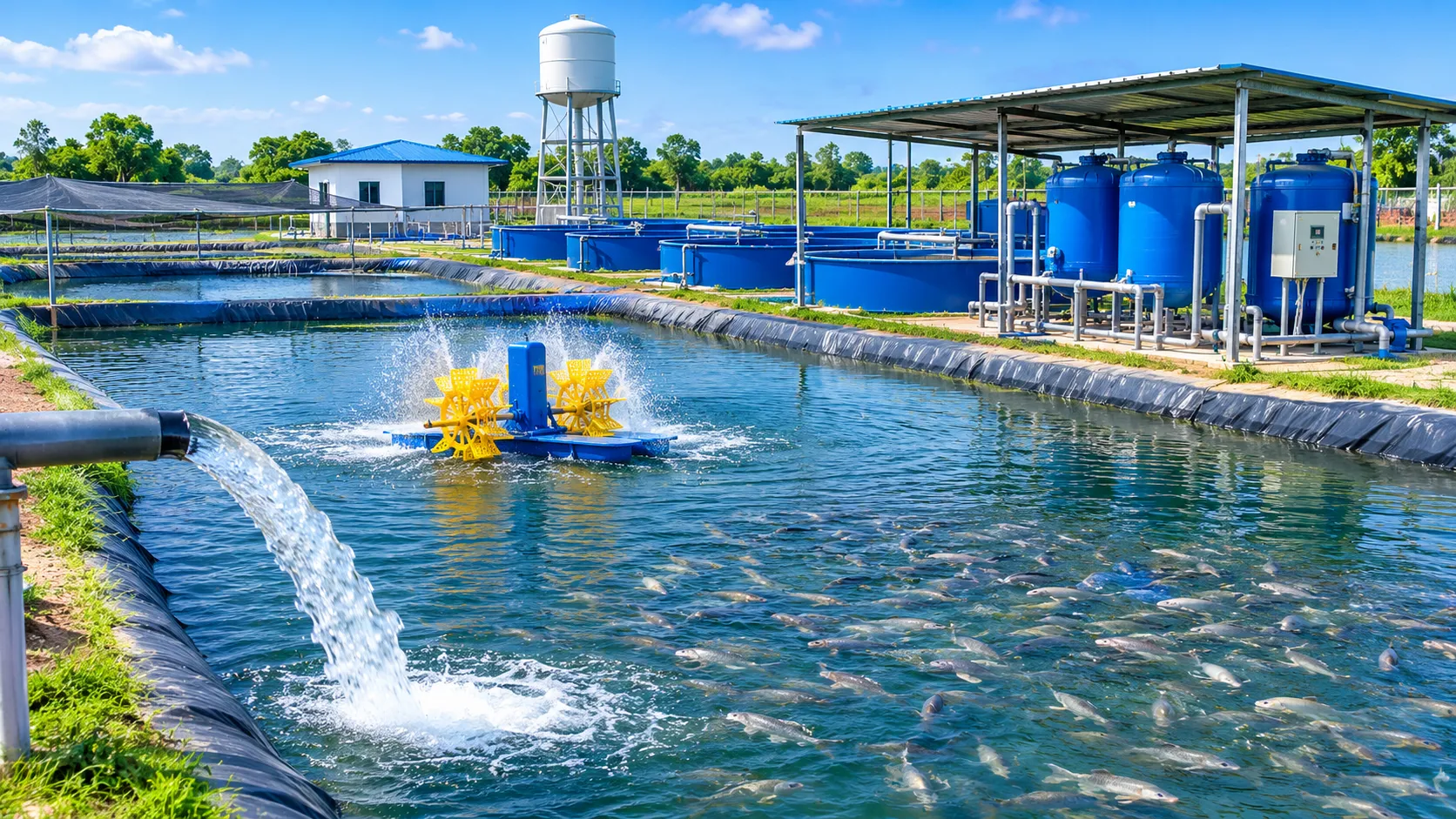
Aquaculture Infrastructure: Essential Systems for Commercial Fish Farms
Commercial fish farming is becoming an important part of modern food production because the demand for fresh, healthy, and affordable seafood continues to grow. However, running a successful fish farm requires more than purchasing fish fingerlings, providing feed, and waiting for them to grow. A profitable aquaculture business depends on properly designed infrastructure, reliable water management, efficient feeding equipment, and suitable fish production systems.
Aquaculture infrastructure includes all the physical structures, equipment, technologies, and support systems required to raise fish in a controlled environment. These systems help fish farmers maintain healthy water conditions, improve fish growth, reduce operational costs, and increase overall production.
Whether you are planning a small fish farm or developing a large commercial aquaculture facility, understanding the essential infrastructure is important. From pond construction and water filtration to aeration systems, fish hatcheries, and harvesting equipment, every component plays a role in successful fish production.
What Is Aquaculture Infrastructure and Why Is It Important?
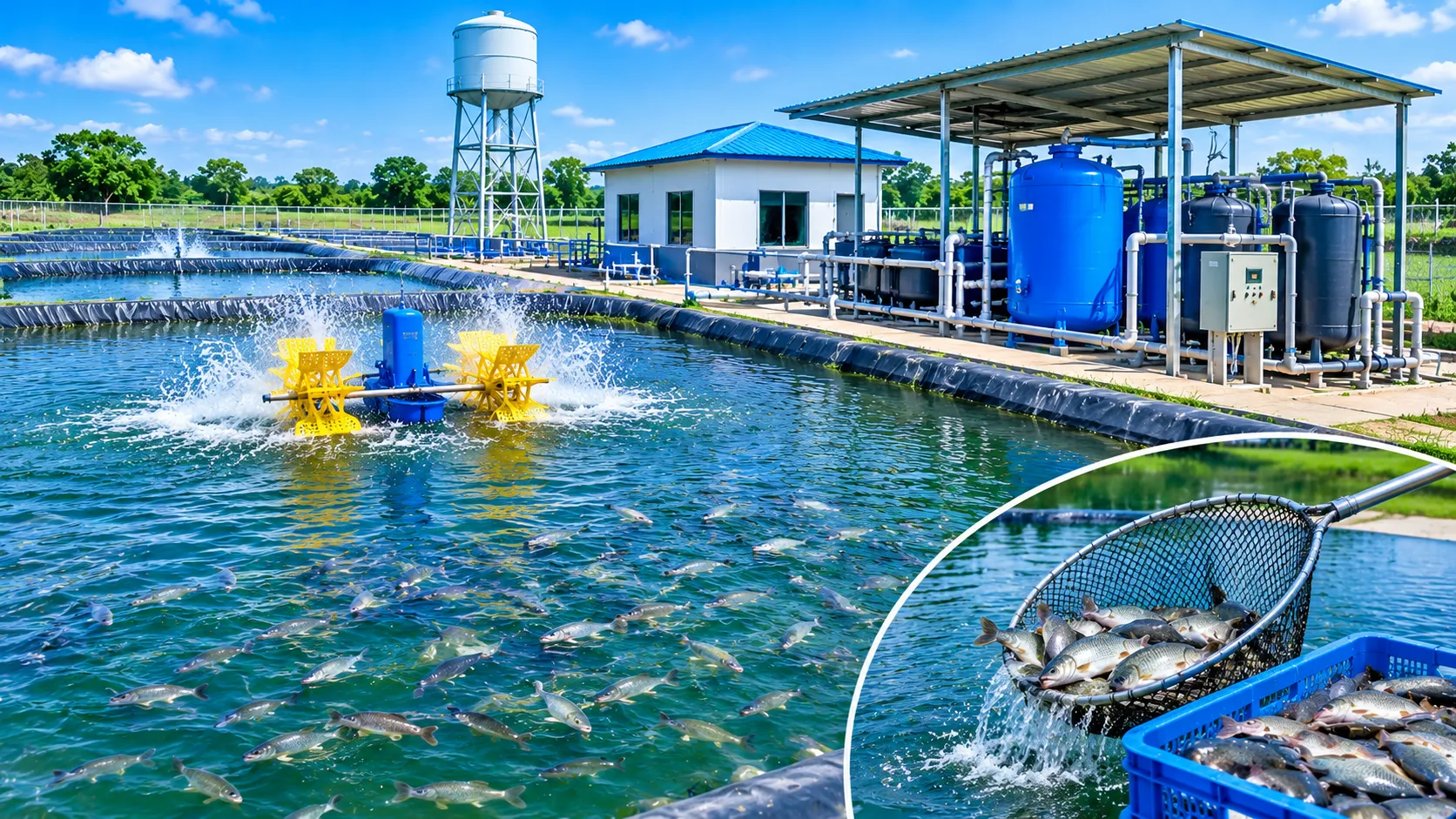
Aquaculture infrastructure refers to the buildings, equipment, water systems, and technological facilities used to produce fish and other aquatic organisms under controlled conditions. It provides the foundation for operating an organized and productive fish farming business.
A well-developed aquaculture facility allows farmers to control important production factors, including water quality, dissolved oxygen, feeding schedules, temperature, and waste removal.
For example, a commercial tilapia farm requires properly constructed ponds or tanks, a dependable water supply, aeration equipment, feeding systems, and harvesting facilities. Similarly, intensive fish farms using Recirculating Aquaculture Systems (RAS) need advanced filtration, biofilters, water circulation pumps, and monitoring equipment.
Why Is Aquaculture Infrastructure Important?
- Improves fish growth: Proper water conditions and feeding systems support healthy fish development.
- Maintains water quality: Filtration and treatment systems help control harmful substances.
- Increases production capacity: Efficient infrastructure allows farmers to raise more fish in a controlled space.
- Reduces fish mortality: Aeration, monitoring, and backup systems help prevent environmental problems.
- Improves operational efficiency: Automated equipment reduces unnecessary manual work.
- Supports business profitability: Well-planned infrastructure can reduce waste, improve productivity, and lower long-term operating costs.
Common aquaculture infrastructure includes earthen ponds, concrete tanks, fish raceways, hatcheries, water pumps, aerators, filtration units, storage facilities, and fish processing areas. The right infrastructure depends on the fish species, farming method, available land, water resources, production targets, and investment budget.
Site Selection and Land Requirements for Commercial Fish Farms
Site selection is one of the first and most important decisions when developing a commercial fish farm. Even advanced equipment cannot compensate for a poorly selected location with inadequate water resources, unsuitable soil, or poor drainage.
Before purchasing land or starting construction, farmers should evaluate the physical and environmental conditions of the proposed site.
Important Factors for Fish Farm Site Selection
- Water Availability: A commercial fish farm needs a reliable source of clean water throughout the production cycle. Possible sources include groundwater, rivers, reservoirs, canals, and other approved water supplies. Water availability should remain sufficient during dry seasons.
- Soil Quality: Soil characteristics are particularly important for earthen fish ponds. Clay-rich soil generally holds water better than sandy soil, reducing seepage and water loss.
- Land Topography: Flat or gently sloping land is often suitable for pond construction. The natural slope should support proper water movement, drainage, and harvesting operations.
- Accessibility: Fish farms should have convenient access to roads, electricity, feed suppliers, fingerling suppliers, labor, and fish markets.
- Flood Protection: The selected location should be evaluated for flood risks, drainage problems, and seasonal water-level changes.
- Environmental Conditions: Temperature, rainfall, evaporation, and local climate influence fish growth and water management requirements.
How Much Land Does a Commercial Fish Farm Need?
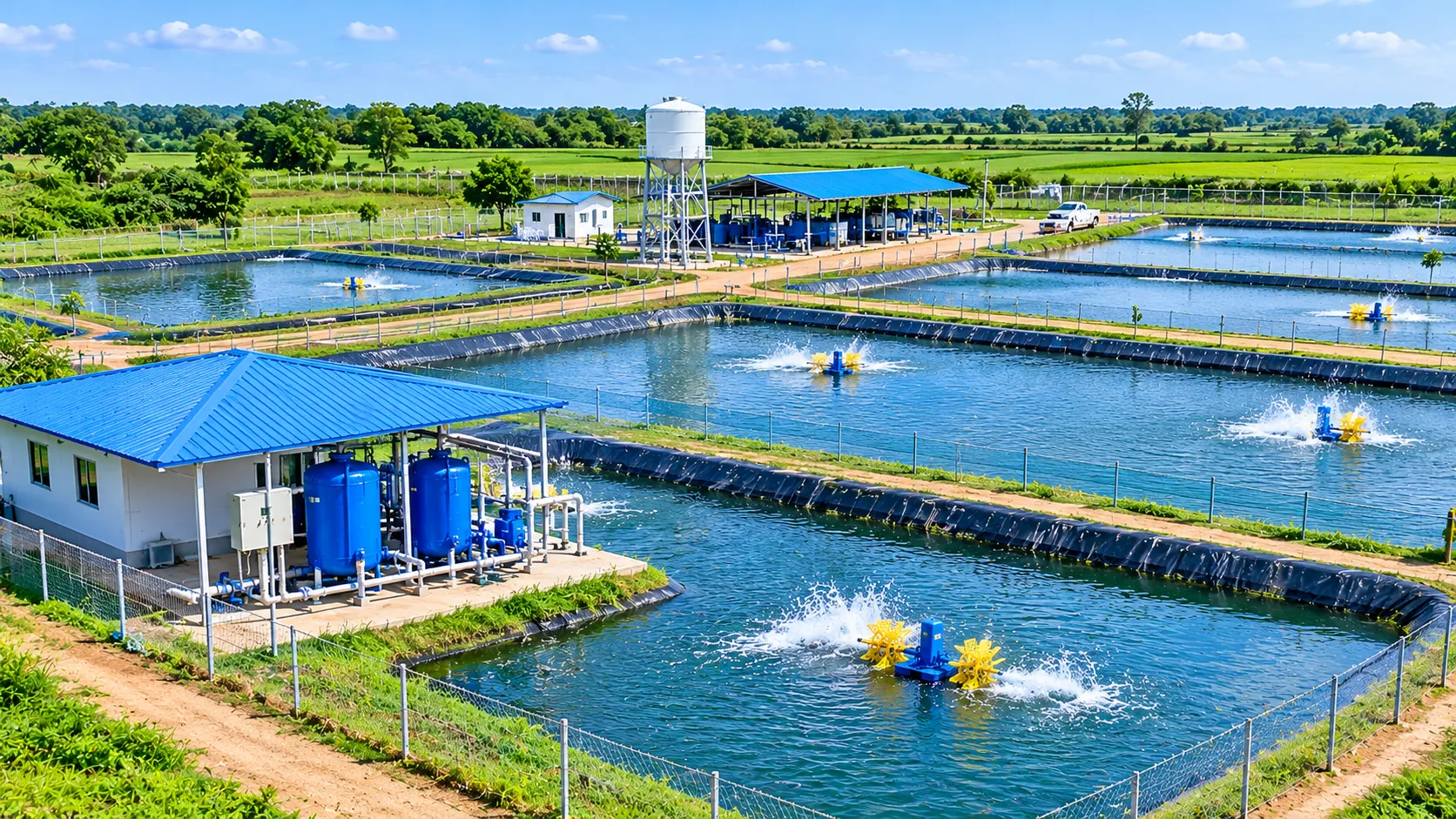
Land requirements depend on production capacity and farming technology.
- Small-scale fish farms may operate with a few ponds or tanks.
- Medium-sized farms require additional space for grow-out ponds, storage, and water management.
- Large commercial farms may include hatcheries, nursery facilities, multiple production ponds, processing areas, and administrative buildings.
Farmers should also reserve space for future expansion, equipment maintenance, water treatment, and waste management. A professional site assessment, including soil testing, water analysis, and environmental evaluation, can help prevent expensive construction mistakes.
Fish Farm Pond Design and Construction
Fish pond design and construction are essential parts of commercial aquaculture infrastructure. A properly designed pond provides a suitable environment for fish growth, feeding, water circulation, and harvesting.
The size, depth, shape, and construction material of a fish pond depend on the fish species, farming method, available land, and production goals.
Types of Fish Farming Ponds
- Earthen Ponds: These ponds are constructed by digging and shaping natural soil. They are commonly used for commercial carp, tilapia, and catfish farming.
- Concrete Ponds: Concrete ponds have strong walls and floors. They are easier to clean and maintain than many traditional ponds.
- Lined Ponds: These ponds use plastic or geomembrane liners to reduce water leakage and protect water resources.
- Nursery Ponds: These smaller ponds are designed for raising young fish and fingerlings before transferring them to grow-out ponds.
- Grow-Out Ponds: These ponds are used to raise fish until they reach market size.
Important Features of Good Pond Construction
- Proper pond depth according to fish species and production requirements.
- Strong pond banks to prevent soil erosion.
- Inlet pipes for supplying fresh water.
- Outlet structures for controlled water drainage.
- Proper pond-bottom slopes for easier cleaning and harvesting.
- Screens to prevent unwanted fish and predators from entering.
A well-designed pond should also have enough space for feeding, fish inspection, equipment movement, and regular maintenance. Before construction, farmers should prepare a pond layout and calculate excavation, water storage, drainage, and construction costs. Professional engineering advice is useful for large commercial projects.
Water Supply Systems for Commercial Aquaculture Farms
Water is the most important resource in fish farming. Fish depend on water for breathing, feeding, growth, and waste removal. Therefore, every commercial aquaculture farm needs a reliable water supply system to maintain healthy fish and consistent production.
A water supply system collects water from a suitable source and delivers it to ponds, tanks, raceways, and other fish production units. A properly designed system ensures a continuous water supply, supports water quality management, and reduces the risk of production losses.
Common Water Sources for Aquaculture
Commercial fish farms use different water sources depending on location, availability, and water quality.
1. Groundwater: Water obtained from wells and tube wells is commonly used in aquaculture. It generally contains fewer suspended particles but may have high mineral concentrations or low dissolved oxygen.
2. Surface Water: Rivers, lakes, and reservoirs provide water for commercial fish farming. However, surface water may contain suspended solids, organic matter, and harmful microorganisms.
3. Agricultural Canals: Approved irrigation canals and water channels can supply large quantities of water to fish farms, provided the water is free from harmful agricultural chemicals and contaminants.
4. Rainwater Harvesting: Stored rainwater can supplement the farm's water supply and reduce dependence on groundwater or other external sources.
5. Treated and Recycled Water: Modern aquaculture facilities use filtration and water treatment technologies to reuse water while maintaining suitable conditions for fish growth.
Main Components of a Water Supply System
A commercial aquaculture water supply system consists of several important components that work together to deliver water efficiently.
1. Water Intake Structure: This structure collects water from the selected source and directs it into the farm's supply system. Screens are often installed to prevent unwanted fish, debris, and large particles from entering.
2. Water Storage Tanks: Storage tanks maintain a reserve of water for daily farming operations and emergencies. They also help regulate water availability during periods of low supply.
3. Water Pumps: Pumps move water from wells, rivers, reservoirs, or storage tanks to ponds, tanks, and treatment units. Their capacity should match the farm's water requirements.
4. Inlet Pipes: These pipes distribute water from the main supply line to different production areas, including nursery ponds, grow-out ponds, and fish tanks.
5. Control Valves: Valves regulate water flow and allow farmers to stop or redirect water during maintenance, cleaning, and emergency situations.
6. Water Distribution Channels: These channels carry water to earthen ponds and other farming units. Proper channel design helps maintain an efficient flow and reduces water losses.
7. Water Filtration Units: Filtration systems remove suspended solids, debris, and unwanted particles before water enters fish production units.
8. Water Treatment Units: Treatment systems help manage harmful microorganisms, unwanted chemicals, and other contaminants that may affect fish health.
9. Water Flow Meters: These devices measure the amount of water entering different farming units and help farmers monitor consumption and prevent unnecessary wastage.
10. Backup Water Supply: Emergency storage tanks, additional pumps, or alternative water sources help maintain water availability during equipment failures or supply interruptions.
Water Filtration and Treatment Systems in Aquaculture
Water filtration and treatment systems help maintain a clean and healthy environment for farmed fish. Fish produce waste, leftover feed collects at the bottom, and harmful particles can enter through the water supply. Without proper treatment, these materials can damage water quality and create health problems for fish. Commercial fish farms use different filtration methods depending on their production systems.
Types of Aquaculture Filtration Systems
- Mechanical Filtration: Mechanical filters remove solid waste, uneaten feed, and suspended particles from water. Common equipment includes drum filters, screen filters, settling tanks, and sedimentation chambers.
- Biological Filtration: Biological filters contain helpful bacteria that convert toxic ammonia into nitrite and then into less toxic nitrate through nitrification.
- Chemical Filtration: Chemical filtration uses materials such as activated carbon to remove certain dissolved substances, odors, and unwanted compounds.
- UV Sterilization: Ultraviolet treatment helps reduce certain microorganisms in flowing water. It is commonly used in hatcheries and recirculating aquaculture systems.
- Water Disinfection: Approved disinfection methods can help control pathogens before water enters fish production units. Treatment must be properly managed to avoid harming fish.
Why Are Water Treatment Systems Necessary?
- Reduce suspended solids and organic waste.
- Support healthy water conditions.
- Control harmful substances.
- Reduce the risk of disease transmission.
- Improve water reuse and circulation.
- Support higher fish production in controlled systems.
Farmers should select filtration equipment according to stocking density, feeding rate, water flow, and the amount of waste produced by fish.
Aeration and Oxygenation Systems for Fish Farms
Dissolved oxygen is essential for fish survival. Fish take oxygen from water through their gills, and low oxygen levels can cause stress, poor feeding, slow growth, and even sudden fish deaths.
Aeration systems increase oxygen transfer from the air into water. They also help improve water movement and prevent stagnant areas.
Common Types of Fish Farm Aerators
- Paddlewheel Aerators: Paddlewheel aerators are widely used in commercial fish ponds. Rotating paddles splash water into the air and increase oxygen transfer.
- Diffused Air Systems: These systems use air blowers, pipes, and diffusers to release small air bubbles into tanks or ponds.
- Surface Aerators: Surface aerators create water movement and increase contact between water and air.
- Venturi Aeration Systems: Venturi equipment mixes air with flowing water, helping increase oxygen levels in suitable water systems.
- Oxygen Cones and Pure Oxygen Systems: Intensive fish farms may use oxygen cones or oxygen injection equipment to deliver concentrated oxygen into water.
Water Quality Monitoring and Management Equipment
Maintaining good water quality is necessary for healthy fish production. Even if a fish farm has advanced ponds, pumps, and filters, poor water conditions can reduce production and increase disease risks.
Water quality monitoring equipment helps farmers identify problems before they become serious.
Important Water Quality Parameters
| Parameter | Why It Matters |
| Dissolved Oxygen (DO) | Supports fish breathing |
| pH | Measures water acidity or alkalinity |
| Temperature | Affects fish metabolism and growth |
| Ammonia | High levels can harm fish |
| Nitrite | Can interfere with oxygen transport |
| Nitrate | Indicates nitrogen accumulation |
| Alkalinity | Helps stabilize pH |
| Water Turbidity | Measures water cloudiness |
Essential Water Monitoring Equipment
- Dissolved Oxygen Meter: Measures the amount of oxygen available in water.
- pH Meter: Measures whether water is acidic, neutral, or alkaline.
- Water Temperature Sensor: Monitors temperature changes.
- Ammonia Test Kit: Checks ammonia concentration.
- Nitrite Test Kit: Helps identify harmful nitrite accumulation.
- Multiparameter Water Quality Meter: Measures several water quality parameters using one device.
- Water Testing Kits: Allow farmers to perform routine water checks.
Farmers should maintain a regular monitoring schedule and record their results. Continuous monitoring is especially useful in intensive aquaculture systems where water conditions can change quickly.
Recirculating Aquaculture Systems (RAS) and Their Components
Recirculating Aquaculture Systems, commonly known as RAS, are modern fish farming systems that reuse and treat water instead of continuously replacing large volumes of it.
These systems are designed for controlled fish production in indoor tanks or specialized facilities. They are useful where land and water availability are limited.
How Does an RAS Work?
In a typical RAS facility, water moves from fish tanks into filtration equipment. Solid waste is removed, biological filters process dissolved ammonia, and additional treatment may be used to improve water quality. Oxygen is added before treated water returns to the fish tanks.
Main Components of RAS
- Fish Culture Tanks: Hold fish during the production cycle.
- Mechanical Filters: Remove solid waste and uneaten feed.
- Biofilters: Convert toxic ammonia into less harmful nitrogen compounds.
- Water Pumps: Maintain continuous water circulation.
- Aeration Equipment: Supplies oxygen to the water.
- UV Sterilizers: Help control certain microorganisms.
- Oxygenation Systems: Maintain suitable oxygen levels.
- Monitoring Sensors: Track water quality conditions.
- Waste Collection Units: Collect sludge and other solid materials.
Advantages of RAS Technology
- Uses less replacement water than many traditional systems.
- Provides better control over water conditions.
- Supports year-round fish production.
- Allows intensive production in a smaller area.
- Makes waste collection easier.
- Reduces dependence on external water sources.
However, RAS facilities require skilled management, reliable electricity, regular maintenance, and higher initial investment. Backup power and emergency oxygen supplies are essential.
Fish Hatchery Infrastructure and Breeding Systems
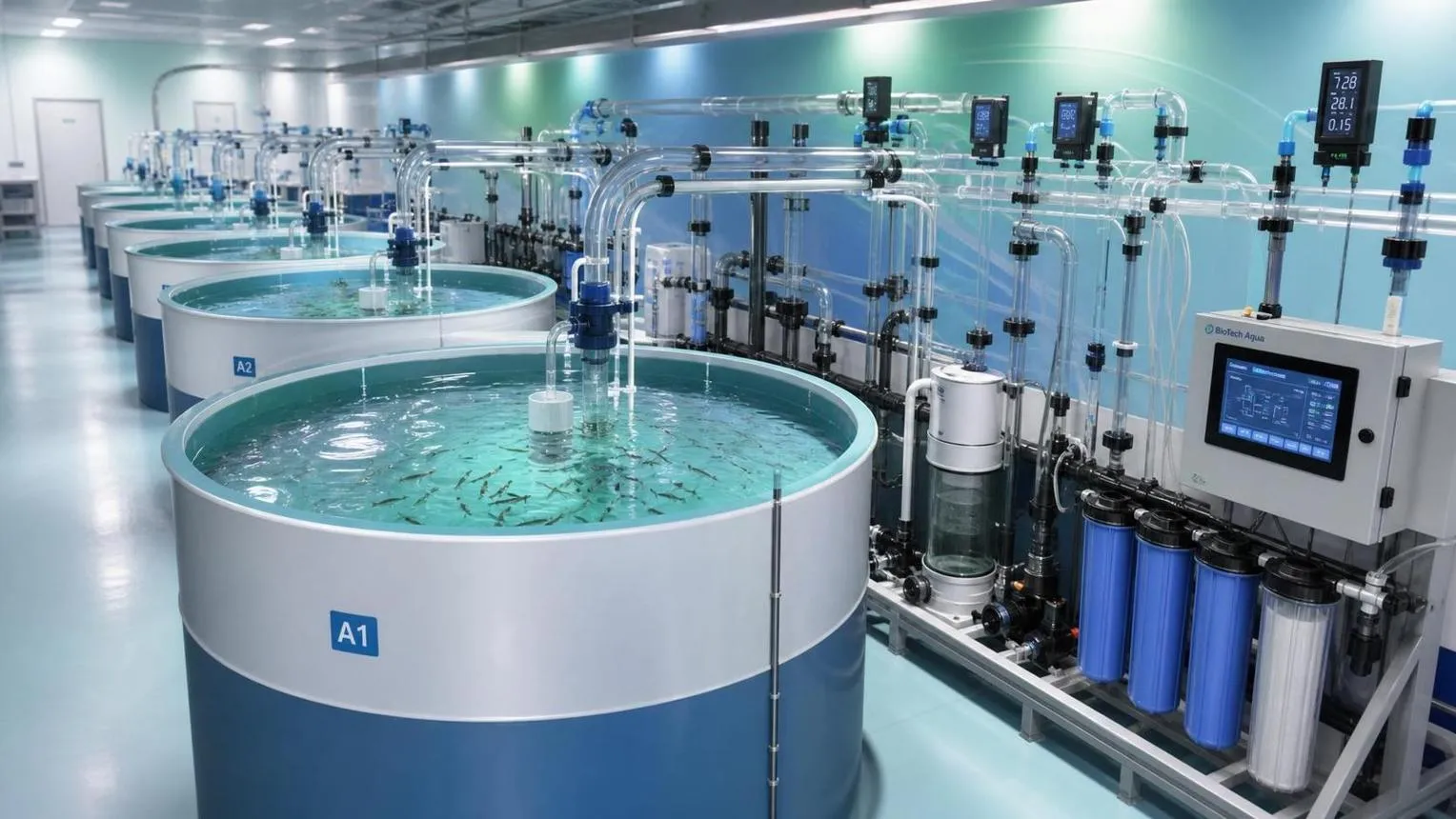
A fish hatchery is a specialized facility where fish are bred, eggs are collected, and young fish are produced. Hatcheries supply fingerlings to commercial fish farms and help farmers maintain a consistent production cycle. Without reliable fingerling supplies, commercial fish farms may struggle to maintain regular production.
Essential Hatchery Infrastructure
- Broodstock Tanks: These tanks hold mature male and female fish selected for breeding.
- Breeding Tanks: Special tanks provide suitable conditions for natural or controlled fish reproduction.
- Egg Incubation Units: Incubators protect fertilized eggs and provide suitable water movement and oxygen.
- Hatching Jars: These units are commonly used for incubating certain fish species' eggs.
- Larval Rearing Tanks: Newly hatched larvae are raised in controlled tanks until they develop further.
- Nursery Tanks: Young fish are grown until they reach a suitable size for transfer to grow-out ponds.
- Water Filtration Equipment: Clean water is essential for eggs, larvae, and young fish.
- Live Feed Production Units: Some hatcheries produce organisms such as rotifers and Artemia to feed fish larvae.
Fish Tanks, Raceways, and Culture Systems
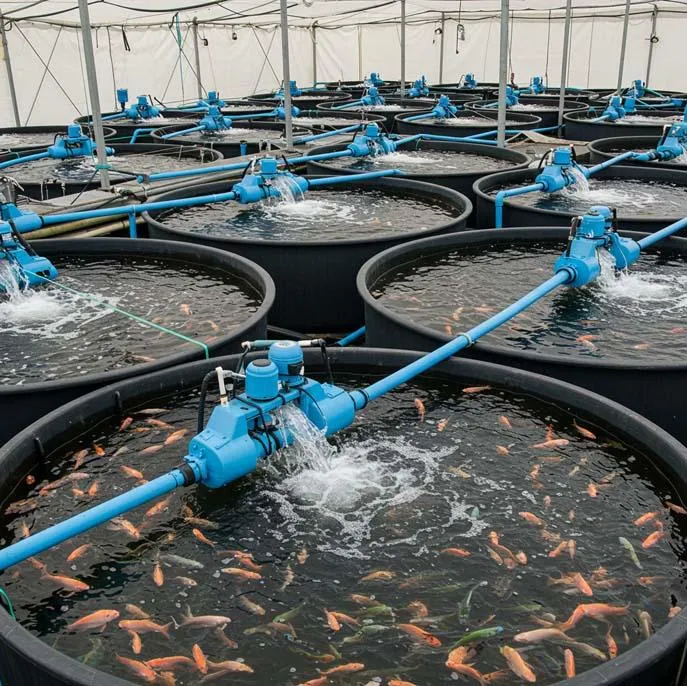
Fish tanks and raceways are important structures in intensive and semi-intensive aquaculture. They provide controlled spaces for raising fish and managing feeding, water flow, and harvesting.
The best culture system depends on fish species, production goals, available water, and investment capacity.
Common Fish Culture Systems
- Circular Fish Tanks: Circular tanks support water movement and help move solid waste toward a central drain.
- Rectangular Fish Tanks: These tanks are suitable for hatcheries, nurseries, and other controlled production facilities.
- Concrete Fish Tanks: Concrete structures are durable and can be designed for different fish production requirements.
- HDPE Fish Tanks: High-density polyethylene tanks are lightweight, corrosion-resistant, and suitable for many aquaculture applications.
- Raceway Systems: Raceway channels use flowing water to support fish production. They are commonly used for species that require continuous water movement.
- Biofloc Systems: Biofloc technology uses microbial communities to help manage nitrogen waste and support water quality. It requires proper aeration, carbon management, and technical monitoring.
Aquaculture Feeding Systems and Feed Storage Equipment
Fish feed is one of the biggest operating expenses in commercial aquaculture. Proper feeding systems help farmers provide balanced nutrition, reduce feed waste, and improve fish growth.
Types of Aquaculture Feeding Systems
- Manual Feeding Systems: Feed is distributed by hand and is commonly used in small fish farms.
- Automatic Fish Feeders: These machines distribute feed at scheduled times, reducing labor and maintaining consistent feeding routines.
- Demand Feeders: These feeders allow fish to trigger feed delivery when they need food, helping reduce unnecessary feeding.
- Blower Feeding Systems: These systems use air pressure to transport and distribute feed through pipes across large farming areas.
Essential Feed Storage Equipment
- Feed Storage Bins: Keep fish feed organized and protected.
- Moisture-Resistant Containers: Prevent moisture damage and feed spoilage.
- Feed Silos: Store large quantities of feed on commercial farms.
- Weighing Scales: Measure accurate feed quantities.
- Temperature and Humidity Monitors: Help maintain suitable storage conditions.
Pumps, Pipes, and Plumbing Infrastructure in Aquaculture
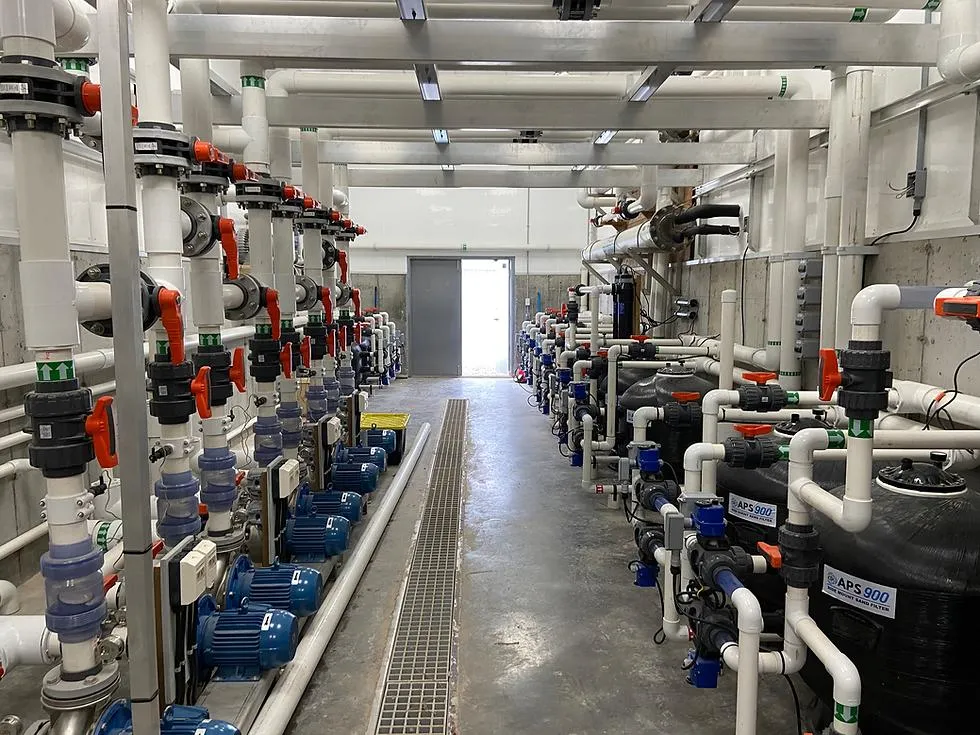
Pumps, pipes, and plumbing systems connect different parts of an aquaculture facility. They transport water between ponds, tanks, filtration units, storage facilities, and drainage areas.
A properly designed plumbing network ensures that water moves efficiently throughout the fish farm.
Important Types of Aquaculture Pumps
- Centrifugal Pumps: These pumps are commonly used to move large amounts of water through pipes and channels.
- Submersible Pumps: Submersible pumps operate underwater and are useful for moving water from wells, sumps, and storage tanks.
- Air Pumps: Air pumps supply air to diffusers and aeration equipment.
- Water Circulation Pumps: These pumps maintain continuous water movement in tanks and RAS facilities.
Essential Plumbing Components
- PVC and HDPE pipes.
- Water inlet and outlet connections.
- Control valves.
- Pipe fittings and connectors.
- Water flow meters.
- Drainage channels.
- Pressure gauges.
- Check valves.
What Should Farmers Consider When Choosing Pumps and Pipes?
Pump selection should depend on water flow requirements, pumping height, pressure losses, pipe diameter, and operating hours.
Pipe materials should be suitable for aquatic environments and the intended water conditions. Properly installed plumbing also makes maintenance and equipment replacement easier.
Farmers should regularly inspect pumps, pipe connections, filters, and valves to identify leaks or blockages before they interrupt farm operations.
Backup Power Systems, Sensors, and Farm Automation
Electricity is essential for modern commercial fish farms. Pumps, aerators, filtration equipment, oxygen systems, and monitoring devices often depend on a continuous power supply.
A sudden electricity failure can stop water circulation and aeration. In intensive fish farms, this can create dangerous conditions for fish within a short period.
Therefore, backup power systems and farm automation are important parts of reliable aquaculture infrastructure.
Backup Power Equipment
Diesel Generators: Generators provide emergency electricity when the main power supply fails.
- Solar Power Systems: Solar panels can support selected farm operations and reduce dependence on conventional electricity.
- Battery Backup Systems: Batteries can supply electricity to essential equipment for a limited period.
- Automatic Transfer Switches (ATS): These devices help transfer electrical loads to backup generators when the main supply fails.
How to Choose the Right Aquaculture Infrastructure for Your Fish Farm
Selecting the right infrastructure requires careful planning. Every fish farm has different production needs, and not every facility requires expensive or advanced equipment.
Before investing in construction and machinery, farmers should evaluate their business requirements.
1. Identify Your Fish Species
Different fish species have different environmental requirements. Tilapia, catfish, carp, trout, and other species may require different pond designs, water temperatures, oxygen levels, and culture systems.
2. Select the Right Farming Method
Decide whether you want to operate earthen ponds, concrete tanks, raceways, biofloc systems, or Recirculating Aquaculture Systems (RAS).
3. Calculate Your Water Requirements
Estimate the amount of water needed for filling ponds, replacing water, cleaning equipment, and maintaining daily operations.
4. Prepare an Infrastructure Budget
Include land preparation, pond construction, pumps, aerators, filtration systems, electrical installations, and storage facilities.
5. Plan for Future Expansion
Design your facility so additional ponds, tanks, hatchery units, and equipment can be installed when production increases.
6. Consider Maintenance and Operating Costs
Do not focus only on the purchase price of equipment. Electricity consumption, spare parts, labor, repairs, and regular maintenance also affect profitability.
7. Follow Environmental and Safety Requirements
Make sure your facility follows applicable water-use, wastewater disposal, construction, and food safety regulations.
Common Mistakes to Avoid When Building Commercial Fish Farm Infrastructure
Many new fish farmers invest in equipment without properly understanding their production requirements. These mistakes can increase operating costs and create problems during fish production.
Here are some common mistakes to avoid:
- Selecting land without checking soil and water quality.
- Constructing ponds without proper drainage.
- Installing insufficient aeration equipment.
- Overlooking water filtration requirements.
- Stocking too many fish without considering system capacity.
- Using poor-quality fish feed.
- Ignoring water quality monitoring.
- Operating without backup electricity.
- Neglecting regular equipment maintenance.
- Failing to plan waste collection and treatment.
- Building facilities without considering future expansion.
Careful planning and professional advice can help farmers avoid these problems and develop a more reliable fish farming operation.
Conclusion
Aquaculture infrastructure is the foundation of a successful commercial fish farming business. From site selection and pond construction to water supply, filtration, aeration, feeding, and harvesting, every system contributes to fish health and farm productivity.
A well-planned fish farm should have reliable water resources, suitable culture systems, effective waste management, and dependable electricity. Modern technologies such as Recirculating Aquaculture Systems (RAS), automatic feeders, digital sensors, and farm automation can further improve production efficiency.
However, investing in advanced equipment is not always necessary. Farmers should choose infrastructure according to their fish species, production capacity, available resources, and business budget.
By selecting the right equipment, maintaining water quality, and planning each stage carefully, fish farmers can build efficient, sustainable, and profitable commercial aquaculture facilities.
The key to long-term success is simple: build the right infrastructure, manage it properly, and create a healthy environment where fish can grow successfully.
Frequently Asked Questions
What is aquaculture infrastructure?
Aquaculture infrastructure includes the buildings, ponds, tanks, pumps, filtration systems, aerators, feeding equipment, and other facilities used for commercial fish farming.
What equipment is needed for a commercial fish farm?
Essential equipment includes fish ponds or tanks, water pumps, aerators, filtration units, feeding machines, water testing kits, harvesting nets, and storage facilities.
What is the most important system in aquaculture?
Water management is one of the most important systems because fish health and growth depend on suitable water quality, dissolved oxygen, temperature, and waste control.
What is a Recirculating Aquaculture System (RAS)?
RAS is a fish farming technology that treats and reuses water through mechanical filtration, biological filtration, and other water treatment processes.
Why is aeration important in fish farming?
Aeration increases dissolved oxygen in water, helping fish breathe, maintain normal activity, and grow in a healthy environment.
What is the purpose of a fish hatchery?
A fish hatchery produces fertilized eggs, larvae, and fingerlings that are supplied to commercial fish farms for further production.
How can farmers maintain good water quality?
Farmers can maintain water quality through regular testing, proper aeration, filtration, controlled feeding, waste removal, and suitable water exchange.