

Aquaculture Project Requirements: Supplier Request Guide
Aquaculture Project Requirements: What Should You Include in a Supplier Request?
Aquaculture is one of the most important methods of producing fish, shrimp, and other aquatic organisms for food and commercial purposes. As demand for seafood increases, fish farmers and aquaculture businesses are investing in modern fish farming systems, water treatment technology, automated feeding equipment, and sustainable production methods. However, the success of an aquaculture project depends on more than selecting the right equipment. It also requires careful planning, accurate technical specifications, and clear communication with suppliers.
Understanding aquaculture project requirements helps farmers, investors, and project managers identify the equipment, infrastructure, services, and technical support needed to establish a successful fish farm. A detailed supplier request allows manufacturers and aquaculture equipment suppliers to understand project goals and recommend suitable solutions based on production capacity, fish species, water availability, and budget.
Whether you are developing a Recirculating Aquaculture System (RAS), a pond-based fish farm, a shrimp farming facility, or a commercial hatchery, your supplier request should explain exactly what the project needs. This guide covers the essential information to include, from production objectives and water quality management to equipment specifications, installation services, supplier qualifications, and after-sales support.
Aquaculture Project Requirements
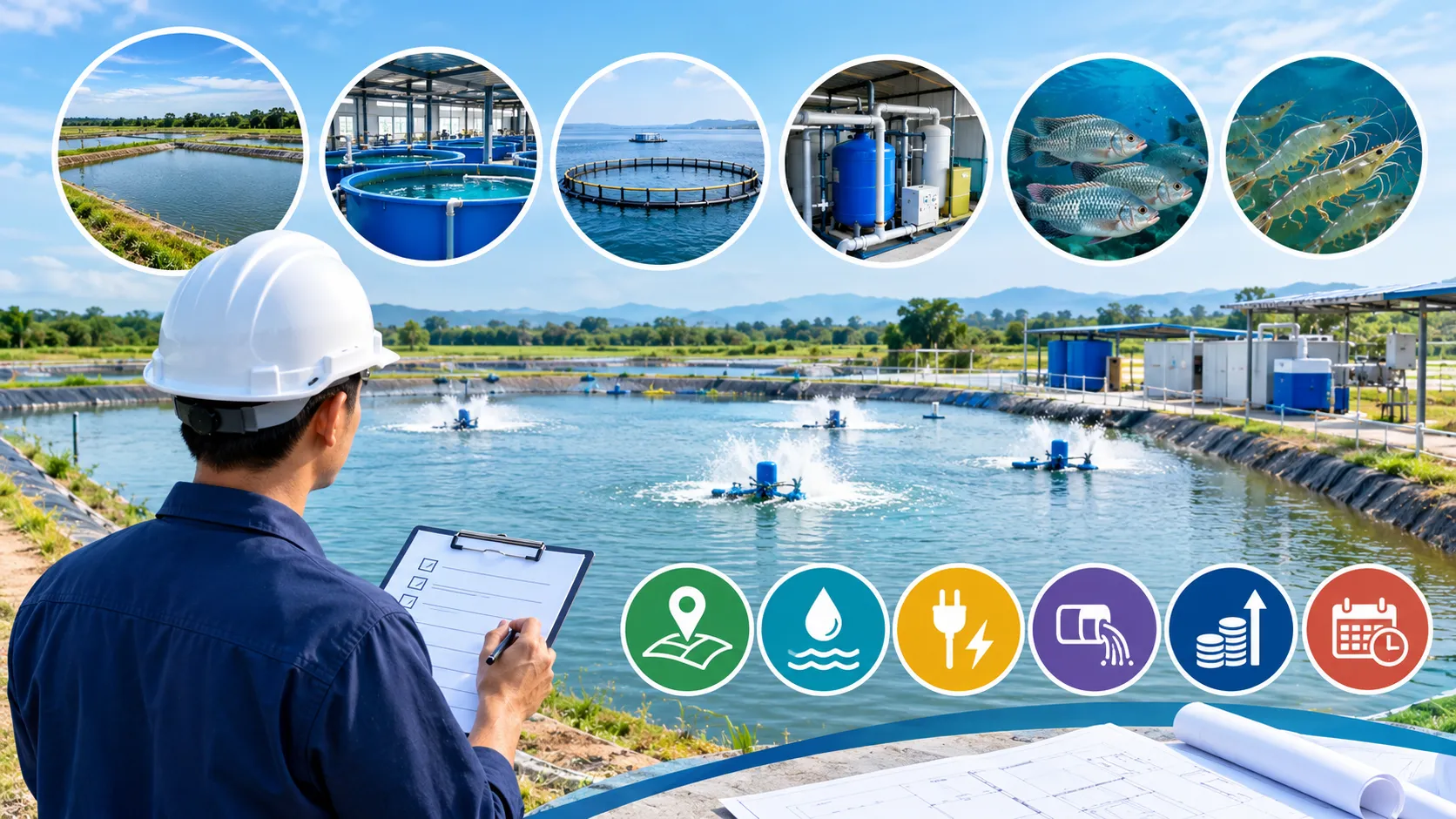
Aquaculture project requirements describe the resources, systems, equipment, and services necessary to develop and operate an aquaculture facility. These requirements vary according to the farming method, production targets, selected species, environmental conditions, and available investment.
Before contacting suppliers, define the basic scope of your project. Explain whether you plan to establish a new fish farm, expand an existing facility, upgrade outdated equipment, or develop a specialized hatchery. This information helps suppliers understand the project's scale and recommend appropriate products.
- Project type: Commercial fish farm, shrimp farm, hatchery, nursery, or aquaponics facility.
- Farming method: Earthen ponds, concrete tanks, cages, flow-through systems, or recirculating aquaculture systems.
- Target species: Tilapia, Atlantic salmon, rainbow trout, catfish, shrimp, or another suitable aquatic species.
- Production capacity: Expected annual harvest, stocking density, and production cycles.
- Site information: Available land, water supply, electricity, drainage, and local climate.
- Investment range: Estimated budget for equipment, construction, installation, and operation.
- Project timeline: Expected design, procurement, installation, and commissioning dates.
Providing these details creates a clear foundation for supplier communication. It also reduces misunderstandings and helps you compare quotations from different manufacturers on an equal basis.
Importance of a Detailed Aquaculture Supplier Request
- Accurate Quotations: Helps suppliers provide realistic prices based on specific equipment and project requirements.
- Technical Compatibility: Ensures tanks, pumps, filters, aeration systems, and other components work together efficiently.
- Transparent Pricing: Makes it easier to understand equipment costs, installation charges, shipping fees, and additional expenses.
- Easy Supplier Comparison: Provides a consistent framework for evaluating supplier proposals, product specifications, and service quality.
- Better Budget Planning: Supports accurate estimates for construction, equipment procurement, installation, and operating costs.
- Complete Equipment Selection: Helps identify essential components and avoid missing items during procurement.
- Clear Project Scheduling: Establishes delivery deadlines, installation schedules, and expected project completion dates.
- Defined Responsibilities: Clarifies supplier obligations for installation, commissioning, staff training, warranties, and maintenance.
- Reduced Operational Risks: Minimizes the likelihood of unsuitable equipment, unexpected expenses, and project delays.
- Long-Term Cost Efficiency: Helps select reliable aquaculture equipment that supports production performance, energy efficiency, and long-term profitability.
Essential Project Details and Production Objectives
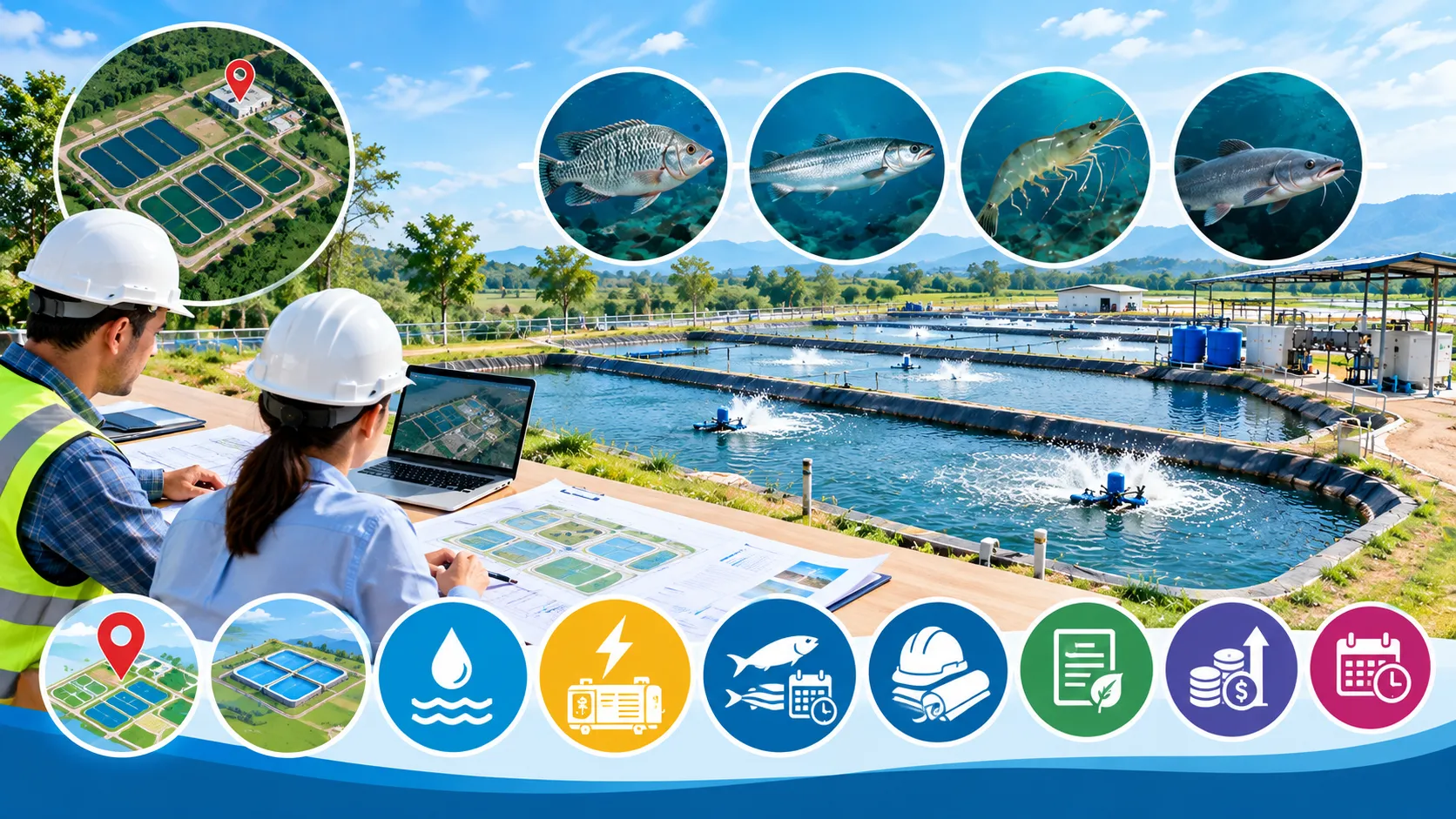
Every supplier request should begin with a clear explanation of the project and its production objectives. Suppliers need to understand what the facility must achieve before they can recommend equipment or develop a technical proposal.
Start by describing the project location, available site area, farming method, expected production volume, and intended market. For instance, a farm producing fresh tilapia for local restaurants may require a different harvesting schedule and production configuration from a salmon facility supplying large seafood distributors.
Include your preferred project capacity and explain whether the farm will operate continuously or through seasonal production cycles. If production will increase in stages, identify the initial capacity and planned expansion targets.
Important project details include:
- Project name and location.
- Type of aquaculture operation.
- Site dimensions and existing infrastructure.
- Water source and estimated daily water availability.
- Electricity supply and backup power arrangements.
- Target production volume and harvesting frequency.
- Expected construction and operational dates.
- Environmental restrictions and applicable permits.
- Available capital and ongoing operating budget.
It is also useful to share preliminary drawings, site photographs, water analysis results, and existing equipment inventories. These documents help suppliers assess technical limitations and prepare more realistic recommendations.
Clearly defined production objectives provide a measurable basis for evaluating supplier proposals. They also help ensure that equipment capacity is appropriate for the intended operation rather than unnecessarily large or insufficient for future demand.
Fish Species Selection and Aquaculture Production Capacity
- Target Species: Specify the common and scientific names of the selected species, such as tilapia (Oreochromis niloticus), rainbow trout (Oncorhynchus mykiss), or Atlantic salmon (Salmo salar).
- Water Type: Identify whether the farm will use freshwater, brackish water, or marine water.
- Production Stage: Define whether the facility will produce larvae, fingerlings, juveniles, market-size fish, or broodstock.
- Initial Stocking Quantity: State the number of fish or shrimp required for the first stocking and subsequent production cycles.
- Stocking Density: Specify the planned number of aquatic animals per cubic meter or square meter, depending on the farming system.
- Target Harvest Weight: Define the desired average weight of each fish or shrimp at harvest.
- Annual Production Volume: Estimate the total quantity of fish or shrimp expected to be harvested annually.
- Survival Rate: Provide the expected percentage of stocked animals that will survive until harvest.
- Production Cycle: Specify the expected growing period, harvesting frequency, and number of production cycles per year.
- Water Quality Requirements: Define the suitable temperature, salinity, dissolved oxygen, pH, and water flow ranges for the selected species.
- Feeding Requirements: Identify the feeding method, suitable feed type, expected feed consumption, and estimated feed conversion ratio (FCR).
- Biomass Capacity: Ask suppliers to confirm that the proposed tanks, pumps, filtration units, aeration equipment, and water treatment systems can support the planned stocking density and total biomass.
- Realistic System Performance: Request production estimates based on species biology, water quality, equipment capacity, survival rates, and farm management practices rather than maximum capacity claims alone.
Aquaculture Systems, Equipment, and Infrastructure Requirements
The aquaculture system determines how water, oxygen, waste, and nutrients move through the farm. Your supplier request should identify the preferred production system or ask suppliers to recommend the most suitable option based on site conditions and production objectives.
Common aquaculture systems include pond farming, flow-through systems, cage aquaculture, and Recirculating Aquaculture Systems (RAS). Each has different infrastructure, operational costs, water requirements, and environmental considerations.
A typical equipment and infrastructure list may include:
- Fish tanks, ponds, raceways, or culture cages.
- Water pumps, pipelines, and valves.
- Mechanical filtration and biological filtration units.
- Aeration equipment and oxygenation systems.
- Water quality monitoring instruments.
- Automatic or demand-based fish feeders.
- Solids collection and sludge handling equipment.
- Backup generators and electrical control panels.
- Quarantine, nursery, and fish handling facilities.
- Wastewater treatment and discharge infrastructure.
For RAS projects, specify whether the supplier must provide a complete integrated system or individual components. A complete system may include drum filters, biofilters, degassing equipment, UV disinfection, pumps, oxygenation, and automated monitoring.
Request a system diagram showing how the components connect. This helps identify missing equipment and ensures that pumps, filters, tanks, and pipes are compatible.
Infrastructure requirements should also address access roads, equipment rooms, drainage, maintenance space, and the ability to expand production in the future.
Fish Tanks, Pond Design, and Farm Layout Specifications
| Tank Specifications | Pond Design Requirements | Farm Layout and Installation |
| Specify tank diameter or length, width, depth, and working water volume. | Include total pond area, number of ponds, dimensions, and operating water depth. | Provide a site plan showing the positions of tanks, ponds, pumps, filtration units, and storage areas. |
| Identify suitable construction materials, such as fiberglass-reinforced plastic (FRP), high-density polyethylene (HDPE), and concrete. | Describe soil conditions, groundwater considerations, pond lining, and embankment requirements. | Specify access routes, service buildings, maintenance areas, and equipment replacement space. |
| Define tank shape, water inlet location, outlet position, and drainage arrangement. | Include inlet, outlet, drainage structures, water exchange, and harvesting arrangements. | Ask the supplier to identify foundation requirements, structural support, and installation clearances. |
| Specify solids removal requirements and water circulation needs. | Include flood protection and erosion control measures. | Consider structural engineering and local site conditions before construction begins. |
| Circular tanks can support rotational water movement when properly designed, while rectangular raceways may suit specific flow-through systems. | Ensure pond design supports efficient water management, fish health, and harvesting operations. | A well-planned layout improves workflow, reduces unnecessary pipe runs, simplifies fish handling, and makes cleaning and maintenance easier. |
Water Quality Management and Filtration Requirements
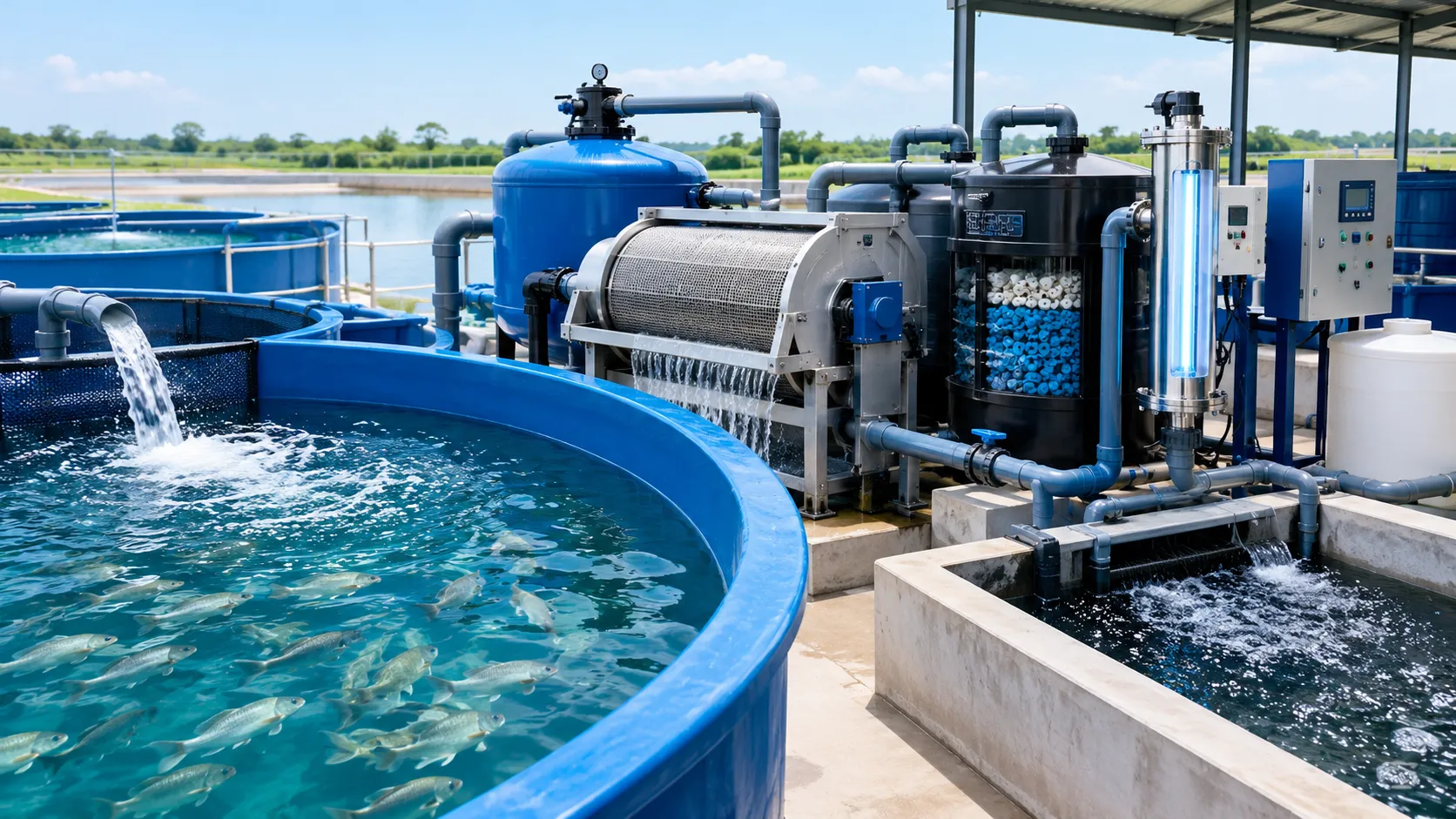
Water quality management is essential for fish health, growth, and efficient aquaculture production. Specify water source, temperature, pH, dissolved oxygen, ammonia, salinity, and other relevant parameters. Include mechanical and biological filtration, UV disinfection, and degassing where required. Ask suppliers to provide filtration capacity, flow rate, energy consumption, maintenance requirements, water quality monitoring, and wastewater handling specifications. Properly sized filtration equipment helps maintain stable water quality as fish biomass increases.
Aeration, Oxygenation, and Water Circulation Systems
Dissolved oxygen is one of the most important water quality parameters in aquaculture. Fish, beneficial bacteria, and other organisms consume oxygen, while feeding activity and increasing biomass can raise oxygen demand.
Your supplier request should explain the expected oxygen requirements, operating water volume, stocking density, and potential peak demand. Suppliers can then recommend suitable aeration or oxygenation equipment.
Common options include paddlewheel aerators, diffused-air systems, regenerative blowers, surface aerators, oxygen cones, and liquid oxygen systems. The appropriate technology depends on whether the farm operates ponds, tanks, raceways, or an intensive RAS facility.
Water circulation is equally important because it distributes oxygen, moves waste toward collection points, and helps maintain suitable environmental conditions throughout the system.
Request details about:
- Oxygen transfer performance under relevant operating conditions.
- Airflow or oxygen delivery capacity.
- Water circulation rate and pump performance.
- Energy consumption and operating noise.
- Equipment placement and installation requirements.
- Backup oxygen supply during power interruptions.
- Dissolved oxygen sensors and alarm systems.
- Emergency response and maintenance procedures.
Ask suppliers to explain their design assumptions and the conditions under which performance figures were measured. Oxygen transfer rates can change with water temperature, depth, salinity, and other factors.
For intensive fish farming, emergency oxygenation and backup power should be evaluated carefully. A power failure or oxygen supply interruption can quickly become a serious operational risk when stocking density is high.
Aquaculture Feeding Systems and Fish Health Management
Feed is a major operating cost in many aquaculture businesses, and feeding efficiency has a direct influence on growth, water quality, and profitability. Your supplier request should specify the feeding method, feed type, expected consumption, and level of automation required.
Feeding options include manual feeding, automatic timer-based feeders, demand feeders, and centralized feeding systems. Large farms may require programmable feeders that distribute feed according to production schedules or biomass estimates.
Describe the feed characteristics, including pellet size, feed form, storage requirements, and the feeding frequency recommended for the target species. The supplier should explain how the proposed equipment handles the intended feed without excessive waste or blockages.
Fish health management must also be considered when planning the facility. Include requirements for quarantine tanks, fish grading equipment, sampling tools, handling equipment, and biosecurity barriers where applicable.
Important considerations include:
- Feed storage and moisture protection.
- Accurate feed distribution and adjustable feeding rates.
- Feeding schedules and monitoring functions.
- Fish grading and harvesting equipment.
- Quarantine and isolation facilities.
- Disinfection stations and cleaning procedures.
- Mortality recording and health monitoring.
- Access to qualified aquatic animal health professionals.
Request guidance on cleaning, calibration, and routine inspection of automated feeders. Incorrect feeding rates can increase uneaten feed, raise ammonia levels, and place unnecessary pressure on filtration systems.
Equipment suppliers can support facility planning, but disease diagnosis and treatment protocols should be developed with appropriately qualified aquatic animal health professionals and in accordance with local regulations.
Technical Specifications and Equipment Performance Standards
- Equipment Capacity: Specify the required flow rate, pumping capacity, filtration capacity, aeration output, and operating range.
- Construction Materials: Identify suitable materials, such as stainless steel, HDPE, fiberglass, or corrosion-resistant coatings.
- Electrical Requirements: Define operating voltage, frequency, motor power, energy consumption, and electrical protection requirements.
- Control Panel and Automation: Specify control panels, automated feeding, pump controls, and compatibility with farm management systems.
- Sensor Accuracy: State measurement ranges, accuracy levels, calibration methods, and monitoring requirements for water quality sensors.
- Alarm and Monitoring Systems: Identify required alarms, remote monitoring options, data logging, and fault detection features.
- Spare Parts Availability: Confirm the availability, cost, and expected delivery time of replacement components.
- Equipment Service Life: Request estimated service life, maintenance intervals, warranty coverage, and expected operating performance.
- Technical Documentation: Require equipment specifications, installation drawings, wiring diagrams, operating manuals, and maintenance instructions.
- Safety Standards and Certifications: Request applicable electrical safety certifications, ISO-related quality management evidence, and relevant IEC standard compliance documentation.
- Performance Guarantees: Define measurable performance targets, testing conditions, acceptance criteria, and supplier responsibilities.
- Installation and Commissioning: Specify installation procedures, system testing, calibration, staff training, and final performance verification.
Equipment Installation, Transportation, and Commissioning Services
- Installation Scope: Specify whether you require equipment delivery, installation support, or a complete turnkey aquaculture solution.
- System Design and Engineering: Confirm requirements for system design, technical drawings, engineering approval, and equipment integration.
- Transportation and Packaging: Define packaging methods, shipping arrangements, delivery location, unloading responsibilities, and protection against transit damage.
- Customs and Import Requirements: Clarify customs documentation, import duties, taxes, shipping insurance, and applicable Incoterms for international purchases.
- Manufacturing and Delivery Schedule: Request a realistic timeline covering equipment preparation, manufacturing, dispatch, and site delivery.
- Equipment Installation: Define supplier responsibilities for installing tanks, pumps, filtration units, aeration systems, electrical components, and plumbing.
- System Integration: Ensure all equipment, sensors, control panels, and automation systems operate together correctly.
- Electrical and Plumbing Inspections: Specify inspection and safety checks before starting the system.
- Dry and Wet Testing: Require testing under dry conditions and with water to verify equipment operation, leaks, flow rates, and system performance.
- Biofilter Maturation: Establish a suitable timeline for beneficial bacteria to develop and support biological filtration before full production begins.
- Operator Training: Confirm training requirements for equipment operation, water quality monitoring, routine maintenance, and emergency procedures.
- Commissioning Documentation: Request a final report covering test results, equipment settings, operational performance, outstanding issues, and acceptance criteria.
Aquaculture Project Budget, Equipment Pricing, and Cost Estimates
A realistic aquaculture project budget should include more than the purchase price of tanks, pumps, and filters. Construction, transportation, installation, energy consumption, maintenance, feed storage, and other operating expenses can significantly affect total project costs.
Ask suppliers to provide itemized quotations rather than a single combined price. An itemized quotation makes it easier to compare alternatives, identify missing components, and understand where the budget will be allocated.
Your request should distinguish between capital expenditure (CAPEX) and operating expenditure (OPEX).
Capital expenditure may include:
- Land preparation and civil construction.
- Tanks, ponds, pipes, and structural materials.
- Pumps, filtration units, and aeration systems.
- Electrical installations and control systems.
- Delivery, installation, and commissioning.
- Initial testing and staff training.
Operating expenditure may include:
- Electricity and water consumption.
- Feed, fingerlings, and other production inputs.
- Labor and routine maintenance.
- Spare parts and equipment replacement.
- Water testing, biosecurity, and waste management.
Request prices in a specified currency and ask suppliers to clarify taxes, shipping, payment terms, quotation validity, and potential additional charges.
It is also useful to request estimated energy consumption and recommended spare parts for the first year of operation. These figures support a more meaningful comparison of long-term ownership costs.
The cheapest quotation is not always the most economical choice. Compare suppliers based on total cost of ownership, technical performance, expected reliability, service availability, and suitability for your production goals.
Supplier Qualifications, Industry Experience, and Certifications
- Company Background: Verify the supplier’s business history, years of experience, and specialization in aquaculture equipment.
- Relevant Project Experience: Assess experience with similar fish farms, shrimp farms, hatcheries, nurseries, or recirculating aquaculture systems (RAS).
- Product Catalogs and Datasheets: Request detailed product catalogs, technical specifications, operating instructions, and performance data.
- Customer References: Ask for references from previous aquaculture clients and examples of successfully completed projects.
- Quality Management Certifications: Review relevant certifications, including ISO 9001 where applicable, and verify their validity and scope.
- Manufacturing Capabilities: Evaluate manufacturing facilities, production capacity, quality control procedures, and product testing processes.
- Installation Expertise: Confirm the availability of qualified engineers, trained technicians, and experienced installation teams.
- After-Sales Support: Check technical assistance, warranty services, maintenance support, and response times for equipment failures.
- Spare Parts Availability: Confirm access to replacement components, spare parts inventories, and reliable delivery schedules.
- Financial and Operational Stability: Assess the supplier’s ability to fulfill contractual obligations, meet deadlines, and complete the project.
- Engineering and Design Support: Determine whether the supplier can provide equipment layouts, hydraulic calculations, electrical drawings, and system integration services.
- Certification Verification: Check certificates against the issuing organization, validity period, certification scope, and applicable equipment requirements.
- Documented Performance Results: Request evidence of equipment performance, completed installations, and production outcomes under comparable operating conditions.
- Technical Communication: Evaluate the supplier’s ability to answer technical questions clearly, justify equipment recommendations, and provide accurate documentation.
Warranty Coverage, Maintenance, and After-Sales Support
- Warranty Period: Specify the warranty duration for each equipment item and clarify when coverage begins.
- Warranty Coverage: Identify covered defects, including manufacturing faults, motor failures, material defects, and component malfunctions.
- Warranty Exclusions: Request clear details about exclusions, misuse conditions, consumable parts, and damage caused by improper maintenance.
- Repair and Replacement Procedures: Define the process for reporting faults, arranging repairs, replacing defective components, and resolving warranty claims.
- Labor and Transportation Costs: Clarify responsibility for technician fees, shipping charges, replacement delivery, and on-site repair expenses.
- Preventive Maintenance Schedule: Request recommended maintenance intervals, inspection procedures, lubrication requirements, and equipment servicing guidelines.
- Spare Parts Availability: Confirm the availability, pricing, and expected delivery times of essential replacement components.
- Technical Support Response Time: Establish expected response times for technical inquiries, equipment failures, and urgent operational problems.
- Remote Troubleshooting: Check whether the supplier offers telephone assistance, video support, remote diagnostics, or online monitoring services.
- On-Site Repair Services: Confirm whether qualified technicians are available for inspections, repairs, and emergency maintenance.
- Equipment Manuals and Maintenance Records: Require operating manuals, troubleshooting guides, maintenance schedules, and service documentation.
- Operator Training: Specify training for equipment operation, routine inspections, fault identification, and emergency response procedures.
- Backup Equipment Recommendations: Ask suppliers to recommend standby pumps, backup aeration systems, emergency oxygen supplies, and other critical spare components.
- Maintenance Contracts: Clarify the availability, pricing, and scope of ongoing maintenance agreements and scheduled servicing.
- Documented Service Responsibilities: Include warranty conditions, support procedures, repair obligations, and maintenance responsibilities in the final supplier agreement.
Aquaculture Supplier Request Checklist and Evaluation Criteria
Before sending your supplier request, review the document to ensure that it contains the information required for an accurate and comparable proposal. A structured checklist helps you identify missing details and gives suppliers a consistent basis for responding.
Project information
- Project location, farming method, and site dimensions.
- Target species and production objectives.
- Expected annual production and stocking capacity.
- Water source, electricity supply, and site conditions.
- Project schedule and estimated investment range.
Equipment and technical requirements
- Tank, pond, or raceway specifications.
- Pumping, filtration, aeration, and oxygenation requirements.
- Feeding equipment and fish handling needs.
- Water quality monitoring and automation requirements.
- Technical datasheets, drawings, and performance criteria.
- Safety, electrical, and applicable compliance requirements.
Commercial and service requirements
- Itemized equipment pricing and project cost estimates.
- Shipping, delivery, taxes, and payment terms.
- Installation, commissioning, and training requirements.
- Supplier references, qualifications, and relevant certifications.
- Warranty coverage and maintenance arrangements.
- Spare parts availability and after-sales support.
- Quotation validity and expected delivery dates.
Conclusion
Preparing a detailed supplier request is an essential step in developing a successful aquaculture facility. By defining production objectives, selecting appropriate aquaculture systems, specifying equipment performance, and addressing water quality, fish health, budgeting, and supplier qualifications, you can make more informed purchasing decisions.
A comprehensive request also improves communication, reduces the risk of missing components, and helps you compare suppliers using consistent technical and commercial criteria.
Whether you are planning a small fish farm, a commercial shrimp operation, or an intensive Recirculating Aquaculture System, the best results come from matching equipment to biological needs, site conditions, production capacity, and long-term operating costs.
The key is to treat your supplier request as a complete project specification rather than a simple price inquiry. When expectations are clear from the beginning, suppliers can provide more accurate proposals, and your aquaculture project has a stronger foundation for reliable, efficient, and sustainable production.
Frequently Asked Questions (FAQs)
What are aquaculture project requirements?
Aquaculture project requirements include equipment, infrastructure, water quality systems, fish species, production capacity, budget, installation services, and supplier qualifications.
Why is a detailed aquaculture supplier request important?
A detailed supplier request helps obtain accurate quotations, compare equipment, clarify technical specifications, control costs, and reduce project risks.
What information should an aquaculture supplier request include?
Include project objectives, fish species, production capacity, equipment specifications, site details, budget, delivery schedules, warranties, and maintenance requirements.
Which aquaculture systems are commonly used?
Common aquaculture systems include earthen ponds, flow-through systems, cage farming, Recirculating Aquaculture Systems (RAS), and aquaponics for different production needs.
How do I choose the right fish species for aquaculture?
Select fish species according to water temperature, salinity, oxygen requirements, local market demand, available resources, and production objectives.
What equipment is required for a commercial fish farm?
Commercial fish farms typically require tanks, pumps, filters, aerators, feeders, monitoring instruments, pipelines, electrical systems, and waste management equipment.
Why is water quality management important in aquaculture?
Water quality management maintains suitable oxygen, pH, temperature, and ammonia levels, supporting fish health, growth, survival, and production efficiency.
hat filtration systems are needed for aquaculture projects?
Aquaculture filtration commonly includes mechanical filters, biological filters, and additional treatment equipment selected according to system design and water quality requirements.
How should aquaculture equipment specifications be prepared?
Specify equipment capacity, dimensions, materials, energy consumption, operating conditions, performance standards, maintenance needs, and compatibility with existing systems.
What affects aquaculture project costs?
Aquaculture project costs depend on construction, equipment selection, production capacity, transportation, installation, electricity consumption, labor, feed, and maintenance expenses.