

Aquaculture Project Sourcing: Find Specialized Suppliers
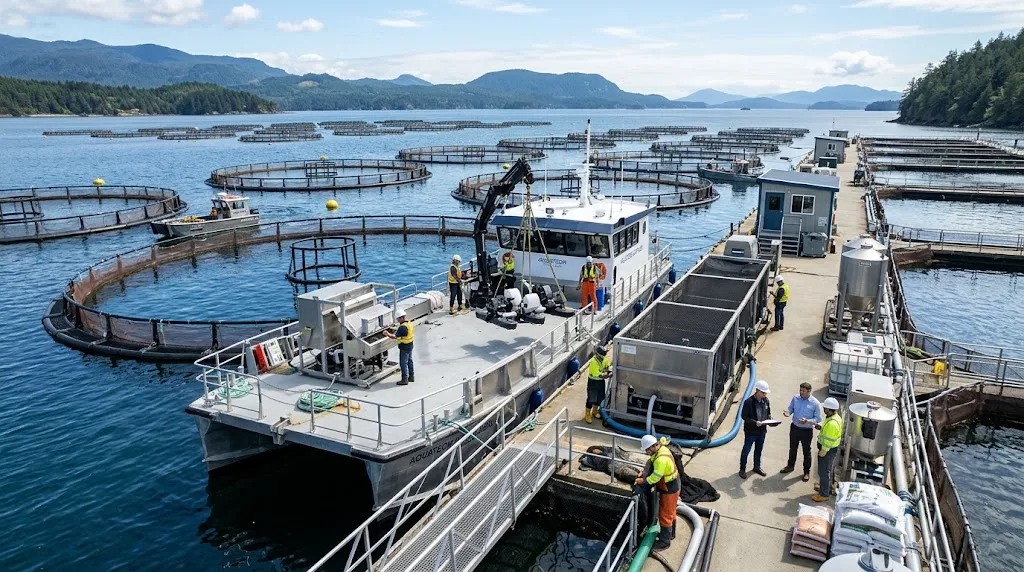
Aquaculture Project Sourcing: Connecting Buyers With Specialized Suppliers
Aquaculture is becoming an important part of the global food supply chain, providing fish, shrimp, shellfish, and other aquatic products to markets worldwide. As demand for seafood grows, fish farmers, seafood producers, and aquaculture investors need reliable equipment, quality supplies, and professional technical support to develop successful projects. This is where aquaculture project sourcing becomes essential.
Aquaculture project sourcing involves identifying, evaluating, and purchasing the equipment, materials, technology, and services required to establish or expand an aquaculture facility. It connects buyers with specialized suppliers who understand the technical requirements of fish farming, shrimp farming, hatchery operations, and commercial aquaculture production.
Whether you are planning a small fish farm, a commercial shrimp production facility, or a large recirculating aquaculture system (RAS), choosing the right suppliers can influence your operating costs, production efficiency, and long-term profitability.
[ Planning an Aquaculture Project ]
What Is Aquaculture Project Sourcing and Why Does It Matter?
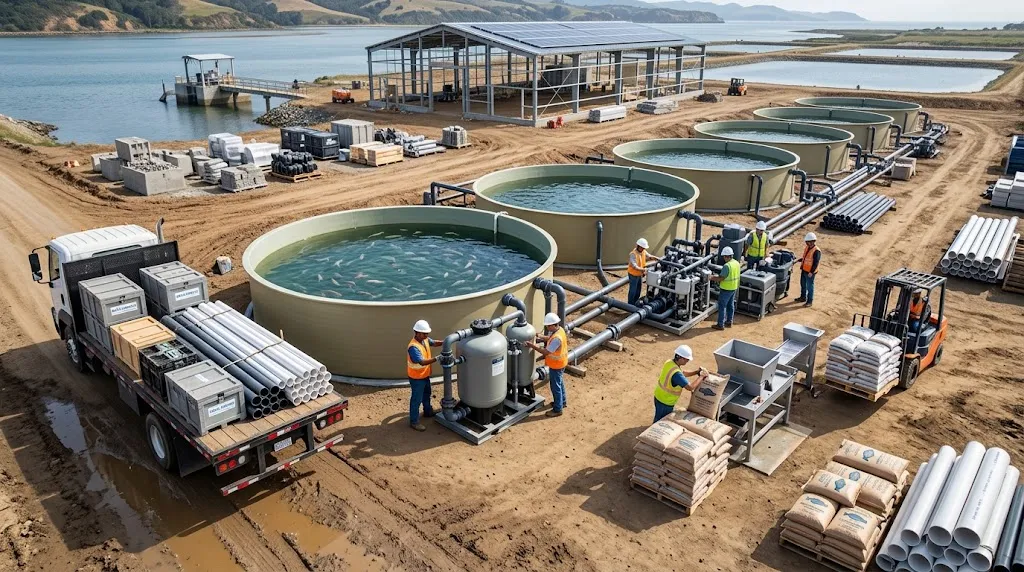
Aquaculture project sourcing is the process of finding and purchasing the products, equipment, materials, and professional services needed to develop and operate an aquaculture project.
Instead of purchasing supplies from multiple unverified vendors, buyers can use a structured sourcing process to identify specialized suppliers that meet their technical specifications, budget, delivery schedule, and production requirements.
For example, someone establishing a commercial tilapia farm may need fish tanks, water pumps, aeration equipment, filtration systems, fish feed, fingerlings, water quality testing kits, and installation services. Aquaculture project sourcing helps bring these requirements together through a coordinated procurement process.
Why is aquaculture sourcing important?
First, it helps buyers identify equipment that matches their farming systems. Different aquatic species require different environmental conditions, feeding methods, and water management practices.
Second, effective sourcing helps control project costs. Comparing supplier quotations, equipment specifications, shipping charges, and maintenance requirements can help buyers make informed purchasing decisions.
Third, sourcing improves supply chain coordination. When equipment, feed, tanks, and technical services arrive according to the project schedule, construction and installation are less likely to experience avoidable delays.
Finally, working with qualified suppliers can improve equipment reliability, operational safety, and access to after-sales support. A successful sourcing strategy considers the complete project lifecycle, from initial planning and facility construction to stocking, production, harvesting, and maintenance.
How to Find Reliable Aquaculture Equipment Suppliers
Finding reliable aquaculture equipment suppliers is one of the most important steps in developing a fish farming project. The right supplier should provide suitable products, clear technical information, dependable delivery, and support after installation.
Start by identifying the specific requirements of your project. Determine the species you intend to raise, the expected production capacity, the available water supply, and the type of farming system you plan to operate.
Next, search for suppliers specializing in your required equipment category. Some companies focus on fish farming tanks, while others manufacture water pumps, aerators, oxygenation systems, filtration equipment, or automated feeding machines.
- Product specialization: Does the supplier regularly provide equipment for your type of aquaculture project?
- Technical specifications: Are product dimensions, capacities, materials, and operating requirements clearly documented?
- Industry experience: Can the supplier provide relevant project references or examples of previous installations?
- Product quality: Are materials suitable for continuous operation in the intended freshwater or marine environment?
- Delivery capabilities: Can the supplier deliver the required products within your project timeline?
- Warranty and maintenance: Are replacement parts, repairs, and technical assistance available?
- Communication: Does the supplier respond clearly to technical questions and quotation requests?
Request detailed quotations from multiple suppliers before making a decision. Compare the complete offer rather than choosing solely on the lowest purchase price.
For specialized systems, it is also helpful to consult an aquaculture engineer or experienced farm manager. Their technical knowledge can help you avoid purchasing equipment that is unsuitable for your intended production capacity.
Types of Aquaculture Projects and Their Sourcing Requirements
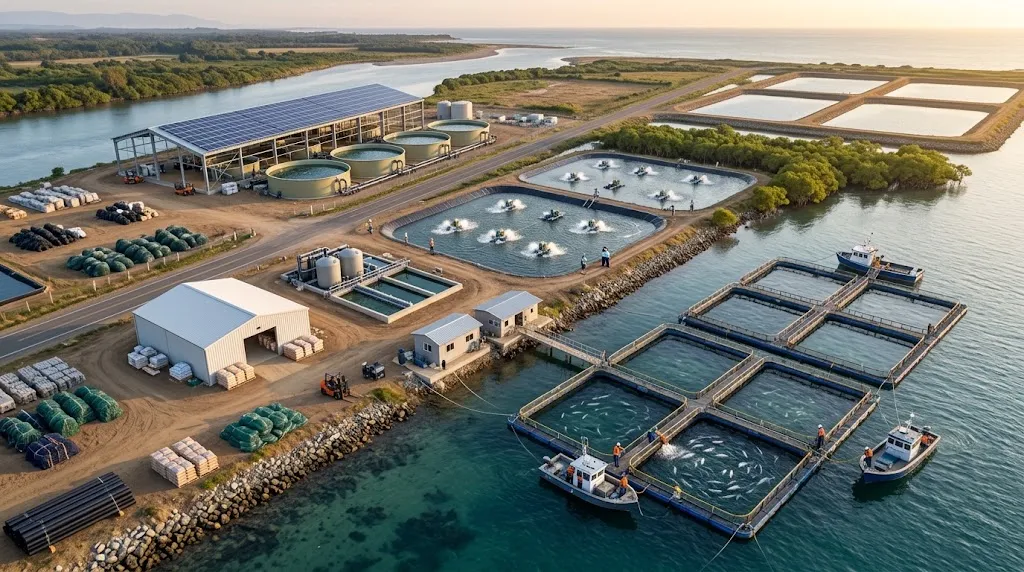
Different aquaculture projects require different equipment, supplies, and technical expertise. Understanding these differences helps buyers identify suppliers who can meet their specific operational needs.
Freshwater fish farming
Freshwater aquaculture commonly involves species such as tilapia, carp, and catfish. Depending on the production method, projects may require earthen ponds, concrete tanks, pond liners, water pumps, aerators, nets, fish feed, and water quality testing equipment.
Shrimp farming
Commercial shrimp farms need equipment and supplies designed for shrimp production. These may include lined ponds, paddlewheel aerators, water pumps, feeding systems, water testing kits, and suitable post-larvae from reputable hatcheries.
Marine aquaculture
Marine aquaculture involves cultivating aquatic species in seawater or suitable coastal environments. Common sourcing requirements include marine-grade cages, corrosion-resistant equipment, mooring systems, nets, monitoring equipment, and specialized feeds.
Fish hatchery projects
Hatcheries produce fish eggs, larvae, fry, and fingerlings for aquaculture farms. Their sourcing requirements may include incubation equipment, breeding tanks, larval rearing systems, water treatment units, oxygenation equipment, and specialized hatchery feeds.
Recirculating aquaculture systems
Recirculating aquaculture systems reuse treated water through mechanical filtration, biological filtration, and other water treatment processes. These projects often require tanks, drum filters, biofilters, pumps, oxygenation equipment, monitoring sensors, and backup systems.
Integrated aquaculture projects
Integrated projects combine aquaculture with other production activities, such as hydroponics in aquaponic systems. These facilities may need fish tanks, plant growing channels, nutrient management equipment, filtration systems, and automated monitoring technology.
Each project should have a sourcing plan based on species requirements, production targets, local environmental conditions, and available infrastructure.
Essential Aquaculture Equipment for Fish Farming Projects
Aquaculture equipment supports water circulation, oxygen supply, waste removal, feeding, and environmental monitoring. Selecting suitable equipment is essential for maintaining healthy aquatic animals and achieving consistent production.
The exact equipment list depends on the farming method, stocking density, species, and facility design.
- Water pumps: Water pumps move water between ponds, tanks, filtration units, and storage systems. Buyers should assess flow rate, pumping head, energy consumption, and compatibility with the water being handled.
- Aeration equipment: Paddlewheel aerators, diffused-air systems, and air blowers help maintain dissolved oxygen levels. Adequate oxygen supply is especially important in intensive fish farming systems.
- Filtration systems: Mechanical filters remove suspended solids, while biological filters support beneficial microorganisms that convert toxic ammonia into less harmful compounds.
- Feeding equipment: Automatic feeders and feeding systems help deliver feed at controlled intervals. Appropriate feeding equipment can improve consistency and reduce uneaten feed.
- Water quality monitoring devices: Dissolved oxygen meters, pH meters, temperature sensors, and ammonia testing kits help farmers monitor important water conditions.
- Backup equipment: Standby pumps, emergency aeration, backup generators, and alarm systems can help reduce the consequences of equipment failures.
When sourcing these products, buyers should confirm operating capacity, energy requirements, installation needs, maintenance intervals, and replacement part availability.
Equipment should be selected as part of a complete system rather than purchased as a collection of unrelated products. A pump, filter, and aerator must work together to meet the farm's actual production requirements.
How to Connect Aquaculture Buyers With Specialized Suppliers
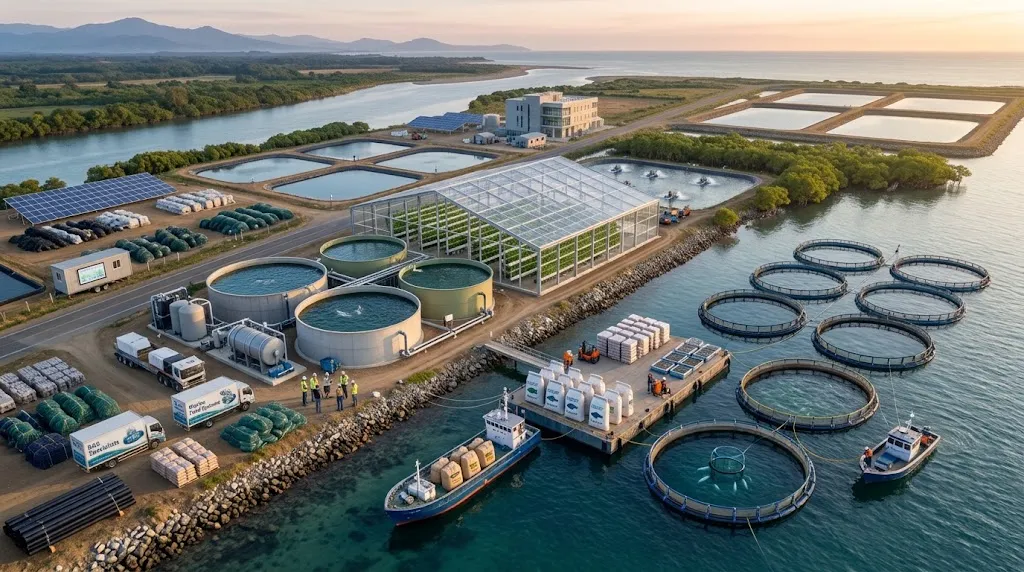
Connecting aquaculture buyers with specialized suppliers requires a clear understanding of project requirements, supplier capabilities, and procurement objectives.
The process becomes easier when buyers prepare a detailed project brief before contacting vendors.
Step 1: Define your project requirements.
Describe the farming system, target species, production capacity, location conditions, and equipment requirements. Include technical specifications wherever possible.
Step 2: Identify suitable supplier categories.
Depending on the project, you may need equipment manufacturers, fish hatcheries, aquaculture feed producers, water treatment specialists, engineering consultants, and installation contractors.
Step 3: Research potential suppliers.
Review company websites, product catalogues, technical documents, industry directories, and relevant project references. Check whether each supplier offers the specific products and services you require.
Step 4: Request quotations.
Send suppliers a consistent request for quotation (RFQ). Include quantities, technical requirements, delivery location, expected delivery dates, warranty requirements, and installation needs.
Step 5: Compare supplier proposals.
Evaluate price, technical suitability, product quality, delivery schedules, payment conditions, and after-sales support.
Step 6: Verify the supplier.
Check business details, references, product documentation, and relevant certifications. For substantial purchases, consider inspecting samples or arranging an independent technical review.
Step 7: Coordinate procurement and delivery.
Confirm the order specifications, shipping arrangements, installation responsibilities, and acceptance criteria before placing the order.
A structured process helps buyers reduce sourcing risks and build stronger relationships with suppliers. It also makes it easier to identify which suppliers are suitable for future expansion or additional aquaculture projects.
Top Aquaculture Products and Supplies for Commercial Fish Farms
Commercial fish farms require a consistent supply of equipment, feed, fish stock, and water management products. The most important supplies depend on the farming system and the species being raised.
- Fish farming tanks and pond liners: Tanks, pond liners, and tank accessories provide suitable environments for fish production and support efficient farm operations.
- Water pumps and circulation systems: Pumps, pipes, valves, and fittings maintain water movement and distribution throughout the farm.
- Aeration equipment: Paddlewheel aerators, air blowers, and diffusers increase dissolved oxygen levels and help maintain suitable aquatic conditions.
- Filtration systems: Mechanical filters remove suspended solids, while biological filters support beneficial microorganisms that convert toxic ammonia into less harmful compounds.
- Feeding equipment: Automatic feeders and feeding systems deliver feed at controlled intervals, improving feeding consistency and helping reduce uneaten feed.
- Water quality monitoring devices: Dissolved oxygen meters, pH meters, temperature sensors, and ammonia testing kits help farmers monitor water conditions and identify potential problems.
- Fish feed and stocking supplies: Commercial fish feed, shrimp feed, hatchery diets, healthy fingerlings, and fry support fish growth, development, and successful production.
- Harvesting, backup, and maintenance equipment: Fish nets, grading tools, weighing scales, backup generators, emergency pumps, alarm systems, and replacement parts help maintain reliable farm operations.
Buyers should also consider consumable supplies and replacement components when preparing their sourcing lists. Creating an inventory and replenishment schedule helps prevent shortages, while reliable suppliers can support consistent deliveries and efficient procurement.
Feed procurement deserves particular attention because feed quality, storage conditions, and feeding practices influence fish growth, production costs, feed conversion efficiency, and water quality.
Choosing the Right Fish Farming Systems for Your Project
Choosing the right fish farming system is a major decision because it affects infrastructure requirements, operating expenses, water management, and production capacity.
Buyers should evaluate several farming methods before sourcing equipment.
Pond aquaculture
Pond farming is commonly used for freshwater species such as tilapia and carp. It may require pond excavation, liners where appropriate, water inlets, drainage structures, aerators, and harvesting equipment.
Its suitability depends on land availability, soil conditions, water supply, climate, and environmental requirements.
Flow-through systems
Flow-through systems continuously or regularly introduce fresh water into fish-rearing units. They may be suitable where a dependable water supply is available and water discharge can be managed appropriately.
Pump capacity, water treatment, drainage, and discharge requirements should be evaluated during planning.
Recirculating aquaculture systems (RAS)
RAS facilities treat and reuse water, allowing production in controlled environments. They can reduce water demand compared with many flow-through arrangements, but they require careful management, reliable filtration, monitoring, and appropriate backup systems.
Cage aquaculture
Cage farming raises fish in net enclosures placed in suitable lakes, reservoirs, or marine environments. Sourcing requirements may include cages, nets, mooring equipment, feeding systems, and monitoring tools.
Site conditions, water movement, environmental impacts, permits, and escape prevention must be considered.
Aquaponics
Aquaponics combines aquaculture with hydroponic plant production. Water and nutrients from fish production support plant growth, while the system requires appropriate filtration and water management.
There is no single best farming system for every project. Buyers should choose a method based on local conditions, target species, available resources, technical expertise, and commercial objectives before purchasing equipment.
Aquaculture Tanks, Fish Hatcheries, Pumps, and Filtration Systems
Aquaculture tanks, hatchery equipment, pumps, and filtration systems are essential components of many modern fish farming facilities.
Because these components work together, their specifications should be coordinated during the design stage.
Aquaculture tanks
Fish tanks may be manufactured from fiberglass-reinforced plastic, high-density polyethylene (HDPE), concrete, or other suitable materials. Buyers should consider tank volume, structural strength, cleaning requirements, drainage design, and compatibility with the intended species.
Tank shape and water circulation also influence waste removal and maintenance.
Fish hatchery equipment
Hatcheries require equipment suited to breeding, incubation, hatching, and early-stage rearing. Depending on the species, this may include egg incubators, larval tanks, water conditioning units, oxygenation systems, and specialized feeding equipment.
Hatchery design should also consider quarantine, sanitation, and disease prevention.
Water pumps
Pump selection should be based on the required flow rate, total dynamic head, energy efficiency, and system layout. Pumps used in saltwater environments may require materials with suitable corrosion resistance.
Mechanical filtration
Mechanical filters remove suspended waste and uneaten feed from the water. Suitable filtration capacity depends on the system's biomass, feeding rate, particle characteristics, and water flow.
Biological filtration
Biofilters provide surfaces for beneficial microorganisms that help process ammonia produced by fish and decomposing organic matter. Their performance depends on factors such as oxygen availability, water chemistry, temperature, and biological loading.
Buyers should request system drawings, performance specifications, installation instructions, and maintenance schedules before purchasing major equipment.
For integrated systems, a qualified designer can help confirm that tanks, pumps, filters, and aeration equipment are appropriately sized and compatible.
How to Source Aquaculture Feed, Fish Fingerlings, and Hatchery Supplies
Aquaculture feed, fish fingerlings, and hatchery supplies directly affect production planning and animal health. Selecting suitable suppliers is therefore essential for both new and established farms.
Aquaculture feed
Fish and shrimp require diets that meet their nutritional needs at different life stages. Feed selection should consider species, size, protein and energy requirements, pellet size, feeding behavior, and the production system.
Buyers should request product specifications, feeding recommendations, batch information, storage instructions, and expiry details where applicable.
Feed should be stored under the conditions recommended by the manufacturer to maintain quality and reduce contamination or spoilage.
Fish fingerlings and fry
Fingerlings should come from reputable hatcheries with suitable production and health management practices. Buyers should confirm species identity, size, quantity, delivery conditions, and any available health documentation.
Transport arrangements should minimize stress and maintain appropriate water quality and oxygen levels.
Shrimp post-larvae
Shrimp farms should assess hatchery reliability, post-larvae quality, species or strain information, and health screening arrangements. The supplier should provide relevant documentation and handling guidance.
Hatchery supplies
Hatchery operations may require incubation equipment, live-feed production supplies, larval diets, water treatment materials, grading equipment, and sanitation products.
Before ordering, buyers should confirm that products are appropriate for the species and life stage being managed.
Biosecurity is especially important when introducing new aquatic animals or biological materials. Quarantine, health checks, traceability, and careful transport can help reduce the risk of introducing disease into a facility.
Reliable sourcing should prioritize quality and animal health rather than focusing only on the lowest purchase price.
Key Factors to Consider When Selecting Aquaculture Suppliers
Choosing the right aquaculture supplier requires more than comparing product prices. Buyers should assess whether a company can provide suitable products, dependable service, and the technical support needed for successful project operation.
- Product quality and suitability: Confirm that equipment and materials meet the technical requirements of the project. Check construction materials, operating capacity, product documentation, and environmental compatibility.
- Supplier experience: Look for suppliers with experience in the relevant aquaculture sector, whether it involves freshwater fish, shrimp, marine species, hatcheries, or RAS facilities.
- Pricing transparency: Request a detailed quotation that identifies product prices, quantities, shipping charges, installation fees, taxes, and any other applicable costs.
- Delivery reliability: Confirm production lead times, shipping arrangements, delivery conditions, and procedures for handling delays or damaged goods.
- Technical support: Evaluate whether the supplier provides installation guidance, troubleshooting assistance, maintenance instructions, and replacement parts.
- Warranty terms: Understand warranty coverage, exclusions, claim procedures, and the availability of repair services.
- Compliance and documentation: Check applicable product standards, import requirements, environmental regulations, and certifications relevant to the project and destination market.
- Communication and accountability: Choose suppliers that answer questions clearly, provide written commitments, and maintain accurate order records.
For expensive or technically complex systems, buyers should also evaluate the supplier's ability to provide commissioning, staff training, and ongoing maintenance.
A dependable supplier relationship can reduce procurement uncertainty and make it easier to maintain consistent operating standards as the farm grows.
Aquaculture Project Planning, Budgeting, and Cost Estimation
Aquaculture project planning and budgeting help buyers estimate the investment required to establish and operate a commercial fish farm. A complete budget should account for infrastructure, equipment, fish stock, feed, installation, and ongoing operating expenses.
- Land and infrastructure: Site preparation, pond construction, building work, drainage systems, water storage, electrical connections, and access roads.
- Aquaculture equipment: Fish tanks, water pumps, aerators, filtration systems, automatic feeders, water treatment units, monitoring sensors, and backup equipment.
- Initial fish stock: Fish fingerlings, shrimp post-larvae, hatchery materials, transportation, and acclimation expenses.
- Feed and consumables: Commercial fish feed, shrimp feed, water testing kits, sanitation supplies, and other routine consumables.
- Installation and technical services: Engineering, system design, equipment installation, testing, commissioning, and employee training.
- Operating expenses: Electricity, water, labor, maintenance, spare parts, packaging, harvesting, and transportation.
- Contingency funds: Additional funds for unexpected expenses, equipment repairs, shipping delays, and project risks.
- Supplier and logistics costs: Supplier verification, freight charges, import duties where applicable, insurance, and delivery coordination.
When comparing supplier quotations, buyers should evaluate the total cost of ownership, including purchase price, energy consumption, maintenance requirements, spare parts, warranty coverage, and technical support.
Accurate cost estimation also requires realistic assumptions about stocking density, fish survival rates, growth cycles, feed conversion ratios, and expected market prices. Comparing these factors helps buyers assess financial feasibility, manage procurement budgets, and make informed investment decisions before starting an aquaculture project.
Sustainable Aquaculture Solutions and Recirculating Aquaculture Systems (RAS)
Sustainable aquaculture aims to produce aquatic food responsibly while managing environmental impacts, animal health, resource use, and long-term economic viability.
Sustainability should be considered during sourcing rather than added after the farm has been constructed.
Buyers can evaluate suppliers based on energy efficiency, water management capabilities, equipment durability, waste handling, and the availability of environmentally responsible products.
Recirculating aquaculture systems (RAS) are one option for farms that need greater control over water quality and production conditions. These systems circulate water through treatment components, including mechanical and biological filters.
Depending on their design and management, RAS facilities can reduce water use compared with some conventional systems. However, they require careful monitoring, reliable electricity, regular maintenance, and effective biosecurity.
Sourcing decisions for RAS projects should consider:
- Mechanical filtration for removing suspended solids.
- Biological filtration for processing dissolved nitrogenous waste.
- Oxygenation and aeration equipment.
- Water quality sensors and monitoring systems.
- Energy-efficient pumps and appropriate pipework.
- Emergency aeration and backup power arrangements.
- Sludge management and wastewater treatment.
- Quarantine and sanitation facilities.
Other sustainable aquaculture practices include reducing feed waste, selecting appropriate stocking densities, monitoring water quality, and managing effluent responsibly.
Suppliers should provide accurate performance specifications rather than relying on broad claims about sustainability.
The right combination of equipment and responsible management can help aquaculture businesses improve resource efficiency while maintaining appropriate conditions for aquatic animals.
Wholesale Aquaculture Supplies and Bulk Purchasing Options
Wholesale aquaculture supplies can help commercial farms, hatcheries, distributors, and large aquaculture projects purchase products in larger quantities.
Bulk purchasing may reduce unit costs, simplify procurement, and improve supply planning. However, the benefits depend on order size, storage capacity, supplier reliability, and actual consumption.
Common wholesale aquaculture products include fish feed, pond liners, aeration equipment, water pumps, pipes, filters, nets, water testing supplies, and selected hatchery materials.
Before placing a bulk order, buyers should assess their expected demand and available storage space.
For example, purchasing large quantities of fish feed may be economical only when the farm can store it properly and use it before its quality deteriorates. Similarly, ordering large numbers of pumps or filtration components may create unnecessary costs if the project design changes.
To improve wholesale purchasing decisions:
- Request volume-based quotations from multiple suppliers.
- Confirm minimum order quantities and production lead times.
- Compare shipping and handling costs.
- Check product specifications and batch consistency.
- Review payment conditions and return policies.
- Confirm the availability of replacement parts.
- Plan deliveries around the project schedule.
- Evaluate supplier capacity for repeat orders.
International sourcing may provide access to specialized products that are unavailable locally. However, buyers should account for freight charges, customs duties, import permits, exchange-rate changes, and potential delivery delays.
A well-planned bulk purchasing strategy balances price savings with product quality, storage requirements, and supply chain reliability.
Aquaculture Supplier Verification, Product Quality, and Certifications
Supplier verification is an essential part of aquaculture project sourcing because equipment failures, unsuitable products, or poor-quality biological materials can create significant operational problems.
Before placing an order, buyers should verify the supplier's business information, technical capabilities, product specifications, and relevant documentation.
Start by confirming the company's legal identity and contact information. For major projects, request references from previous customers and investigate whether the supplier has completed comparable installations.
Product quality checks
Review product datasheets, materials, dimensions, capacity ratings, installation instructions, and maintenance requirements.
For critical equipment, consider independent inspections, sample testing, or technical approval before shipment.
Certification and compliance
The certifications required depend on the product, country, and intended use. Electrical equipment may need to meet applicable electrical safety requirements, while materials used in contact with aquatic animals or drinking-quality water may be subject to specific suitability requirements.
Food safety, environmental, and aquaculture certifications may also be relevant to certain operations or markets.
For example, the Aquaculture Stewardship Council (ASC) and Best Aquaculture Practices (BAP) programs are relevant to certain aquaculture production and supply chain contexts. Their applicability depends on the operation, product, and certification scope.
Buyers should verify the current status, scope, and issuing organization of any certificate rather than relying on a logo or unsupported supplier claim.
Feed and fish health documentation
Feed buyers should review product specifications, traceability information, and applicable safety documentation.
When sourcing fingerlings or shrimp post-larvae, request appropriate health records and verify any applicable movement or import requirements.
Contract and delivery verification
Purchase agreements should clearly identify the product, quantity, specifications, delivery schedule, warranty, payment terms, and procedures for addressing defective or nonconforming goods.
These checks help buyers reduce sourcing risks and establish transparent relationships with qualified aquaculture suppliers.
How Aquaculture Project Sourcing Simplifies Procurement and Supplier Partnerships
Aquaculture project sourcing simplifies procurement by bringing project requirements, supplier evaluation, purchasing decisions, and delivery coordination into one organized process.
Without a structured approach, buyers may need to contact many vendors independently, compare inconsistent quotations, and coordinate equipment that may not work together.
A coordinated sourcing strategy makes it easier to identify suitable suppliers, standardize product specifications, and track purchasing decisions.
For example, a new commercial fish farm may need tanks, water pumps, filtration systems, aerators, feed, fingerlings, and water testing equipment. By preparing a complete procurement schedule, the buyer can identify which products must arrive first and which items depend on the installation of other components.
- Better supplier coordination: Buyers can organize orders around project milestones and reduce avoidable scheduling conflicts.
- Improved cost visibility: Standardized quotations help compare product prices, shipping charges, installation costs, and maintenance expenses.
- More consistent quality: Clear specifications and supplier verification procedures help reduce the risk of receiving unsuitable products.
- Reduced procurement delays: Advance planning helps identify long-lead-time equipment and essential replacement components.
- Stronger supplier relationships: Clear communication, accurate documentation, and realistic delivery schedules encourage long-term cooperation.
- Easier project expansion: Maintaining supplier records makes it easier to source additional equipment, consumables, and technical services as production increases.
Supplier partnerships should continue after the initial purchase. Regular performance reviews, maintenance planning, warranty management, and feedback can help buyers improve procurement decisions over time.
For complex projects, working with experienced aquaculture engineers, equipment specialists, and qualified suppliers can help ensure that the selected products meet the facility's design and operational requirements.
Ultimately, successful aquaculture project sourcing is about more than finding products at competitive prices. It is about building a reliable supply chain that supports efficient production, responsible resource management, and long-term business growth.
Conclusion
Aquaculture project sourcing plays an important role in connecting buyers with specialized suppliers for fish farming, shrimp farming, hatchery development, and commercial aquaculture facilities.
By identifying project requirements, evaluating suppliers, comparing quotations, and verifying product quality, buyers can make better purchasing decisions and reduce avoidable procurement risks.
From aquaculture tanks and filtration systems to fish feed, fingerlings, pumps, and sustainable production technologies, every sourcing decision should support the project's technical requirements and long-term objectives.
A successful sourcing strategy also considers budgeting, delivery schedules, biosecurity, maintenance, and supplier relationships. These elements help create a more organized procurement process and support reliable farm operations.
Whether you are developing a small fish farm or a large commercial aquaculture facility, connecting with the right specialized suppliers can help turn your project plans into a practical, efficient, and sustainable aquaculture operation.
[ Ready to Start Your Aquaculture Project ]
Frequently Asked Questions
1. What should I check before selecting an aquaculture supplier?
Verify business credentials, product quality, technical specifications, relevant certifications, customer references, delivery capabilities, and warranty conditions.
2. Are sustainable aquaculture systems worth investing in?
They can improve resource efficiency and environmental management, but suitability depends on investment costs, operating conditions, and effective system management.
3. How do I find reliable aquaculture equipment suppliers?
Research specialized suppliers, compare quotations, verify certifications, review customer references, and evaluate warranties and technical support.
4. What equipment is needed for a fish farming project?
Common equipment includes fish tanks, water pumps, aerators, filtration systems, feeders, monitoring devices, and backup power systems.
5. What products do aquaculture suppliers provide?
Suppliers provide tanks, pumps, filters, fish feed, fingerlings, hatchery equipment, aerators, water testing kits, and harvesting tools.
6. How do I choose the right aquaculture system?
Consider your target species, production capacity, available water, land, budget, technical expertise, and environmental requirements.
7. What is a recirculating aquaculture system (RAS)?
RAS is a fish farming system that treats and reuses water through filtration, biological treatment, and water quality management.
8. How can I compare aquaculture supplier quotations?
Compare product specifications, prices, shipping, installation, warranties, energy consumption, delivery schedules, and after-sales support.
9. What factors affect aquaculture project costs?
Costs depend on infrastructure, equipment, fish stock, feed, labor, utilities, transportation, installation, maintenance, and regulatory requirements.
10. Can I buy aquaculture supplies wholesale?
Yes. Many suppliers offer bulk purchasing options for feed, pumps, filters, tanks, pipes, and other commercial aquaculture products.
11. How do I source healthy fish fingerlings?
Choose reputable hatcheries, verify species and health documentation, confirm delivery conditions, and follow appropriate quarantine and biosecurity practices.