

Aquaculture Supply Planning: Equipment & Systems
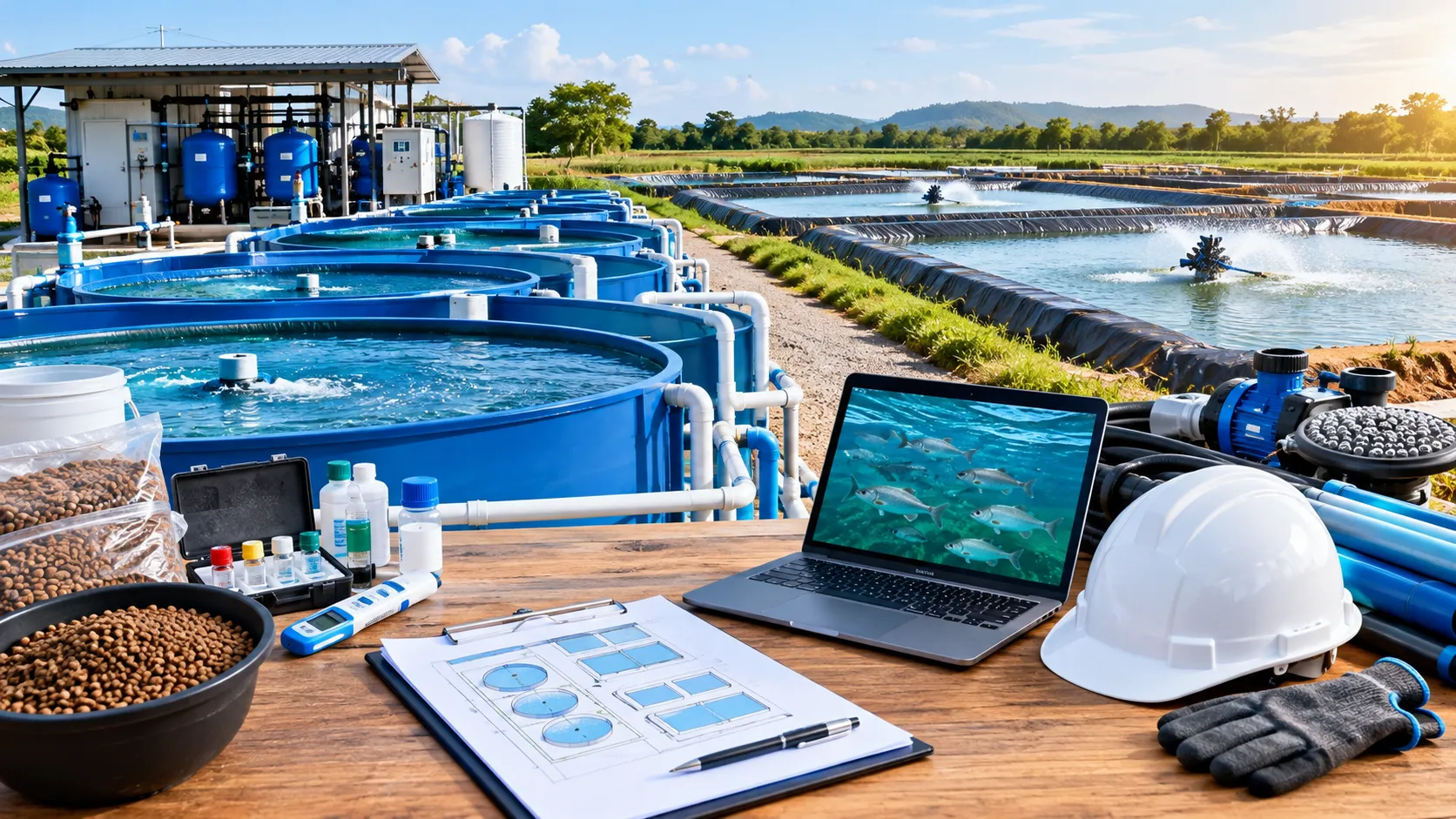
Aquaculture is one of the most important methods of producing fish, shrimp, and other aquatic organisms for food and commercial purposes. As global demand for seafood continues to grow, fish farmers need reliable equipment, efficient farming systems, and well-organized supply chains to operate successfully. Proper aquaculture supply planning helps farmers select the right equipment, maintain healthy water conditions, reduce operating costs, and improve production efficiency.
Whether you are starting a small fish farm, developing a commercial fish hatchery, or investing in a Recirculating Aquaculture System (RAS), understanding your project requirements is essential. Every aquaculture project requires careful planning of water resources, tanks or ponds, filtration equipment, aeration systems, fish feed, monitoring tools, and biosecurity supplies.
A well-designed aquaculture operation also depends on selecting suitable fish species, estimating production capacity, evaluating equipment suppliers, and preparing a realistic budget. Without proper planning, farmers may experience poor water quality, slow fish growth, equipment failures, disease outbreaks, and unexpected expenses.
[ Plan Your Aquaculture Project ]
What Is Aquaculture Supply Planning and Why Is It Important?
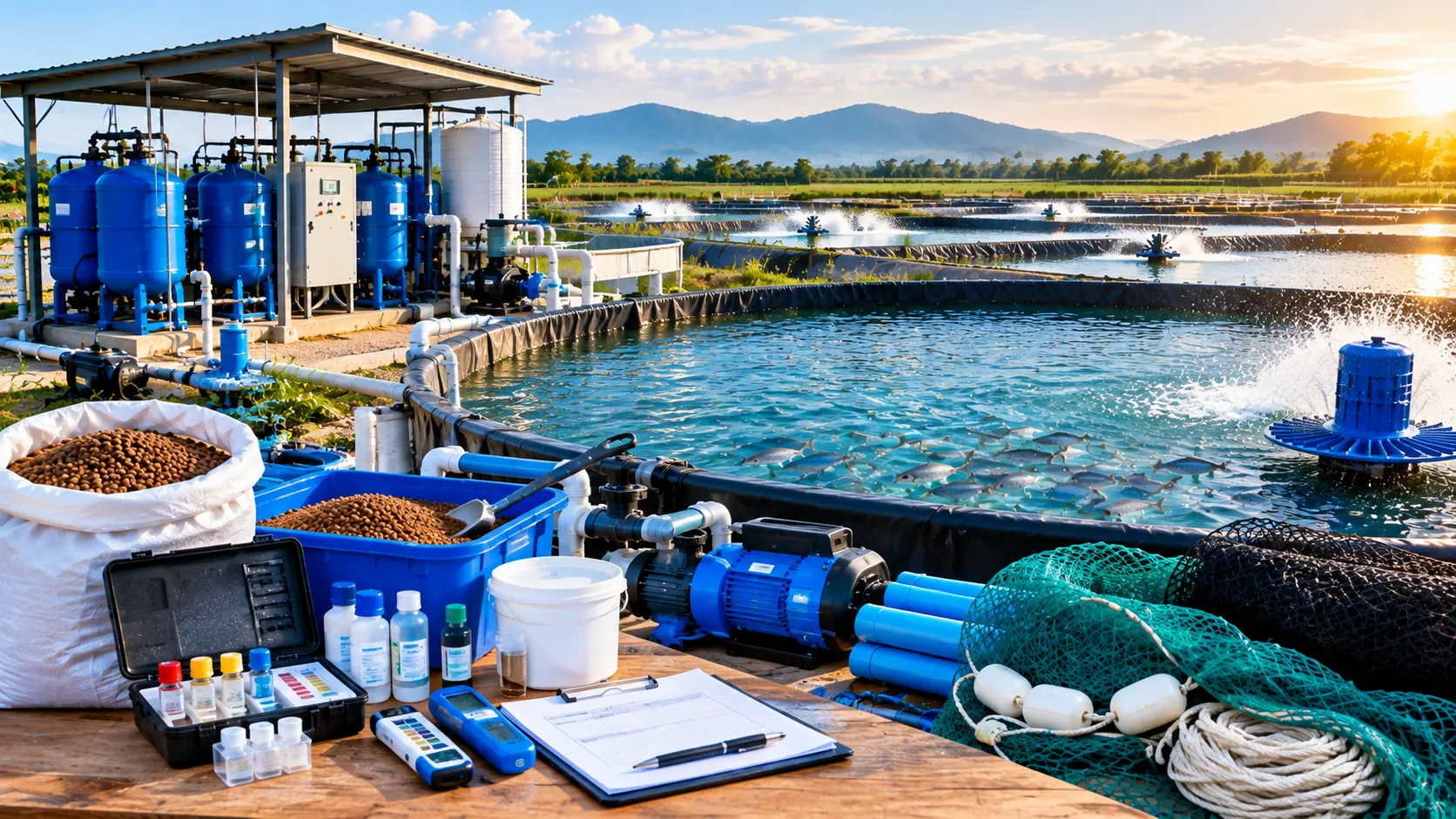
Aquaculture supply planning involves selecting, purchasing, and managing the equipment, materials, and resources needed to operate a fish or shrimp farm. It includes tanks, water pumps, aerators, fish feed, fingerlings, water quality testing kits, and backup power systems.
Effective planning ensures the right equipment is available within budget and supports efficient farm operations. For example, tilapia farms need reliable aeration and feeding systems, while shrimp farms may require salinity monitoring equipment and specialized aeration.
Why Is Aquaculture Supply Planning Important?
1. Better Production Efficiency: Appropriate equipment helps farmers maintain suitable growing conditions and manage fish populations more effectively.
2. Improved Water Quality: Proper filtration, aeration, and monitoring systems help control dissolved oxygen, ammonia, pH, and other important water parameters.
3. Lower Operating Costs: Planning purchases in advance can reduce emergency orders, unnecessary equipment purchases, and avoidable downtime.
4. Better Fish Health: Reliable water treatment and biosecurity supplies help reduce environmental stress and the risk of disease.
5. Easier Farm Expansion: Selecting scalable equipment makes it easier to increase production when market demand grows.
6. More Predictable Project Costs: A detailed supply plan helps estimate initial investment, installation expenses, recurring costs, and maintenance requirements.
Aquaculture planning should begin with a feasibility study. Farmers need to evaluate water availability, electricity, land conditions, local regulations, market demand, and the biological requirements of their chosen species.
The objective is not simply to purchase equipment. It is to build an integrated production system in which every component supports fish health, operational reliability, and long-term profitability.
Essential Aquaculture Equipment for Fish Farming
Aquaculture equipment supports daily farming activities, including water circulation, oxygen delivery, feeding, waste management, fish handling, and environmental monitoring. The equipment required depends on the farming method, species, production scale, and local climate. However, most commercial fish farms need several essential categories of equipment.
Fish Tanks and Pond Infrastructure
Fish tanks, earthen ponds, lined ponds, and raceways provide the primary growing environment. Their size, depth, construction materials, and drainage arrangements should match the species and planned stocking density.
Water Pumps
Water pumps move water between tanks, filtration units, reservoirs, and drainage systems. Their capacity should account for required flow rates, total pumping head, pipe friction, and the resistance created by filters.
Aeration Equipment
Paddlewheel aerators, air blowers, diffusers, and other oxygenation devices help maintain adequate dissolved oxygen. Equipment selection depends on stocking density, water depth, species requirements, and system design.
Filtration Equipment
Mechanical filters remove suspended solids, while biological filters support microorganisms that convert toxic ammonia into less harmful compounds through nitrification.
Feeding Equipment
Automatic feeders, feeding trays, feed storage containers, and weighing equipment help farmers distribute feed consistently and monitor consumption.
Water Quality Testing Supplies
Testing kits and digital meters are used to monitor dissolved oxygen, pH, temperature, ammonia, nitrite, nitrate, and alkalinity. Salinity and other measurements may also be necessary for marine and brackish-water farms.
Fish Handling Equipment
Nets, grading equipment, weighing scales, harvest containers, and transport tanks help farmers move fish while reducing injury and stress.
Backup Power and Safety Equipment
Backup generators, electrical protection, alarms, spare pumps, and emergency aeration supplies help protect fish during power failures and equipment breakdowns.
Before purchasing any equipment, prepare a list of essential, optional, and emergency items. Compare the capacity, energy consumption, durability, spare-parts availability, and warranty of each product.
[ Find the Right Aquaculture Equipment ]
Types of Aquaculture Systems for Different Farming Needs
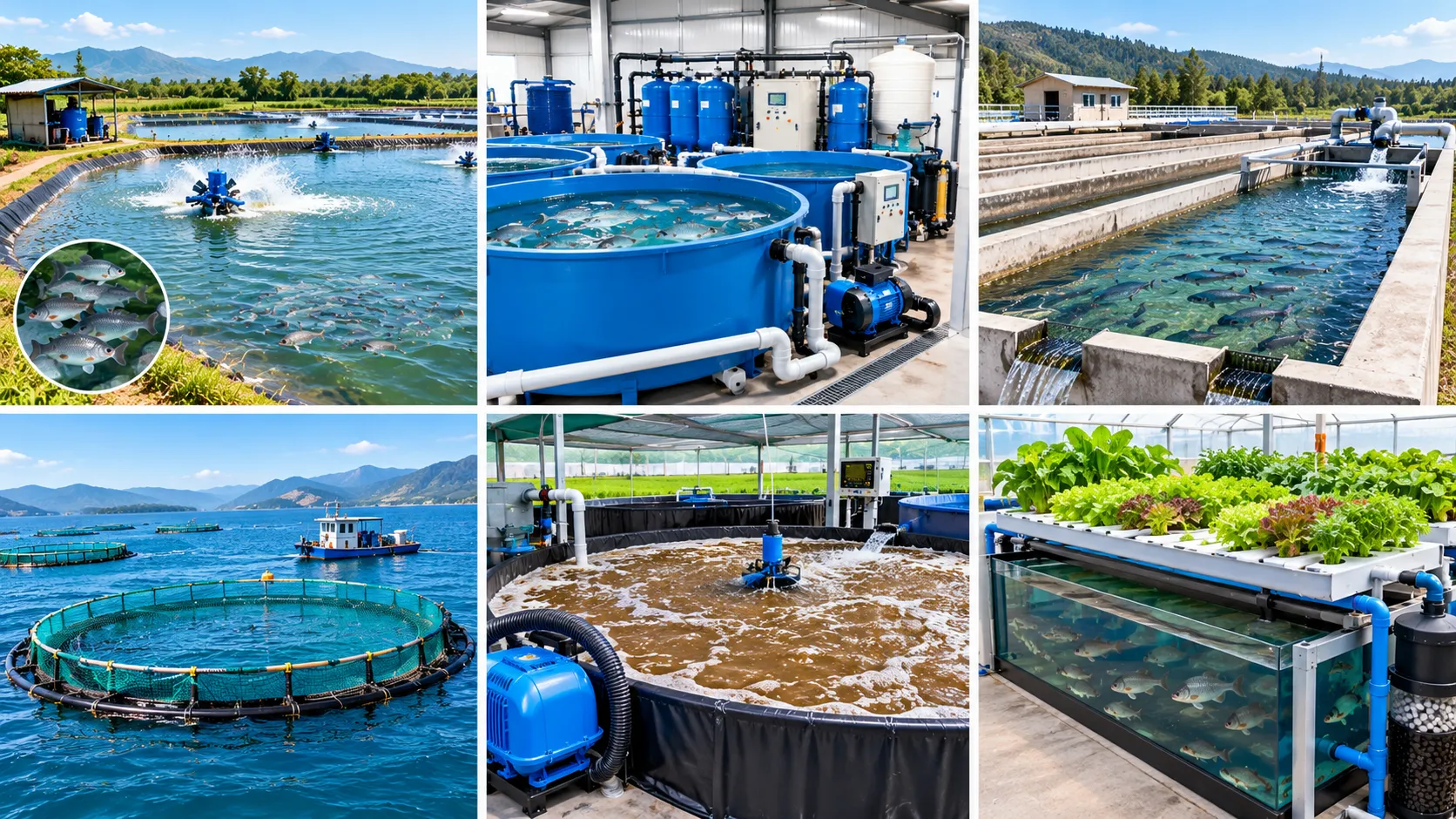
Choosing the right aquaculture system is one of the most important decisions in supply planning. Different systems have different requirements for water use, land, equipment, energy, filtration, and daily management.
The best option depends on the fish species, production targets, available resources, environmental conditions, and investment budget.
1. Pond Aquaculture Systems
Pond aquaculture is a common method of raising freshwater fish in natural or constructed ponds. Farmers may use earthen ponds, lined ponds, or concrete ponds depending on soil conditions and water availability.
Commonly farmed species include tilapia, carp, and catfish. Essential supplies may include pond liners, inlet and outlet structures, aerators, feeding equipment, water testing kits, and harvesting nets.
Pond systems can be suitable for farmers with sufficient land and reliable water supplies. However, water quality, seasonal temperature changes, predators, and waste accumulation require regular management.
2. Recirculating Aquaculture Systems (RAS)
A Recirculating Aquaculture System reuses water by passing it through treatment equipment before returning it to the fish tanks. A typical RAS installation may include mechanical filtration, biological filtration, pumps, aeration or oxygenation equipment, monitoring sensors, and waste removal systems.
RAS technology can reduce water consumption and provide greater control over the growing environment. It is used for species such as tilapia, trout, and other fish that can be raised under appropriately designed conditions.
However, RAS facilities require reliable electricity, technical expertise, careful water quality management, and backup systems. Their capital and operating costs can be higher than those of simpler pond systems.
3. Flow-Through Aquaculture Systems
Flow-through systems continuously supply fresh water to fish tanks or raceways and discharge the used water after it passes through the production area.
These systems may be appropriate for trout farms and other operations with sufficient clean water. Pumps, channels, screens, oxygenation equipment, and wastewater management infrastructure may be required.
Water availability and discharge regulations are major considerations because these systems can consume substantial quantities of water.
4. Cage Aquaculture Systems
Cage aquaculture involves raising fish in floating or submerged enclosures placed in lakes, reservoirs, or marine environments.
Equipment requirements can include cages, nets, mooring systems, feeding equipment, navigation or safety supplies, and water quality monitoring instruments.
Farmers must consider currents, water depth, storm exposure, net maintenance, fish escapes, and environmental impacts before installing cages.
5. Biofloc Aquaculture Systems
Biofloc technology uses managed microbial communities to help process organic waste and recycle certain nutrients within the culture water. It is used in some intensive tilapia and shrimp farming operations.
Biofloc facilities generally require suitable tanks or lined ponds, strong aeration, water quality monitoring equipment, and careful feed and solids management.
Because biofloc systems depend on active microbial processes, oxygen shortages and poor management can quickly affect water quality.
6. Aquaponics Systems
Aquaponics combines aquaculture with hydroponic plant production. Nutrients generated by fish waste support plant growth after appropriate biological processing.
These systems may require fish tanks, solids filtration, biofilters, water pumps, grow beds, plumbing, and monitoring equipment for both fish and plants.
Aquaponics can support integrated food production, but fish health and plant nutrient requirements must be balanced.
Fish Tanks, Ponds, and Aquaculture Tank Setup Requirements
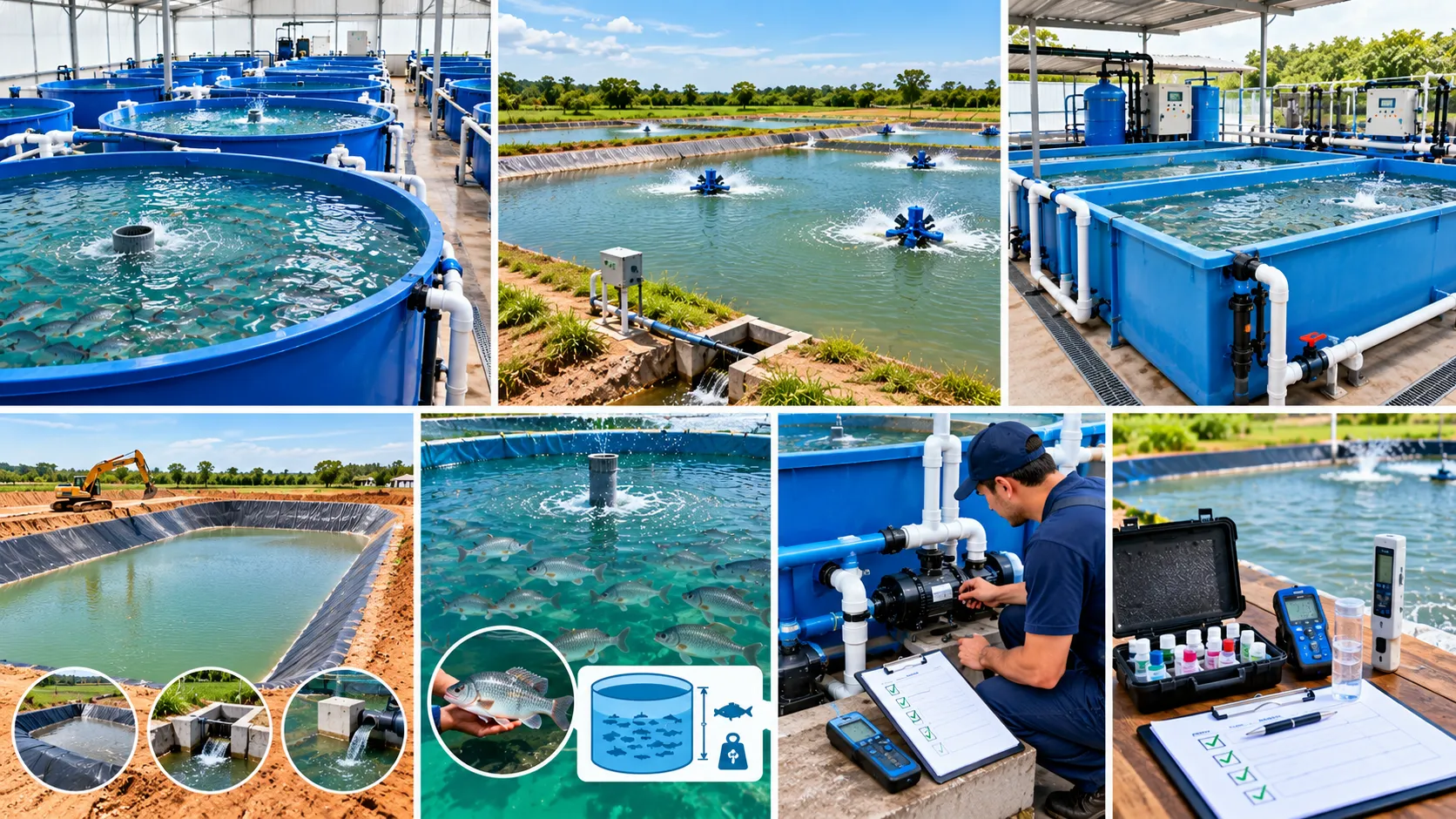
Fish tanks and ponds form the foundation of an aquaculture project. Their design directly affects water quality, fish behavior, stocking capacity, cleaning efficiency, and harvesting operations.
Before selecting a tank or constructing a pond, determine the species, expected fish size, production cycle, stocking density, water supply, and planned harvest volume.
Choosing Aquaculture Tanks
Commercial fish tanks may be manufactured from fiberglass, polyethylene, high-density polyethylene (HDPE), concrete, or other materials suitable for aquatic environments.
Circular tanks can support useful water circulation patterns and may help direct solids toward a central drain when designed correctly. Rectangular tanks can make efficient use of available space but require careful consideration of water movement and waste collection.
Tank selection should account for:
- Total water volume and operating depth.
- Structural strength and resistance to corrosion.
- Drainage and emergency overflow arrangements.
- Compatibility with filtration and pumping systems.
- Accessibility for feeding, inspection, and harvesting.
- Cleaning requirements and expected service life.
Pond Construction Requirements
Ponds require appropriate site preparation, soil conditions, water retention, inlet and outlet structures, drainage, and access for equipment.
Earthen ponds may be economical where suitable soil and land are available. Lined ponds can help control seepage in locations where natural soil conditions are unsuitable.
Pond design should also address flooding, erosion, predators, water exchange, and the safe management of accumulated sludge.
Stocking Density and Tank Capacity
Stocking density describes the quantity or biomass of fish held within a given volume of water or pond area. Appropriate stocking levels depend on species, fish size, oxygen supply, filtration capacity, water exchange, feeding rates, and the farmer's management skills.
For example, a tank that can physically hold 10,000 liters of water is not automatically capable of supporting a particular number of fish. Its actual production capacity depends on the complete system's ability to supply oxygen and process waste.
Tank Setup Checklist
Before introducing fish, verify that tanks are clean, pipes are connected correctly, drains function properly, pumps operate reliably, and aeration is adequate. Test the water and confirm that temperature, pH, and other relevant parameters are suitable for the species.
Run the system before stocking and check for leaks, flow restrictions, and equipment failures. This commissioning process helps identify problems before fish are exposed to them.
Water Filtration and Treatment Systems for Aquaculture
Water filtration and treatment are essential for maintaining a healthy aquatic environment, especially in intensive fish farming and recirculating aquaculture systems.
Fish release metabolic waste, while uneaten feed and fecal material contribute additional organic matter. Without suitable treatment, these materials can degrade water quality and increase the risk of fish stress or mortality.
Mechanical Filtration
Mechanical filters remove suspended solids from the water. Common options include screen filters, drum filters, settling chambers, and appropriately designed sedimentation units.
The correct filter depends on flow rate, particle size, waste production, cleaning requirements, and the desired water quality.
Removing solids promptly can reduce the organic load entering biological filters and help maintain system performance.
Biological Filtration
Biological filters support beneficial microorganisms that convert ammonia into nitrite and then nitrate through nitrification.
Ammonia is produced primarily through fish metabolism and the decomposition of organic waste. Both ammonia and nitrite can harm fish, so biological filtration must be established and managed properly.
Moving bed biofilm reactors (MBBRs), trickling filters, and submerged biofilters are among the technologies used in aquaculture.
Biological filter sizing should consider expected feed input, ammonia production, temperature, pH, alkalinity, oxygen availability, and the performance characteristics of the filter media.
Water Disinfection and Treatment
Some farms use ultraviolet (UV) disinfection or other validated treatment methods to reduce certain pathogens in water. UV systems require appropriate flow rates, suitable water clarity, and correct equipment sizing.
Water treatment may also involve aeration, degassing, source-water conditioning, or salinity adjustment, depending on the project.
Disinfection does not replace effective filtration, sanitation, or biosecurity practices.
Aquaculture Water Treatment Supplies
Common supplies include filter media, replacement screens, cleaning tools, water conditioning materials, and monitoring equipment. Chemicals should be selected and used according to their intended purpose, product instructions, species sensitivity, and applicable regulations.
A complete water treatment plan should define routine inspections, filter cleaning schedules, waste removal procedures, and contingency measures for treatment failures.
Aeration and Oxygenation Equipment for Fish Farms
Dissolved oxygen is essential for fish health, growth, and survival. Low oxygen levels can cause stress, reduce feeding, slow growth, and lead to fish deaths.
Common Aeration Equipment
- Paddlewheel aerators: Improve water circulation and oxygen transfer in ponds.
- Air blowers and diffusers: Supply air to tanks and ponds.
- Surface aerators: Increase oxygen transfer by creating water movement.
- Oxygen injection systems: Provide additional oxygen for intensive aquaculture systems.
How to Select an Aeration System
Choose equipment based on fish biomass, feeding rates, water temperature, pond depth, oxygen demand, and energy consumption.
Backup Oxygen Supply
Use backup generators, standby aerators, emergency oxygen supplies, and alarms to reduce the risk of fish losses during power failures or equipment breakdowns. Regular inspections and emergency planning help maintain safe oxygen levels.
Water Quality Monitoring Equipment and Testing Supplies
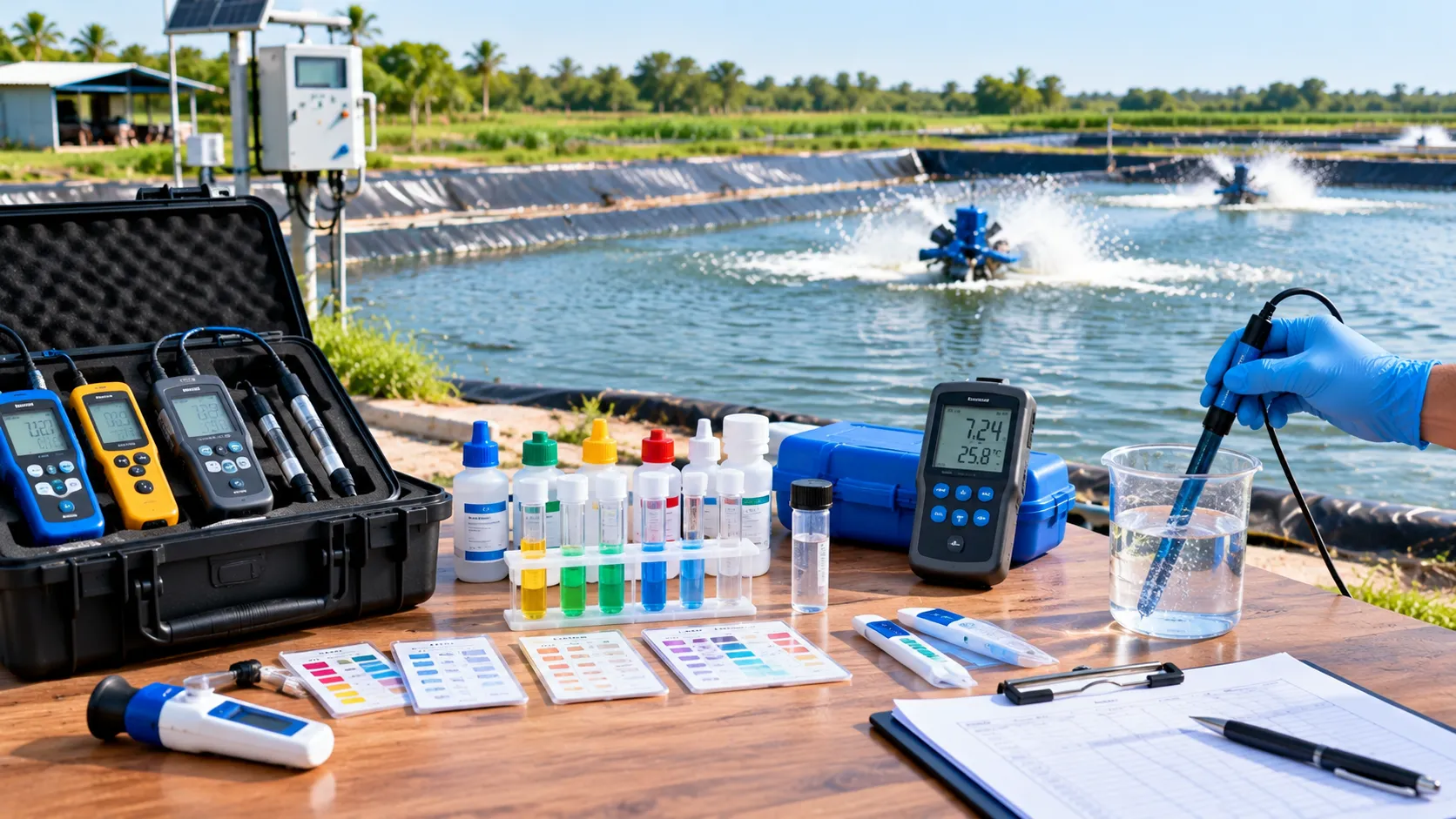
Water quality monitoring helps farmers identify problems before they become serious. Regular measurements support decisions about feeding, water exchange, filtration, stocking, and disease prevention.
The correct monitoring equipment depends on the species, farming system, water source, and production intensity.
Essential Water Quality Parameters
| Parameter | Why It Matters | Common Monitoring Equipment |
| Dissolved oxygen | Supports fish respiration and biological filtration | Dissolved oxygen meter |
| Temperature | Affects fish metabolism, growth, and oxygen availability | Digital thermometer or temperature sensor |
| pH | Influences fish health and ammonia toxicity | pH meter or test kit |
| Total ammonia nitrogen (TAN) | Helps identify nitrogen waste accumulation | Ammonia test kit or suitable analyzer |
| Nitrite | Can interfere with oxygen transport in fish | Nitrite test kit |
| Nitrate | Indicates nitrogen accumulation in many systems | Nitrate test kit |
| Alkalinity | Helps stabilize pH and supports nitrification | Alkalinity test kit |
| Salinity | Important for marine and brackish-water species | Salinity meter or refractometer |
Ammonia levels require careful monitoring because toxic NH₃ becomes more dangerous as pH and temperature increase.
Manual and Digital Testing Equipment
Manual test kits are affordable for small farms, while digital meters provide quick readings but require regular calibration and maintenance. Larger farms may use continuous sensors and automated alarms.
Choose equipment based on accuracy, durability, calibration needs, replacement costs, and spare parts availability.
Create a Water Quality Monitoring Schedule
Monitor water according to the farming system and production intensity. Record test results, corrective actions, and inspection dates to identify trends and respond quickly to abnormal readings.
Aquaculture Pumps, Pipes, and Water Circulation Systems
Aquaculture pumps, pipes, and circulation systems move water between tanks, ponds, filters, and treatment units. They help maintain water quality, remove waste, and support healthy fish growth.
Choosing the Right Aquaculture Pump
Common pump types include centrifugal, submersible, and self-priming pumps. Select a pump based on:
- Required water flow rate and total head.
- Energy efficiency and operating costs.
- Freshwater or saltwater compatibility.
- Maintenance needs and spare-parts availability.
Aquaculture Pipes and Fittings
PVC and HDPE pipes are commonly used for water distribution. Valves, elbows, connectors, strainers, and flow meters help control water movement and simplify maintenance. Choose the correct pipe diameter to maintain efficient flow.
Water Circulation and System Reliability
Proper circulation supports oxygen distribution, waste removal, and filtration. Farmers should regularly inspect pumps and pipes for leaks, blockages, and damage. Backup equipment and spare parts can help prevent costly interruptions.
Fish Feed, Feeding Equipment, and Nutrition Requirements
Fish feed is a major aquaculture expense that affects fish growth, water quality, and production costs. Supply planning should consider species, fish size, nutritional needs, and feeding frequency.
Types of Aquaculture Fish Feed
Common feed types include starter, nursery, grow-out, and broodstock feed. Choose suitable formulations based on species requirements, protein levels, pellet size, and product quality.
Feed Conversion Ratio and Feed Planning
Feed conversion ratio (FCR) measures feed used relative to biomass gained. For example, 1,200 kg of feed producing 1,000 kg of biomass gain results in an FCR of 1.2. Tracking feed use and fish growth helps improve efficiency and control costs.
Safe Feed Storage
Store feed in a clean, dry, well-ventilated area protected from moisture, pests, and sunlight. Check expiry dates and rotate stock to maintain feed quality and reduce waste.
Aquaculture Biosecurity Equipment and Disease Prevention Supplies
Biosecurity refers to the practices used to prevent pathogens from entering a farm, spreading between production units, or leaving the facility.
Disease prevention is particularly important in intensive aquaculture because fish share the same water environment, and certain pathogens can spread quickly under suitable conditions.
A biosecurity plan should cover incoming fish, equipment movement, visitors, staff hygiene, water sources, dead-fish handling, and waste disposal.
Essential Biosecurity Supplies
- Dedicated nets and equipment for individual tanks or production areas.
- Handwashing stations and suitable protective clothing.
- Footbaths or other appropriate entry hygiene arrangements.
- Cleaning tools and approved disinfection products.
- Quarantine tanks and separate water treatment arrangements.
- Dead-fish collection containers.
- Waste handling and disposal equipment.
- Recordkeeping supplies for fish movements and health observations.
Equipment should be selected according to the facility's risk assessment and the pathogens it needs to control.
Quarantine and Fish Health Monitoring
Incoming fish may introduce pathogens even when they appear healthy. A suitable quarantine process helps reduce the risk of introducing disease into established production units.
Quarantine arrangements should prevent direct contact and uncontrolled water exchange with existing stocks. Their duration and monitoring procedures should be based on the species, disease risks, supplier information, and relevant veterinary advice.
Staff should regularly inspect fish for abnormal swimming, skin lesions, reduced feeding, unusual mortality, and other signs of illness.
Cleaning and Disinfection
Cleaning removes organic material, while disinfection reduces susceptible microorganisms when an appropriate product is used correctly.
Surfaces and equipment should be cleaned before disinfection because organic material can reduce the effectiveness of some disinfectants.
Always follow product instructions, observe required contact times, and prevent harmful chemical exposure to live fish. Disinfectants should never be mixed unless the product instructions explicitly permit it.
Essential Supplies for Recirculating Aquaculture Systems (RAS)
RAS facilities reuse water through continuous filtration and treatment, helping reduce water consumption and support intensive fish production.
- Essential RAS Equipment: Fish tanks, mechanical filters, biological filters, water pumps, aerators, degassing systems, sensors, pipes, valves, and backup generators.
- Mechanical and Biological Filtration: Mechanical filters remove solid waste, while biological filters convert toxic ammonia into nitrite and then nitrate. Proper filter sizing helps maintain water quality.
- Degassing and Oxygenation: Oxygenation systems maintain dissolved oxygen, while degassing equipment removes excess carbon dioxide.
- Monitoring and Automation: Digital sensors measure dissolved oxygen, temperature, pH, and water flow. Alarms help detect problems early.
- Spare Parts and Maintenance: Keep spare pump seals, valves, sensor components, and filter materials available to reduce downtime.
- Emergency Preparedness: Prepare backup power, emergency oxygen supplies, and procedures for pump failures, oxygen shortages, and filtration problems.
- System Compatibility: Select equipment according to fish species, stocking density, feed input, water quality requirements, and production capacity.
- Staff Training: Train workers to operate equipment, monitor water quality, perform maintenance, and respond to emergencies.
Aquaculture Equipment Costs and Project Budget Planning
Aquaculture project costs depend on farm size, production system, location, species, and equipment requirements. Prepare a detailed budget using supplier quotations rather than relying on general price estimates.
- Initial Capital Costs: Include land preparation, pond or tank construction, pumps, pipes, aeration systems, filtration equipment, monitoring tools, electrical installation, and backup power.
- Operating Costs: Budget for fish feed, fingerlings, electricity, labor, water, maintenance, testing supplies, and biosecurity materials.
- Budget Preparation: Record equipment quantities, unit prices, installation costs, warranties, operating expenses, and supplier details. Compare quotations to find suitable equipment within budget.
- Total Cost of Ownership: Consider purchase prices, energy consumption, maintenance, repairs, and replacement costs. Energy-efficient equipment may reduce long-term expenses.
- Working Capital: Keep sufficient funds for feed, electricity, labor, and other operating expenses before the first harvest generates revenue.
- Contingency Reserve: Set aside funds for unexpected repairs, price increases, construction changes, and production delays.
- Financial Feasibility: Evaluate expected production, fish survival rates, feed costs, selling prices, and market demand to determine whether the project can generate sustainable profits.
How to Choose the Right Aquaculture Equipment Suppliers
Choosing reliable aquaculture equipment suppliers helps ensure product quality, timely delivery, and smooth farm operations.
- Check Product Quality: Review equipment specifications, materials, performance data, and warranty terms before purchasing.
- Compare Multiple Quotations: Compare prices, shipping, installation, energy consumption, maintenance, and spare-parts costs.
- Evaluate Technical Support: Choose suppliers offering installation guidance, operator training, troubleshooting, and after-sales service.
- Verify Delivery and Availability: Confirm stock availability, delivery schedules, shipping costs, and replacement policies to avoid project delays.
- Check Supplier Experience: Review previous aquaculture projects, customer references, and product documentation to assess reliability.
- Ensure Equipment Compatibility: Check pump capacity, filtration requirements, pipe connections, electrical specifications, and sensor compatibility.
- Plan Long-Term Supplies: Establish reliable sources for spare parts, fish feed, fingerlings, and maintenance materials. Maintain alternative suppliers to reduce the risk of shortages.
Selecting suppliers based on quality, compatibility, technical support, and long-term value helps improve aquaculture efficiency and control operating costs.
Aquaculture Project Requirements: Installation, Maintenance, and Operations
Successful aquaculture projects require proper planning, equipment installation, maintenance, trained staff, and efficient daily operations.
- Site Assessment and Feasibility Study: Evaluate land, water quality, electricity, drainage, market demand, production capacity, and regulatory requirements before starting the project.
- System Design and Equipment Procurement: Prepare equipment specifications, quantities, supplier details, delivery schedules, and a project budget.
- Installation and Commissioning: Install tanks, pumps, filters, pipes, and aeration systems. Test equipment, check for leaks, and ensure suitable water quality before stocking fish.
- Staff Training and Operating Procedures: Train employees in feeding, water quality monitoring, equipment operation, fish handling, biosecurity, and emergency response.
- Daily Farm Operations: Monitor fish behavior, feeding activity, water quality, equipment performance, and mortality. Maintain accurate production records.
- Preventive Maintenance: Regularly inspect pumps, clean filters, calibrate sensors, service aerators, and test backup systems to prevent unexpected failures.
- Emergency Preparedness: Prepare backup power, emergency oxygen supplies, spare parts, and procedures for power outages, low oxygen, and equipment breakdowns.
- Production Records and Performance Evaluation: Track survival rates, fish growth, feed conversion ratio (FCR), energy consumption, and production costs to improve efficiency.
- Environmental and Regulatory Compliance: Manage wastewater, sludge, and farm waste responsibly while following applicable environmental and aquaculture regulations.
- Continuous Improvement: Review production results, equipment performance, and operating costs regularly to identify opportunities for expansion and improved farm efficiency.
Conclusion
Aquaculture supply planning is a fundamental part of building a productive, reliable, and financially sustainable fish farming operation. From selecting fish tanks and ponds to purchasing pumps, filters, aeration equipment, monitoring instruments, and feed, every decision should support the farm's production goals.
The right aquaculture system depends on species requirements, water availability, land, electricity, investment capacity, and the technical skills of the operating team. Pond aquaculture, flow-through systems, cage farming, biofloc technology, aquaponics, and Recirculating Aquaculture Systems each offer different opportunities and challenges.
A complete supply plan should include equipment specifications, supplier evaluation, installation requirements, maintenance schedules, biosecurity measures, and realistic operating budgets. It should also account for emergency supplies, replacement parts, staff training, and environmental compliance.
By planning carefully, monitoring performance, and maintaining reliable supply relationships, fish farmers can reduce avoidable risks, improve resource efficiency, and create a stronger foundation for long-term aquaculture production.
[ Start Planning Your Aquaculture Project Today ]
Frequently Asked Questions
What Is Aquaculture Supply Planning?
Aquaculture supply planning involves selecting and managing equipment, fish feed, fingerlings, water treatment systems, and resources required for successful fish farming operations.
What Equipment Is Needed for Fish Farming?
Essential fish farming equipment includes tanks, ponds, pumps, aerators, filters, feeders, water testing kits, harvesting nets, and backup power systems for emergencies.
What Are the Main Types of Aquaculture Systems?
The main aquaculture systems include pond farming, cage culture, flow-through systems, biofloc technology, aquaponics, and Recirculating Aquaculture Systems for different farming requirements.
Why Is Water Quality Monitoring Important in Aquaculture?
Water quality monitoring helps farmers control oxygen, temperature, pH, and ammonia levels, supporting fish health, growth, and improved production efficiency.
How Much Does Aquaculture Equipment Cost?
Aquaculture equipment costs depend on farm size, system type, equipment quality, installation expenses, energy consumption, maintenance requirements, and production capacity.
How Can Farmers Choose Reliable Aquaculture Equipment Suppliers?
Farmers should compare supplier experience, equipment quality, pricing, warranties, delivery schedules, technical support, and spare parts availability before making purchasing decisions.
What Is a Recirculating Aquaculture System (RAS)?
A Recirculating Aquaculture System treats and reuses water through filtration, biological treatment, and oxygenation, helping farmers manage intensive fish production efficiently.
How Can Aquaculture Farmers Prevent Fish Diseases?
Farmers can prevent fish diseases through effective biosecurity, quarantine procedures, clean equipment, regular health inspections, appropriate stocking densities, and consistent water quality monitoring.