

How To Completely Clean Pavers Sealing LandscapingGlobe™
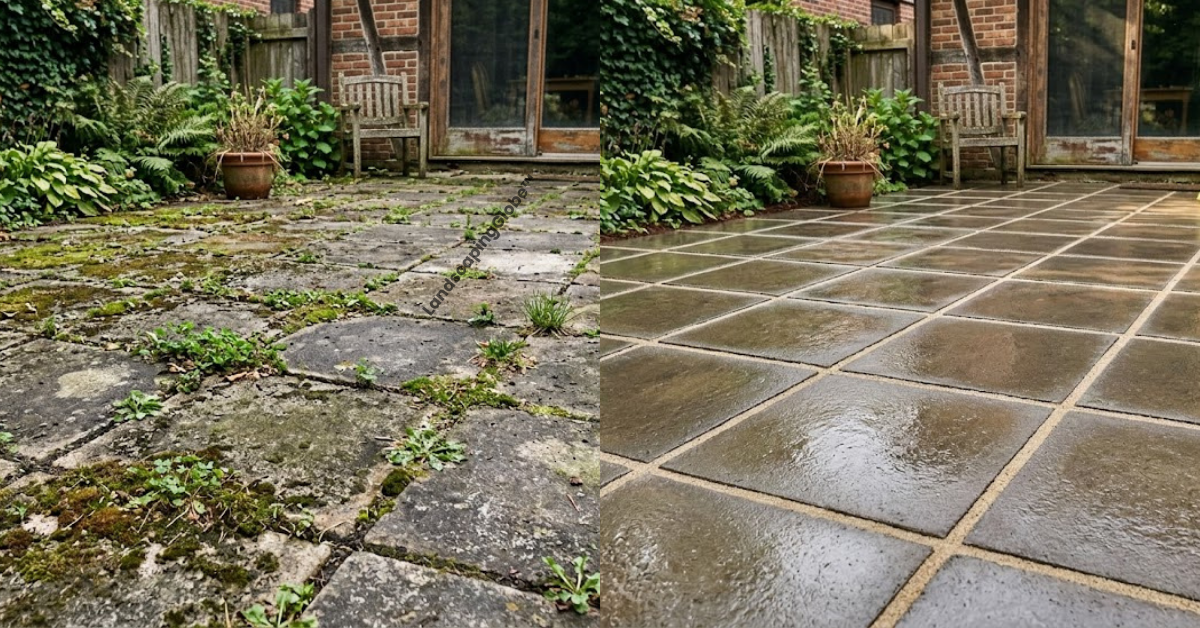
Pavers are a stunning addition to any outdoor space. Over time, dirt, moss, and stains can dull their appearance. That’s where paver cleaning & sealing comes in. Proper maintenance keeps your pavers looking fresh and vibrant. Neglecting this care can lead to fading, cracks, and permanent stains. Cleaning and sealing preserves beauty, strengthens the surface, and extends its lifespan.
Why Cleaning and Sealing Pavers Matters
Maintaining pavers is more than just cosmetic. Regular care protects your investment. Here’s why it matters:
- Shields protect surfaces from harsh weather and UV damage.
- Prevents weeds and grass from growing in joints.
- Restores original color and enhances the shine.
- Stops mold, moss, and dirt buildup.
- Extends paver lifespan and reduces repair costs over time.
Types of Paver Surfaces That Need Cleaning & Sealing
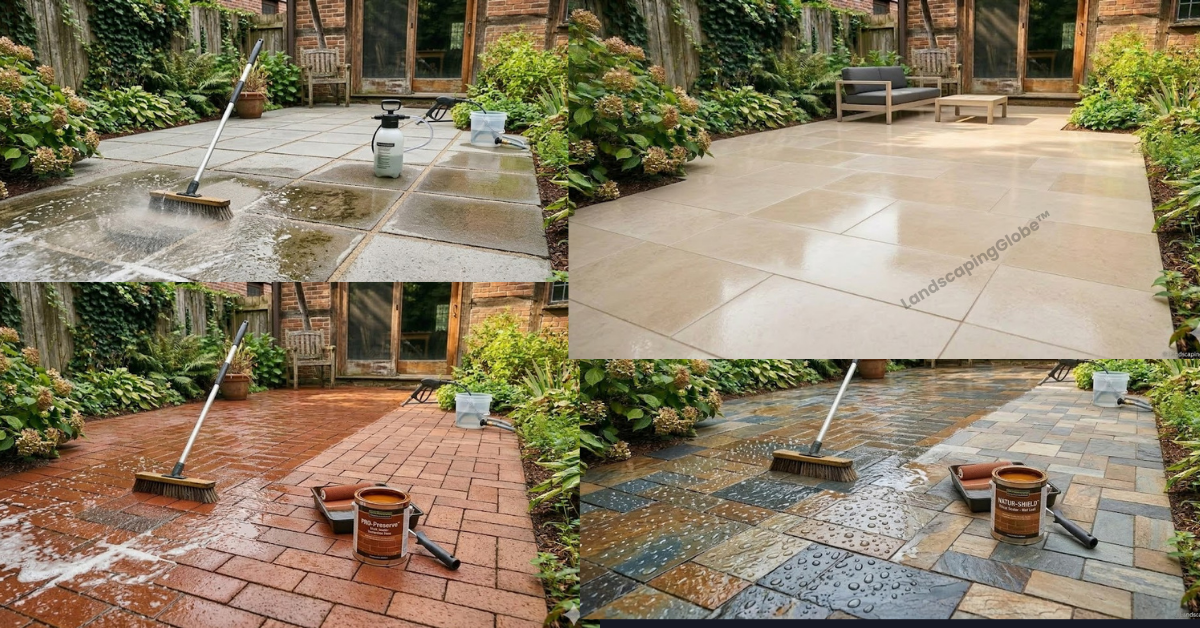
Different paver materials require different care:
Concrete Pavers
Concrete absorbs stains easily. Sealing prevents discoloration and keeps surfaces looking fresh.
Brick Pavers
Regular sealing helps bricks retain color and strength. It also prevents chipping and erosion.
Natural Stone Pavers
Porous stone requires specialized sealants. It protects against water damage and preserves natural texture.
Travertine or Porcelain Pavers
Smooth surfaces benefit from UV protection and sealant. This prevents fading and adds a subtle gloss.
Step-by-Step Guide to Cleaning Pavers
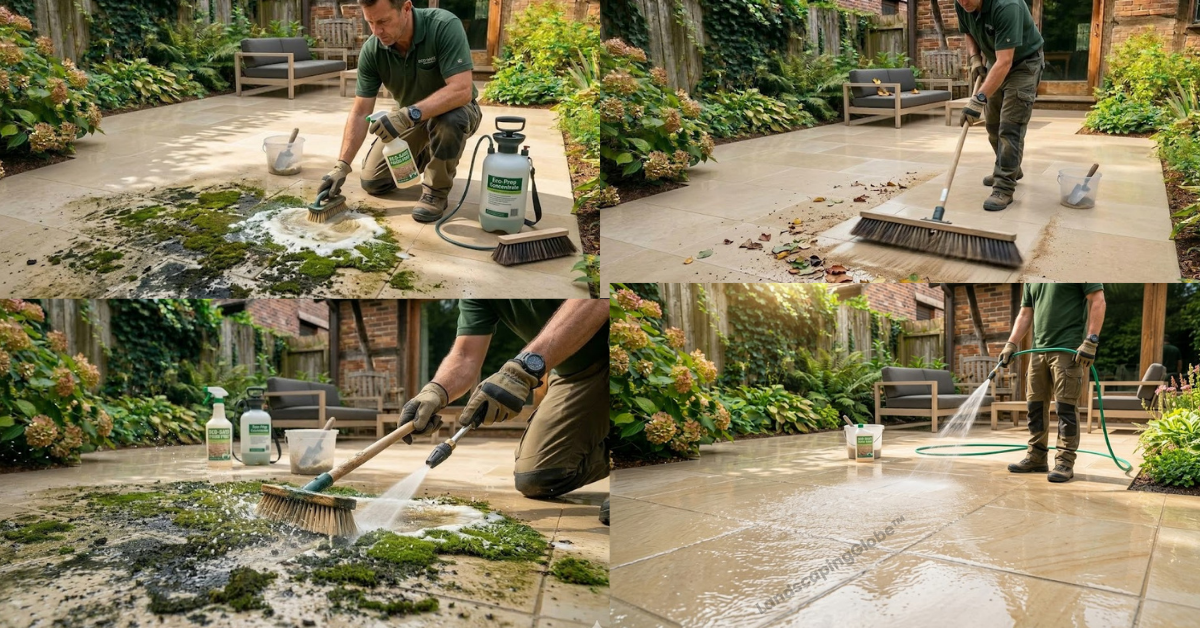
Step 1 – Sweep and Remove Debris
Clear loose sand, leaves, and dirt with a broom. This prepares the surface for deep cleaning.
Step 2 – Apply a Cleaning Solution
Use eco-friendly or paver-safe cleaners. Apply evenly over stains and moss.
Step 3 – Scrub or Pressure Wash
Scrub stubborn areas with a brush. Low-pressure washing works for larger areas without damaging joints.
Step 4 – Rinse and Dry Completely
Rinse thoroughly. Allow pavers to dry fully before sealing to ensure proper adhesion.
How to Seal Pavers Effectively
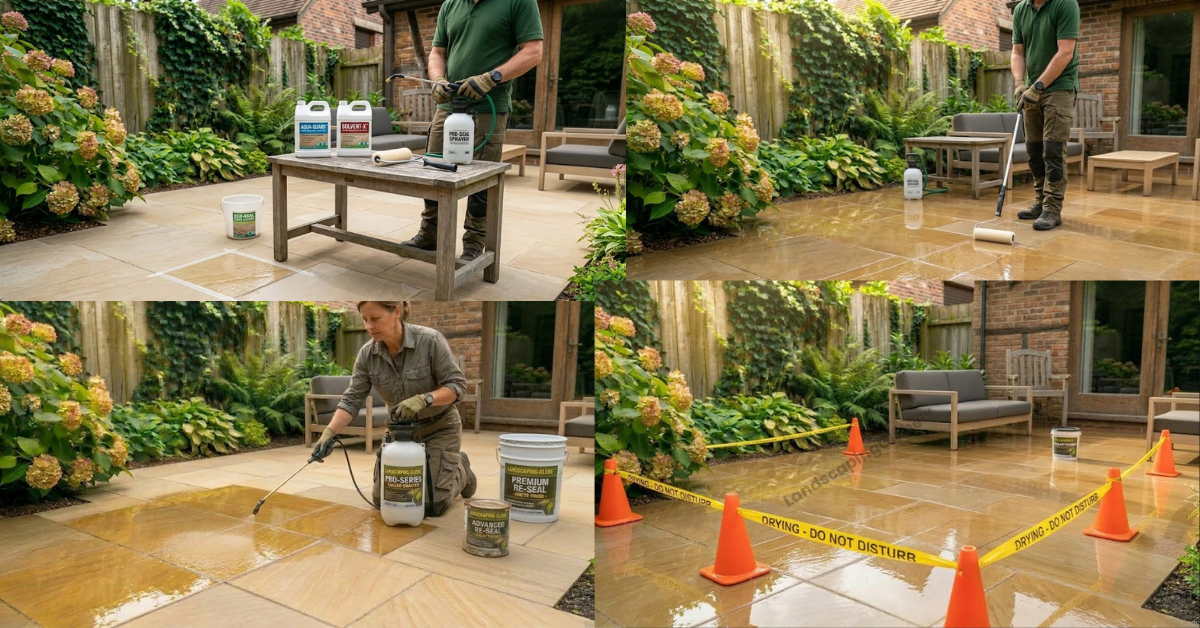
Step 1 – Choose the Right Paver Sealer
Decide between water-based or solvent-based sealers. Water-based dries faster, solvent-based lasts longer.
Step 2 – Apply Even Coating
Use a roller or sprayer for uniform coverage. Avoid pooling of sealant.
Step 3 – Allow Proper Drying Time
Sealers typically need 24–48 hours to cure, depending on weather and type.
Step 4 – Reapply When Needed
For optimal protection, reseal every 2–3 years.
Common Mistakes to Avoid When Cleaning and Sealing
- Using harsh chemicals that damage surfaces.
- Sealing pavers before they are completely dry.
- Over-applying sealant, which can make surfaces slippery.
- Ignoring joint sand maintenance.
Avoiding these mistakes ensures your pavers remain beautiful and safe.
Benefits of Professional Paver Cleaning & Sealing
Hiring experts saves time and provides superior results. Professionals:
- Use high-grade sealers for longer protection.
- Ensure even coating and full coverage.
- Enhance durability against oil, water, and salt damage.
- Offer long-lasting results that DIY may not achieve.
Paver Cleaning & Sealing Costs
Costs vary based on material, size, and service type.
- Average cost per square foot: $2–$6 for DIY, $4–$10 for professional services.
- Factors affecting cost:
• Paver type and porosity
• Area size
• Sealer quality
• Labor rates
DIY may save money, but it takes time and effort. Professionals provide speed, expertise, and better long-term results.
Maintenance Tips After Sealing
- Sweep regularly to keep surfaces dust-free.
- Avoid acidic cleaners that strip sealant.
- Re-sand joints as needed.
- Reapply sealer seasonally to maintain protection.
Conclusion
Regular paver cleaning & sealing keep your driveway, patio, or walkway looking new. It prevents stains, fading, and damage. Routine care extends lifespan and reduces future repair costs. Hiring professionals can be worth it for high-traffic areas or large surfaces. Take care of your pavers today, and they will stay beautiful for years.
Pro Tip: Seal your pavers after a full cleaning and drying. This keeps colors bright and protects against stains for years.
FAQs
How do you clean and seal pavers?
First, sweep the pavers to remove dirt and debris. Then, wash them with water and a mild detergent or paver cleaner. Let them dry completely. After drying, apply a quality paver sealer evenly with a brush, roller, or sprayer. Make sure to follow the manufacturer’s instructions for best results.
What is the best thing to clean pavers with?
A mixture of warm water and mild dish soap works well. For tougher stains, use a specialized paver cleaner or a pressure washer on a low setting. Avoid harsh chemicals that can damage the surface.
Should I clean pavers before sealing?
Yes! Cleaning is essential before sealing. Dirt, moss, or stains will prevent the sealer from sticking properly, reducing its effectiveness and lifespan.
How often should pavers be cleaned and sealed?
Clean your pavers at least once or twice a year. Seal them every 2–3 years, or sooner if they start to look dull or absorb water. High-traffic areas may need more frequent maintenance.
How long does a paver sealer last?
A good-quality sealer usually lasts 2–3 years, depending on weather, traffic, and sunlight exposure. Some premium sealers may last longer if properly maintained.
Do I really need to seal my pavers?
Sealing is highly recommended. It protects your pavers from stains, water damage, moss, and fading. While it’s not mandatory, sealed pavers look better and last longer, making it worth the effort.
What are the disadvantages of sealing pavers?
The main disadvantages are:
- It adds extra cost
- Poor application can cause uneven shine or sticky spots
- It needs reapplication every few years
However, professional services, like those suggested by LandscapingGlobe, minimize these issues.
What is the difference between a sealant and a sealer?
A sealer is a protective coating applied to pavers to guard against stains and water damage. A sealant is often used interchangeably, but it can also refer to a product that fills cracks and gaps. In most driveway projects, “sealer” is the term you’ll use.
How do I know if my pavers need to be sealed?
Check if water beads on the surface. If it soaks in quickly, it’s time to seal. Also, faded color, stains, or moss growth are signs that sealing is needed to protect and restore your pavers.