

Commercial Aquaculture Equipment for Large Fish Farms
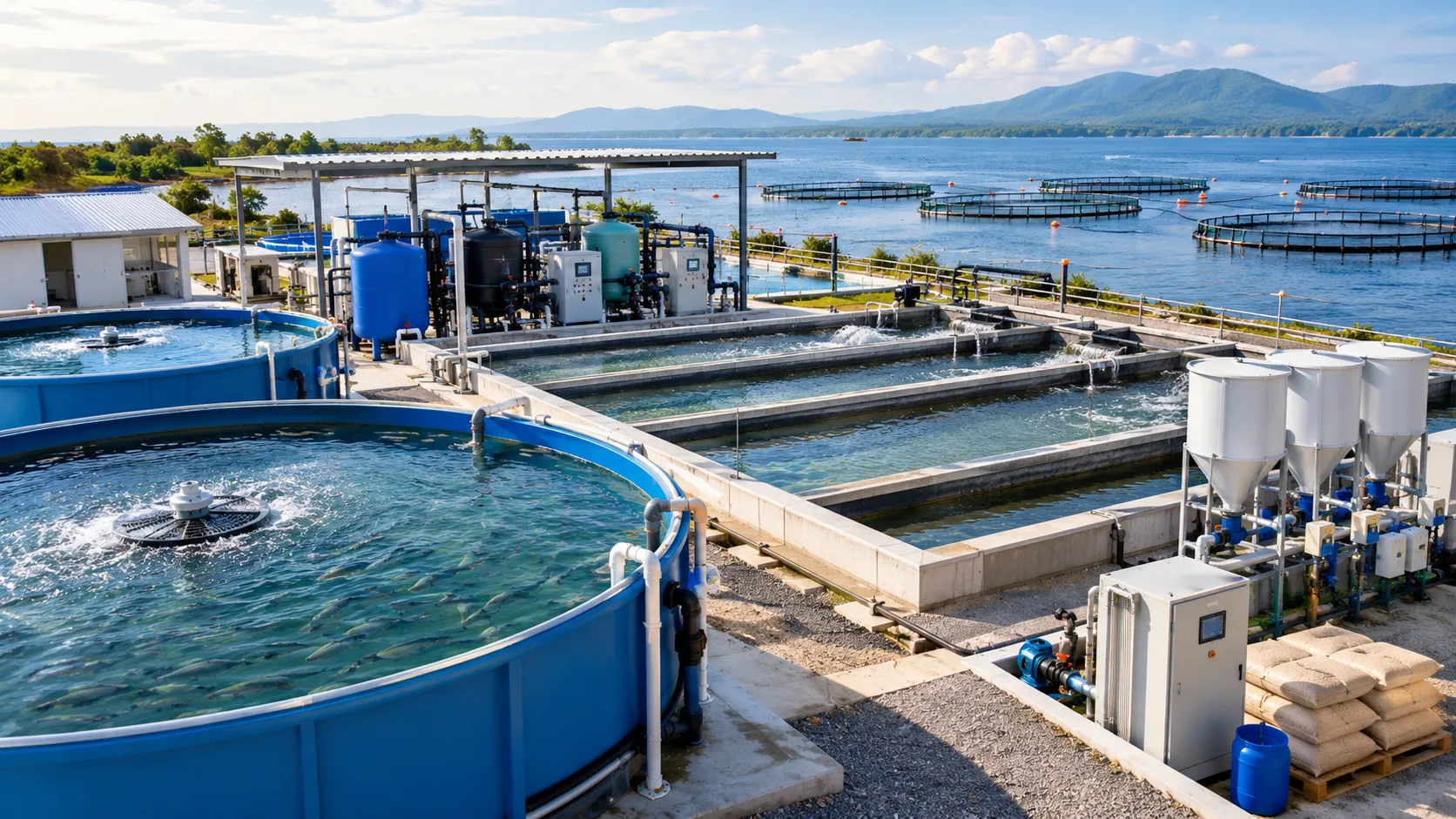
Commercial Aquaculture Equipment: What Large-Scale Fish Farms Need
Commercial aquaculture is an important part of the global food industry. As demand for seafood continues to grow, fish farmers need reliable equipment to raise healthy fish, maintain water quality, reduce waste, and increase production. Whether a farm produces tilapia, salmon, catfish, trout, or shrimp, the right equipment can make daily operations easier and more efficient.
Large-scale fish farming requires more than tanks and fish feed. Farmers need water filtration systems, aeration equipment, automatic feeders, pumps, water quality sensors, biofilters, and harvesting tools. Each piece of equipment plays a role in maintaining a suitable environment for aquatic animals.
Modern aquaculture technologies also help farmers monitor their facilities, manage resources, and reduce unnecessary operating costs. For example, a Recirculating Aquaculture System (RAS) can clean and reuse water, while automated feeding systems help deliver feed at controlled intervals.
However, the best equipment depends on several factors, including fish species, farm size, stocking density, local climate, available water, and production goals.
What Is Commercial Aquaculture Equipment?
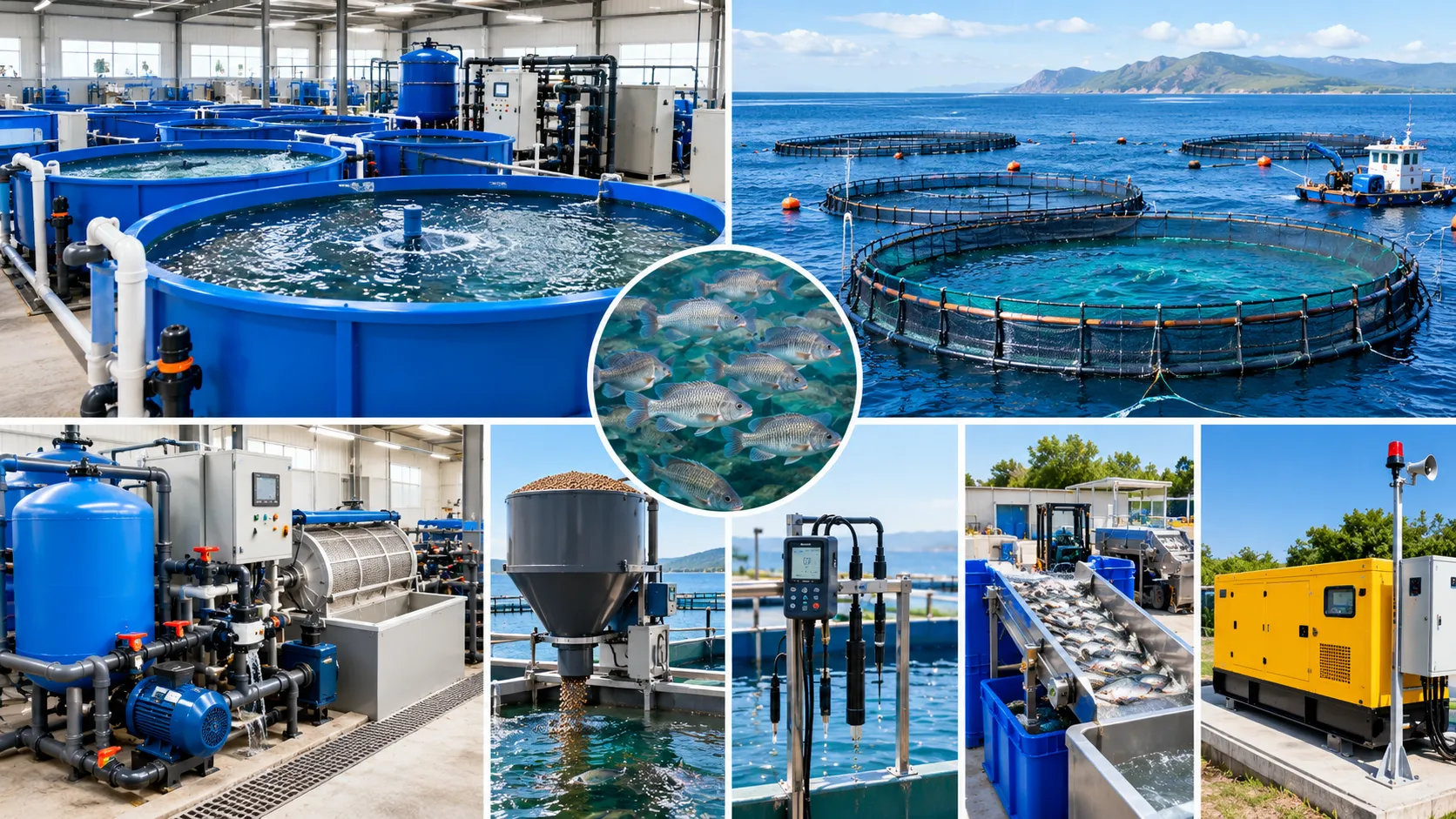
Commercial aquaculture equipment refers to the machinery, tools, and systems used to raise fish and other aquatic animals for business purposes. These systems help farmers control water conditions, supply oxygen, distribute feed, remove waste, and maintain fish health.
Unlike small backyard fish ponds, commercial fish farms often manage large populations of fish and need equipment that can operate reliably for long periods. A problem with oxygen supply, filtration, or water circulation can affect thousands of fish, making equipment selection especially important.
Common types of commercial aquaculture equipment include:
- Fish farming tanks, ponds, and cages
- Water pumps and circulation systems
- Mechanical filters and biological filters
- Aerators, diffusers, and oxygenation systems
- Automatic fish feeders
- Water quality monitoring instruments
- Biofilters and waste removal equipment
- Fish hatchery and nursery equipment
- Fish grading, sorting, and harvesting tools
- Backup generators and alarm systems
For example, a commercial tilapia farm using indoor tanks may need pumps, filters, aeration devices, and automatic feeders. A salmon farm using marine net pens may require cage structures, mooring systems, underwater cameras, oxygen monitoring, and specialized feeding equipment.
Essential Equipment Needed for Large-Scale Fish Farms
Large-scale fish farms require a combination of equipment to manage different stages of production. The exact setup depends on whether the farm uses earthen ponds, concrete tanks, indoor systems, or offshore cages.
Water management equipment is usually one of the most important investments. Pumps move water through the farm, filters remove unwanted particles, and aeration systems maintain dissolved oxygen levels. Together, these systems help create a suitable environment for fish growth.
Feeding equipment is another essential component. Commercial farms may use automatic feeders to distribute measured quantities of feed across tanks or ponds. This can reduce labor requirements and improve feeding consistency.
Farmers also need equipment for monitoring water conditions. Dissolved oxygen meters, pH meters, temperature sensors, and ammonia test kits help identify changes that could affect fish health.
A typical commercial aquaculture facility may need the following equipment:
- Water management: Water pumps, pipes, valves, filters, and circulation systems.
- Oxygen supply: Paddlewheel aerators, air blowers, diffusers, and oxygenation equipment.
- Feeding: Automatic feeders, feed storage containers, and feeding control systems.
- Monitoring: Temperature sensors, dissolved oxygen meters, pH meters, and water testing kits.
- Fish handling: Grading machines, weighing equipment, harvesting nets, and transport tanks.
- Safety and reliability: Backup generators, emergency aeration equipment, alarms, and spare components.
Farmers should evaluate the capacity of each system before purchasing equipment. For example, a pump must deliver enough water at the required flow rate and operating pressure. An aerator must provide sufficient oxygen transfer for the farm's fish biomass and environmental conditions.
Buying equipment based only on its purchase price can create problems later. A cheaper system may consume more electricity, require frequent repairs, or fail to provide enough capacity during periods of peak demand.
Commercial Fish Farming Tanks and Pond Systems
- Earthen Ponds: Large fish farming ponds designed for commercial production of species such as tilapia and catfish.
- Concrete Tanks: Durable fish farming tanks that provide better control over water conditions, waste removal, and feeding practices.
- Fiberglass Tanks: Lightweight, corrosion-resistant tanks suitable for indoor aquaculture and intensive fish farming systems.
- Circular Fish Tanks: Specially designed tanks that promote effective water circulation and help direct solid waste toward a central drain.
- Rectangular Fish Tanks: Space-efficient tanks suitable for commercial aquaculture facilities where layout and production capacity are important.
- Floating Net Cages: Net pens installed in lakes, reservoirs, and marine environments for raising fish in natural water bodies.
- Water Circulation Systems: Pumps, pipes, and water inlets that maintain suitable water movement and distribution throughout fish farming tanks.
- Drainage and Waste Removal: Bottom drains, sludge collection systems, and waste removal equipment that help maintain clean water.
- Pond Aeration Equipment: Paddlewheel aerators, diffused air systems, and oxygenation equipment that help maintain adequate dissolved oxygen levels.
- Water Supply and Exchange: Water intake systems, valves, pipes, and drainage channels that support regular water replacement and quality management.
- Tank Cleaning Equipment: Brushes, pressure washers, and cleaning tools used to remove algae, sediment, and accumulated waste.
- Environmental Protection: Pond liners, predator barriers, cage nets, and escape-prevention systems that help protect fish stocks and surrounding ecosystems.
- System Selection and Planning: Equipment and infrastructure selected according to fish species, production targets, available land, water resources, operating costs, and environmental regulations.
Aquaculture Water Filtration Systems for Fish Farms
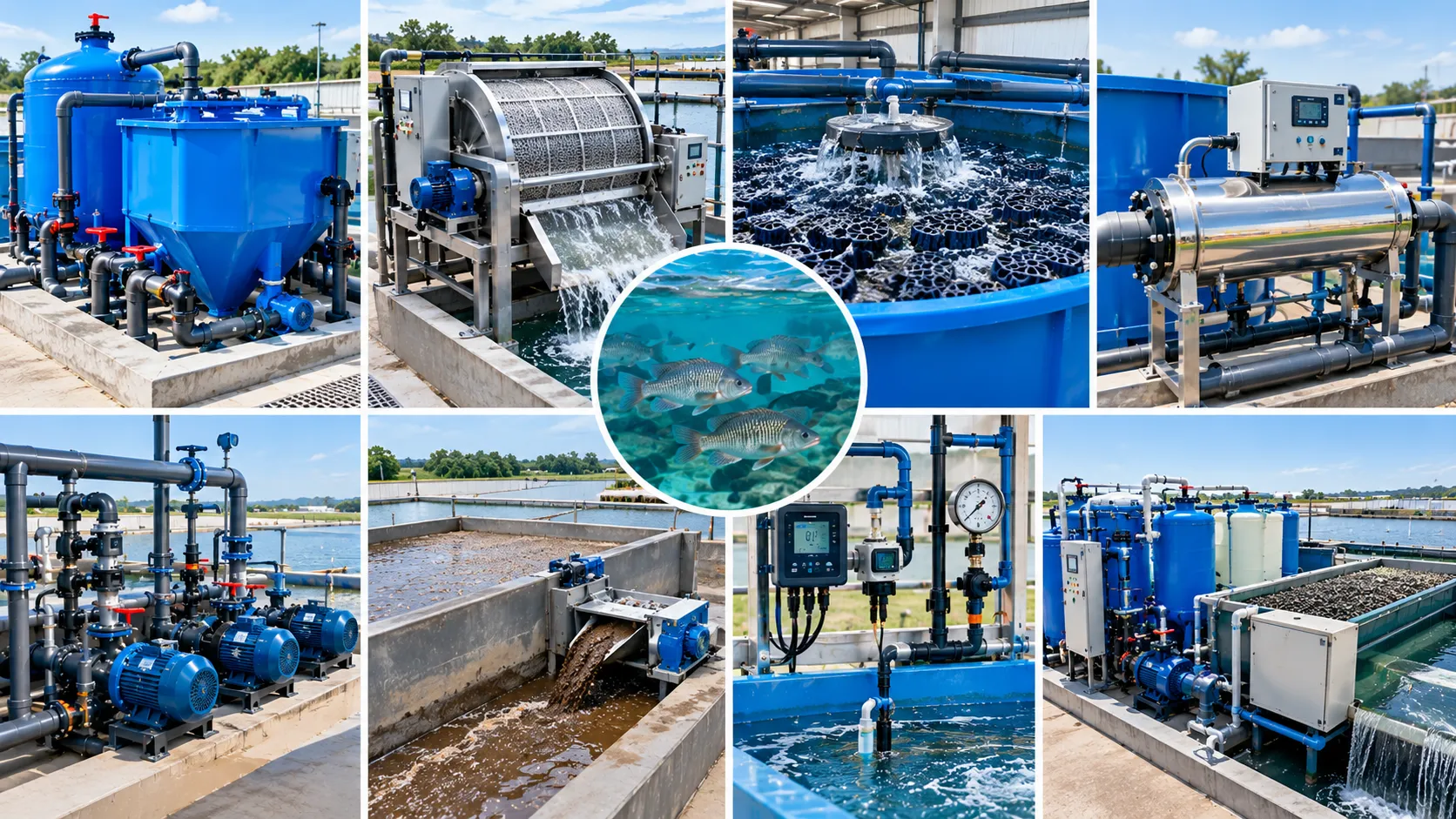
- Mechanical Filtration: Screen filters, drum filters, settling tanks, and solids separation equipment for removing uneaten feed, fish waste, and suspended particles.
- Drum Filtration Systems: Automatic drum filters with fine screens and self-cleaning mechanisms to improve solid waste removal and reduce manual maintenance.
- Biological Filtration: Moving bed biofilters, trickling filters, and biofilter media that support beneficial bacteria for converting toxic ammonia into nitrite and nitrate.
- UV Disinfection Systems: Ultraviolet treatment equipment designed to reduce certain microorganisms in circulating water and support aquaculture biosecurity.
- Water Circulation and Flow Control: Water pumps, pipes, valves, and circulation equipment that maintain consistent water movement through filtration units.
- Sludge and Waste Removal: Sludge collectors, sedimentation tanks, and waste discharge systems that remove accumulated solids and help maintain water quality.
- Filter Monitoring and Maintenance: Pressure gauges, flow meters, water quality sensors, and cleaning equipment used to monitor filtration performance and prevent blockages.
- Integrated Filtration Systems: Combined mechanical and biological filters, supplementary disinfection, and oxygen management equipment selected according to fish biomass, feed input, water flow, and waste load.
Commercial Aquaculture Aeration and Oxygenation Equipment
Dissolved oxygen is one of the most important water quality factors in commercial fish farming. Fish need oxygen for respiration, and oxygen demand generally increases as fish biomass and feeding activity rise.
Aeration and oxygenation equipment help maintain oxygen availability. Although the terms are related, they are not identical. Aeration transfers oxygen from the air into water, while oxygenation systems may use concentrated oxygen to increase dissolved oxygen levels more directly.
Common aeration equipment includes paddlewheel aerators, surface aerators, air blowers, air diffusers, and aspirating aerators.
Paddlewheel aerators are widely used in some pond-based aquaculture operations. They move water and increase contact between water and air, helping transfer oxygen into the pond.
Air blowers supply air through diffusers placed in tanks or ponds. The resulting bubbles can transfer oxygen and, depending on the system design, help circulate water.
Pure oxygen systems may be used in intensive tank facilities and recirculating aquaculture systems where oxygen demand is high or water exchange is limited.
Choosing the right equipment requires an understanding of fish species, stocking density, water temperature, feeding rates, and peak oxygen demand. Warm water generally holds less dissolved oxygen than cold water, while fish and beneficial filter bacteria continue to consume oxygen.
Farmers should also install dissolved oxygen monitoring equipment and plan for emergencies. Backup aeration, emergency oxygen supplies, alarms, and reliable power sources can help reduce the risk of catastrophic fish losses.
The goal is not simply to install an aerator but to maintain suitable dissolved oxygen levels throughout the production system, including during hot weather, heavy feeding, and periods of equipment failure.
Automatic Fish Feeding Systems for Large-Scale Aquaculture
- Automatic Fish Feeders: Timer-controlled feeding machines that dispense fish pellets at scheduled intervals to maintain consistent feeding routines.
- Programmable Feeding Systems: Digital controllers that allow farmers to adjust feeding times, feed quantities, and delivery schedules according to fish growth requirements.
- Centralized Feeding Equipment: Automated feed distribution systems that deliver feed to multiple tanks, ponds, or cages across large aquaculture facilities.
- Feed Storage and Hopper Systems: Feed bins, storage containers, and weather-resistant hoppers designed to protect pellets from moisture and contamination.
- Sensor-Based Feeding Systems: Smart feeders integrated with underwater cameras, acoustic sensors, and feeding response measurements to help assess fish appetite and feeding activity.
- Feed Dispensing Mechanisms: Rotating discs, vibrating feeders, blowers, and pellet distribution equipment designed to deliver feed evenly across the farming area.
- Feed Monitoring and Control Software: Digital farm management systems that track feed consumption, feeding schedules, growth performance, and feed conversion ratios.
- Feeder Maintenance and Calibration: Cleaning tools, dispensing controls, replacement parts, and calibration equipment used to maintain accurate feed delivery and reduce feed waste.
Water Quality Monitoring Equipment for Commercial Fish Farms
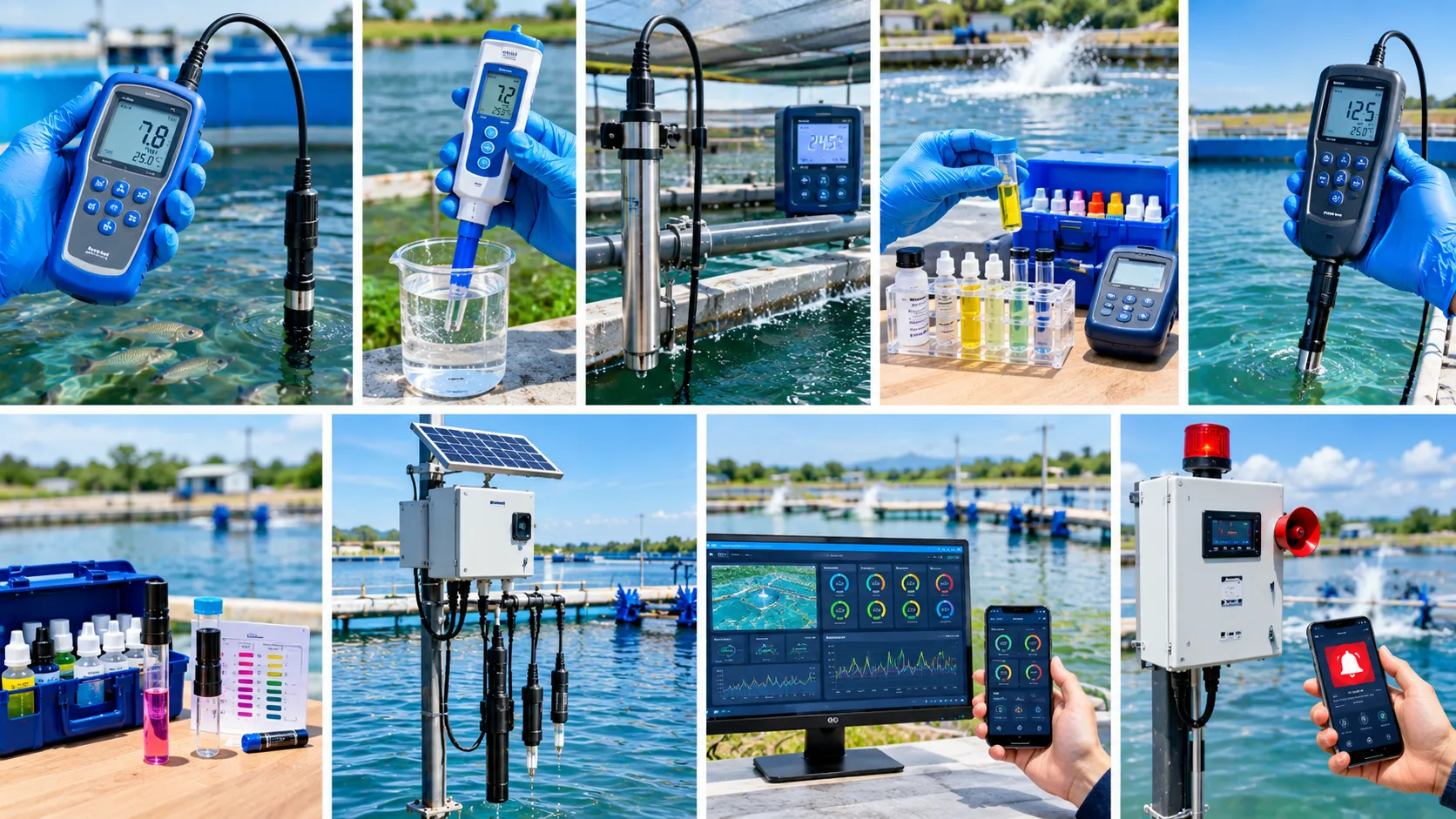
- Dissolved Oxygen Meters: Portable and digital meters that measure oxygen levels in water to help maintain suitable conditions for fish growth and survival.
- pH Meters: Digital pH testing devices used to measure water acidity or alkalinity and identify sudden changes that may affect fish health.
- Temperature Sensors: Digital thermometers, submersible probes, and temperature monitoring devices that track water temperature and support effective feeding and growth management.
- Ammonia and Nitrite Testing Kits: Water testing kits and digital analyzers used to detect harmful nitrogen compounds that can accumulate from fish waste and uneaten feed.
- Salinity and Conductivity Meters: Monitoring instruments that measure salt concentration or electrical conductivity to help manage water conditions for freshwater and marine aquaculture.
- Alkalinity and Nitrate Test Kits: Chemical testing kits used to assess buffering capacity and nitrate levels, supporting stable water conditions and effective filtration management.
- Continuous Water Quality Monitoring Systems: Integrated digital sensors that continuously track selected water parameters and record data across commercial fish farming facilities.
- Automated Alarms and Remote Monitoring: Smart controllers, notification systems, and farm management software that alert operators to abnormal readings, oxygen shortages, temperature fluctuations, or potential equipment failures.
Aquaculture Pumps and Water Circulation Systems
Aquaculture pumps move water between tanks, filters, reservoirs, heat exchangers, and other treatment components. They are especially important in recirculating aquaculture systems, where water must continuously pass through treatment equipment.
Different pumps serve different purposes. Centrifugal pumps are commonly used for general water transfer, while other pump designs may be selected for specific flow, pressure, or solids-handling requirements.
Water circulation systems also include pipes, valves, fittings, manifolds, and drains. These components must be properly sized to deliver the required flow without excessive energy consumption or unnecessary pressure loss.
- Flow rate: The amount of water the pump needs to move within a specific period.
- Total dynamic head: The combined effect of elevation, pipe friction, fittings, and other resistance the pump must overcome.
- Energy efficiency: A more efficient pump can reduce electricity costs over its operating life.
- Material compatibility: Components should resist corrosion and remain suitable for the water conditions.
- Maintenance needs: Seals, bearings, impellers, and other parts may require periodic inspection.
Oversized pumps can waste energy, while undersized pumps may fail to provide adequate circulation or filtration flow.
Farmers should also consider redundancy. In critical systems, installing a standby pump or keeping essential spare parts available can reduce downtime during repairs.
Properly designed water circulation helps maintain stable water conditions and supports the performance of filtration, oxygenation, and temperature control equipment.
Commercial Fish Farm Biofilters and Waste Management Systems
Fish produce waste through metabolism, while uneaten feed and other organic materials contribute additional waste to the production environment. If these materials accumulate, they can reduce water quality and increase the workload on filtration systems.
Biofilters are designed to support beneficial microorganisms that break down harmful nitrogen compounds. In particular, nitrifying bacteria convert ammonia into nitrite and then nitrate under suitable conditions.
Biofilters may contain plastic media, structured surfaces, or other materials that provide space for microbial growth. Moving bed biofilters use floating media that moves within a tank, while trickling filters expose filter media to flowing water and air.
The performance of a biofilter depends on several factors, including temperature, pH, alkalinity, oxygen availability, water flow, and the amount of ammonia entering the system.
Waste management also requires effective solids removal. Settling tanks, mechanical drum filters, sludge collection systems, and suitable drainage arrangements can help remove waste before it breaks down further.
Collected sludge should be handled and disposed of or treated according to local environmental requirements. Depending on its composition and applicable regulations, some waste may be suitable for further treatment or beneficial use.
- Removing solid waste regularly
- Preventing feed from accumulating in tanks
- Maintaining appropriate filter flow
- Monitoring ammonia and nitrite
- Avoiding untreated waste discharge into natural waterways
- Inspecting biofilters and waste collection equipment
Biofilters need time to establish their microbial populations, particularly when a new system is started. Farmers should not assume that a newly installed biofilter is immediately capable of processing the full waste load.
Proper filtration and waste management help protect fish health and reduce the environmental impact of commercial aquaculture.
Recirculating Aquaculture Systems (RAS) Equipment
A Recirculating Aquaculture System (RAS) is a fish farming system that treats and reuses water instead of relying on continuous replacement with large volumes of fresh water.
RAS technology is used in some indoor commercial fish farms, hatcheries, and intensive production facilities. It can provide greater control over temperature, water quality, and biosecurity, although it also requires careful engineering and management.
- Fish tanks: These provide the growing environment and must support suitable water movement, stocking density, and waste collection.
- Mechanical filters: These remove suspended solids from the circulating water.
- Biofilters: These support the conversion of ammonia into less harmful nitrogen compounds.
- Pumps: These maintain the required circulation through the treatment system.
- Aeration or oxygenation equipment: These help maintain sufficient dissolved oxygen.
- Degassing equipment: These help remove excess carbon dioxide and other dissolved gases when necessary.
- Monitoring systems: Sensors and test equipment track important water quality parameters.
- Disinfection equipment: UV treatment or other suitable methods may be used as part of a broader biosecurity plan.
Some RAS facilities also require heating, cooling, backup generators, automated controls, and emergency oxygen systems.
One major advantage of RAS is reduced dependence on continuous water exchange. This can be valuable where water resources are limited or environmental conditions are difficult to control.
Fish Hatchery Equipment for Commercial Aquaculture
Fish hatcheries produce eggs, larvae, and young fish for stocking commercial farms. They are an important part of aquaculture because reliable supplies of healthy juveniles support consistent production planning. Hatchery equipment varies according to the species being raised and its reproductive biology.
Common equipment includes incubation trays, egg incubators, hatching jars, larval rearing tanks, nursery tanks, water filtration systems, and oxygen supply equipment. Some hatcheries also require specialized systems for maintaining broodstock, controlling temperature, managing light conditions, and producing suitable live feeds for early life stages.
Water quality is especially important during incubation and larval development. Eggs and young fish may be sensitive to changes in oxygen, temperature, water flow, and contamination. Hatchery staff must also manage stocking density, feeding, grading, and sanitation carefully. Equipment should be easy to clean and arranged to reduce the risk of transferring pathogens between production areas.
Commercial hatcheries may use sensors and automated controls to monitor water conditions and reduce the need for constant manual adjustment. Before purchasing hatchery equipment, farmers should consider the target species, expected production volume, water source, available space, and biosecurity requirements.
A hatchery designed for one species may not be suitable for another without modifications. The equipment and operating procedures should reflect the specific needs of the fish being produced. Well-managed hatchery systems can improve the consistency of juvenile supply and help commercial farms plan their production cycles more effectively.
Fish Grading, Sorting, and Harvesting Equipment
- Fish Grading Machines: Adjustable fish grading equipment that separates fish according to size or weight to support uniform growth and reduce feeding competition.
- Fish Sorting Systems: Mechanical sorting machines, conveyor systems, and automated optical technologies used to classify fish by size and manage large production batches.
- Fish Weighing Equipment: Digital weighing scales, biomass measurement tools, and sampling equipment used to estimate fish growth, adjust feeding rates, and plan harvesting operations.
- Harvesting Nets and Crowd Control Systems: Seine nets, harvesting nets, and fish crowding equipment designed to gather fish efficiently while minimizing stress and physical injury.
- Live Fish Transfer Pumps: Specialized fish transfer pumps that move live fish between ponds, tanks, cages, and collection areas while reducing handling damage.
- Mechanical Harvesting Equipment: Fish harvesting conveyors, lifting systems, and mechanical handling equipment used to improve harvesting efficiency in large-scale aquaculture facilities.
- Live Fish Transport Tanks: Insulated transport tanks equipped with oxygen supply, water circulation, and suitable environmental controls for safely transporting live fish.
- Cleaning and Disinfection Equipment: Washdown systems, cleaning tools, and approved disinfection equipment used to maintain hygiene, prevent cross-contamination, and support fish welfare and food safety.
Aquaculture Equipment for Disease Prevention and Fish Health
- Quarantine Tanks: Separate fish holding tanks used to observe newly introduced fish, monitor their health, and reduce the risk of introducing pathogens into the main production system.
- Water Quality Monitoring Equipment: Dissolved oxygen meters, pH meters, temperature sensors, and ammonia testing kits that help identify environmental conditions that may stress fish and increase disease risk.
- UV Disinfection Systems: Ultraviolet water treatment equipment designed to reduce certain microorganisms in circulating water and support biosecurity when properly installed and operated.
- Cleaning and Disinfection Equipment: Cleaning stations, brushes, pressure washers, and suitable disinfectant supplies used to maintain hygiene and reduce contamination between production areas.
- Fish Health Diagnostic Tools: Microscopes, fish sampling equipment, and examination tools that help identify potential health problems under the guidance of qualified aquatic animal health professionals.
- Biosecurity and Protective Equipment: Protective clothing, gloves, dedicated nets, separate handling tools, and footbaths used to control the movement of pathogens between tanks and farming zones.
- Fish Waste and Mortality Management: Secure collection containers, waste handling tools, and appropriate disposal equipment used to remove dead fish promptly and reduce the risk of disease transmission.
- Fish Health Monitoring and Record-Keeping Systems: Digital farm management software, mortality records, feeding logs, and health monitoring tools that help farmers identify unusual patterns and respond quickly to suspected disease outbreaks.
How to Choose the Best Commercial Aquaculture Equipment
Selecting commercial aquaculture equipment requires more than comparing product prices. Farmers must understand their production goals, available resources, fish species, and operating conditions. The first step is to determine the type of farm. Pond-based aquaculture, cage farming, flow-through systems, and recirculating aquaculture systems have different equipment requirements.
Next, estimate the expected fish biomass and daily feed input. These figures help determine the capacity required for pumps, filters, aeration equipment, and waste treatment systems. Farmers should also consider water availability and quality. A farm with a reliable water source may have different needs from an indoor facility designed to reuse most of its water.
Energy consumption is another important factor. Pumps, blowers, oxygenation equipment, heating systems, and automated controls can contribute significantly to operating costs.
- Capacity: Can the system handle the expected production load?
- Reliability: Is the equipment suitable for continuous commercial operation?
- Energy efficiency: How much electricity will it use under actual operating conditions?
- Maintenance: Are spare parts and technical support available?
- Durability: Can the equipment withstand moisture, corrosion, and local environmental conditions?
- Automation: Would sensors, alarms, or automatic controls improve management?
- Compatibility: Can the equipment work effectively with the farm's existing systems?
- Safety: Are backup systems available for critical operations?
Farmers should also ask suppliers about installation requirements, warranties, service arrangements, and replacement parts.
Commercial Aquaculture Equipment Costs and Maintenance
The cost of commercial aquaculture equipment varies widely according to farm size, production method, automation level, materials, and local market conditions.
A small pond-based farm may need relatively simple pumps, aerators, feeding equipment, and water testing tools. An intensive indoor facility may require tanks, drum filters, biofilters, oxygenation systems, digital controls, backup power, and specialized waste treatment equipment.
For this reason, there is no single price that applies to every commercial fish farm.
Farmers should prepare a budget that includes both initial investment and ongoing expenses.
- Initial equipment costs may include tanks, pond construction, pumps, filters, aerators, feeders, sensors, piping, installation, and electrical work.
- Operating costs may include electricity, replacement parts, filter cleaning, calibration supplies, oxygen, and routine servicing.
- Labor costs include the time required to inspect equipment, clean filters, monitor water quality, and perform repairs.
- Emergency costs may include replacement pumps, backup oxygen supplies, generator fuel, and urgent maintenance.
Preventive maintenance is particularly important because equipment failure can lead to rapid deterioration in water quality.
A practical maintenance program should include regular pump inspections, filter cleaning, aerator checks, sensor calibration, pipe inspections, and testing of alarms and backup power systems.
Farmers should keep records of maintenance activities, energy use, water quality readings, equipment failures, and replacement parts. These records help identify recurring problems and support better budgeting.
Conclusion
Commercial aquaculture equipment plays a major role in the success of large-scale fish farms. From tanks and ponds to pumps, filtration systems, aerators, automatic feeders, and water quality sensors, every component contributes to the management of fish production.
Modern technologies such as Recirculating Aquaculture Systems (RAS), automated feeding systems, digital monitoring, and biological filtration can help farmers manage water resources and maintain more consistent production conditions.
However, the right equipment depends on the farm's species, production capacity, water availability, energy costs, and management expertise. Farmers should carefully assess these factors before making major investments.
Regular maintenance, accurate water quality monitoring, responsible fish health management, and reliable backup systems are equally important.
By choosing suitable commercial aquaculture equipment and managing it properly, fish farmers can improve operational efficiency, support fish welfare, reduce avoidable losses, and build a more reliable aquaculture business.
Frequently Asked Questions (FAQs)
1. What equipment is needed for commercial aquaculture?
Commercial aquaculture requires fish tanks, pumps, filters, aerators, automatic feeders, water quality sensors, biofilters, and harvesting equipment.
2. What is the most important equipment for fish farming?
Water pumps, aeration systems, filtration units, and monitoring instruments are essential for maintaining suitable water quality and healthy fish growth.
3. How does a Recirculating Aquaculture System (RAS) work?
A RAS filters fish waste, supports biological filtration, maintains oxygen levels, and reuses treated water to reduce freshwater consumption.
4. Why is aeration important in commercial fish farming?
Aeration increases dissolved oxygen availability, supports fish respiration, reduces oxygen-related stress, and helps maintain suitable conditions in intensive aquaculture systems.
5. What equipment maintains water quality in fish farms?
Dissolved oxygen meters, pH meters, temperature sensors, ammonia test kits, mechanical filters, and biofilters help maintain suitable water quality.
6. Are automatic fish feeders worth buying?
Automatic fish feeders improve feeding consistency, reduce routine labor, help control feed distribution, and potentially minimize waste when properly managed.
7. How much does commercial aquaculture equipment cost?
Equipment costs depend on farm size, production method, automation, installation requirements, local prices, energy consumption, and ongoing maintenance expenses.