Compost vs Organic Matter for Healthy Soil | LandscapingGlobe™
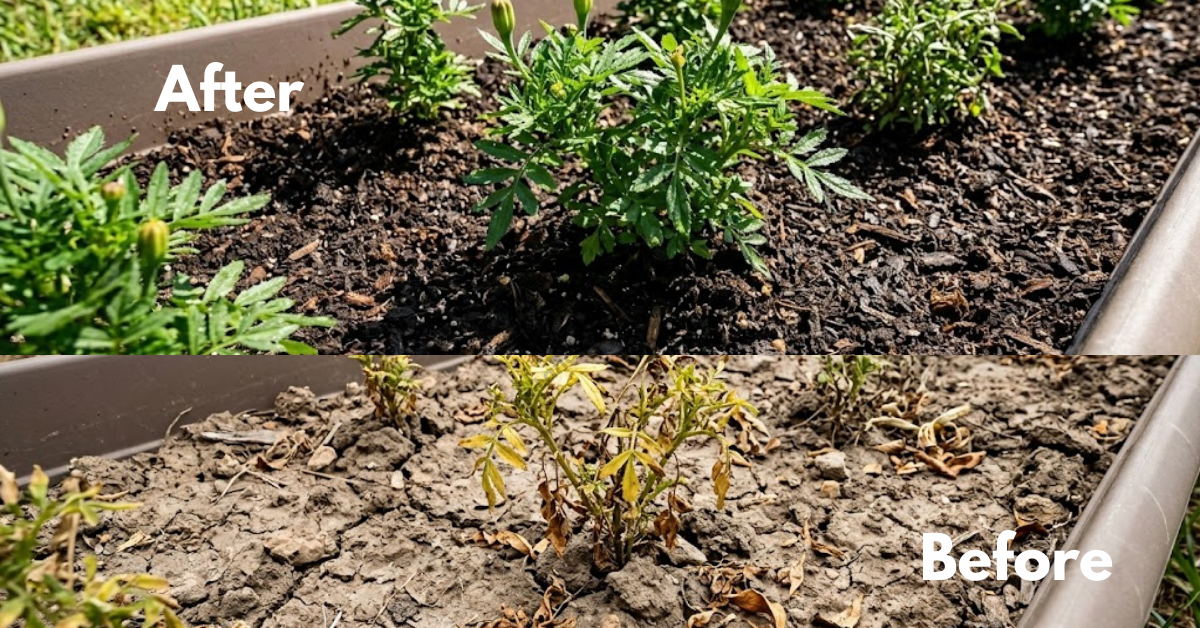
Many gardeners mix up compost and organic matter. They sound similar, but they are not the same. Both improve soil, but they work in different ways.
Understanding compost vs organic matter helps you choose the right option for healthy plants and better soil results.
What Is Organic Matter?
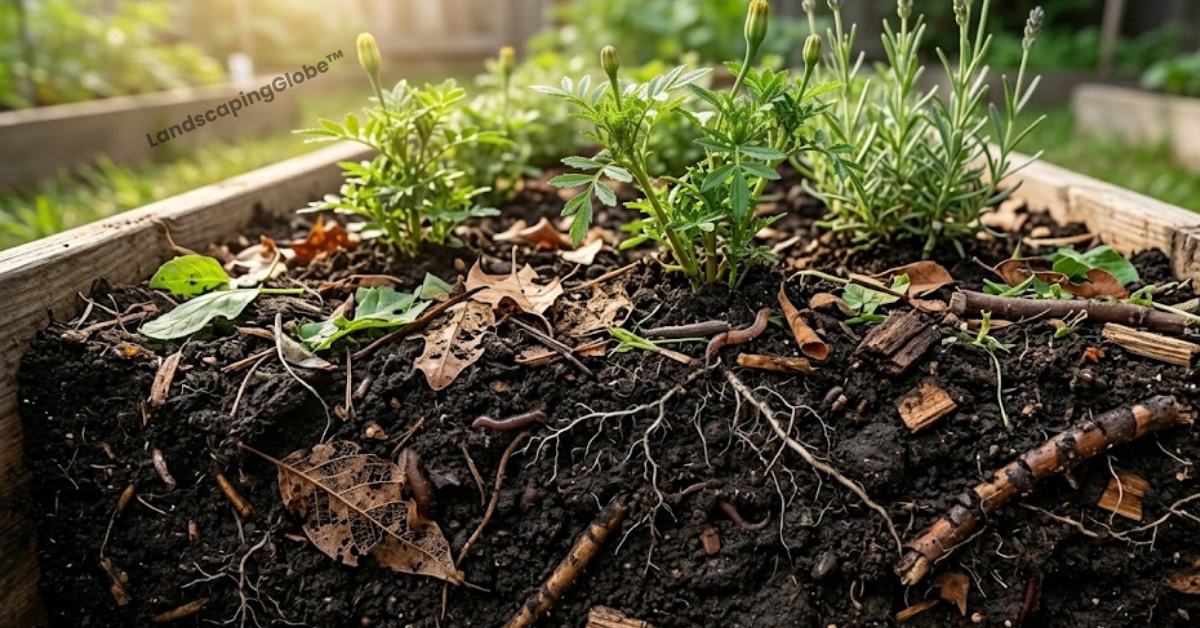
Organic matter includes all natural materials that come from plants or animals. These materials break down slowly in the soil. Examples include leaves, grass clippings, roots, wood chips, and manure.
Key points about organic matter:
- Exists naturally in soil
- Breaks down over time
- Improves soil structure
- Holds moisture and nutrients
Organic matter builds soil health long-term.
What Is Compost?
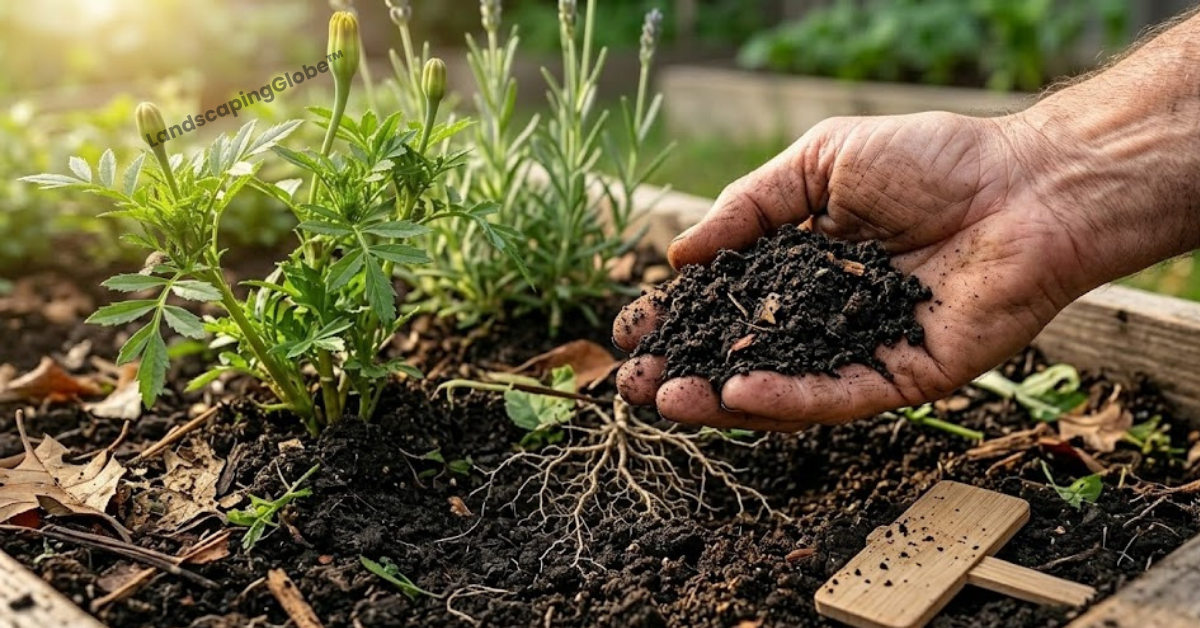
Compost is decomposed organic matter. It is processed through controlled breakdown using air, moisture, and microbes.Compost is ready to use once it turns dark and crumbly.
Key points about compost:
- Made from organic waste
- Fully or mostly decomposed
- Rich in nutrients
- Safe for plants
So yes, organic matter in compost exists because compost comes from organic materials.
Is Compost Organic Matter?
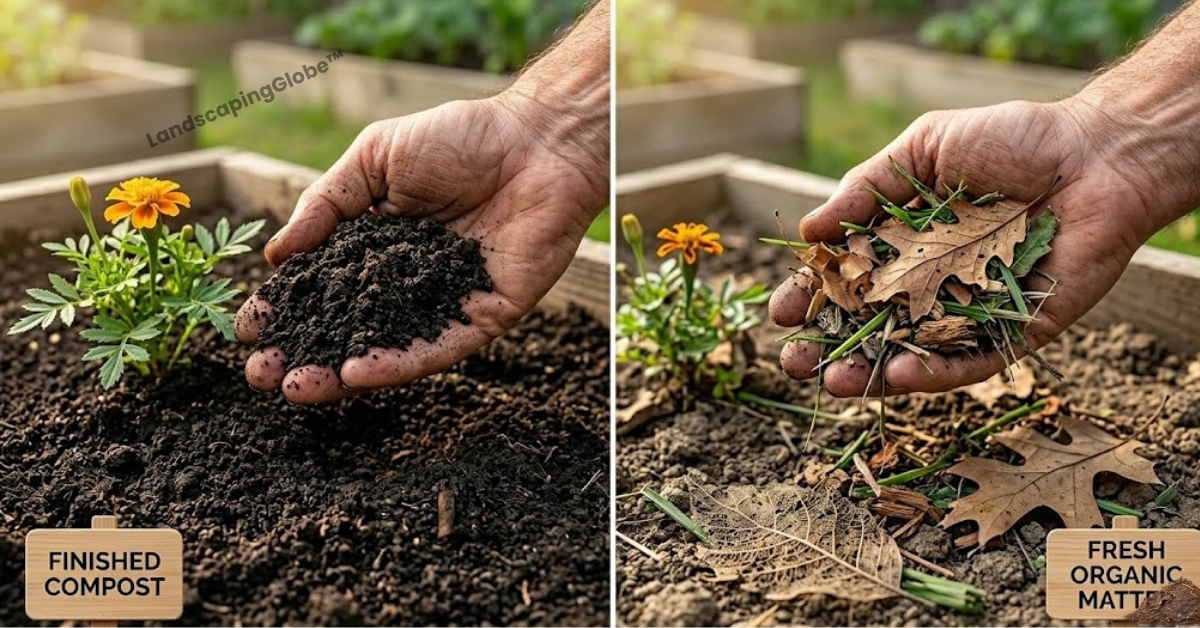
Yes. Compost is a type of organic matter. But not all organic matter is compost. Organic matter becomes compost only after proper decomposition.
Is Organic Matter the Same as Compost?
No. They are related, but not the same. Organic matter can be fresh or partially broken down. Compost is already processed and stable.
That’s why gardeners ask: is organic matter the same as compost?
The answer is no.
Compost vs Organic Matter Side-by-Side Comparison
| Feature | Compost | Organic Matter |
| Breakdown level | Fully decomposed | Fresh to partially decomposed |
| Nutrient release | Fast | Slow |
| Plant safety | Ready to use | May need time |
| Soil improvement | Immediate | Long-term |
| Odor risk | Low | Can smell |
When to Use Compost
Use compost when:
- Preparing garden beds
- Planting vegetables
- Improving poor soil fast
- Feeding plants naturally
Compost works quickly and supports strong growth.
When to Use Organic Matter
Use organic matter when:
- Building long-term soil health
- Mulching garden beds
- Improving soil texture
- Reducing erosion
Organic matter improves soil slowly but steadily.
Compost or Organic: Which Is Better?
Neither is better alone. Both work best together. Compost feeds plants.
Organic matter feeds the soil. Using both gives the best results.
This answers another common question: compost or organic matter?
The best answer is both.
Common Gardening Mistakes
- Using fresh organic matter directly around roots
- Expecting compost to last forever
- Skipping organic matter in soil
- Overusing unfinished compost
Balanced use avoids problems.
FAQs
Is organic matter in compost important?
Yes. It improves soil life and nutrients.
Can I replace compost with organic matter?
Not fully. Compost works faster.
Does compost improve soil structure?
Yes. It improves drainage and airflow.
Is fresh organic matter bad for plants?
It can harm roots if not decomposed.
Should I mix compost and organic matter?
Yes. Mixing both gives a better soil balance.
Pro Tip
Pro Tip: Use compost for quick plant growth and organic matter for long-term soil health. Together, they create a perfect soil balance.