

How to Build an Efficient Water Circulation System
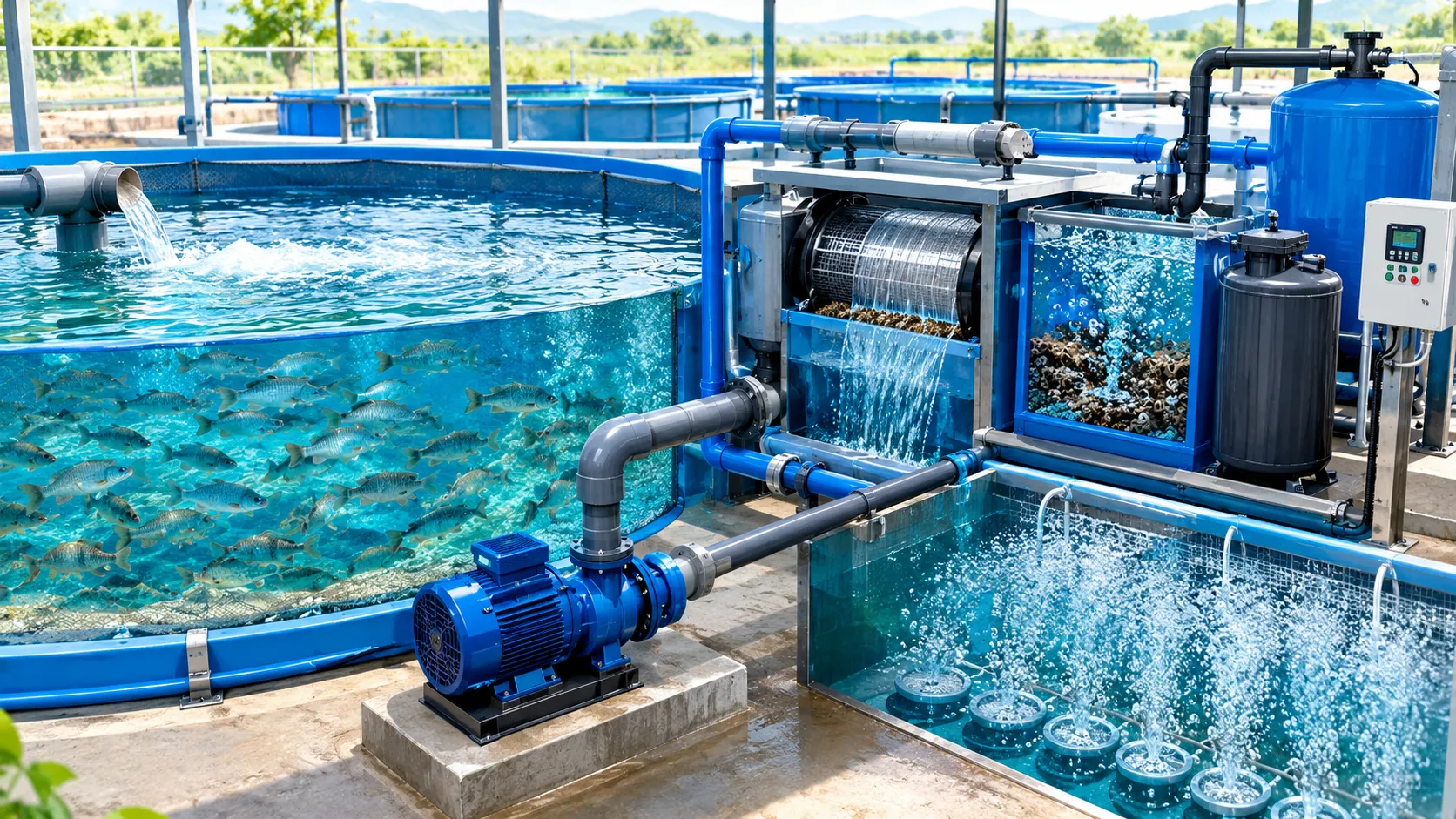
An efficient water circulation system is one of the most important parts of a successful aquaculture farm. Whether you are raising tilapia, catfish, trout, carp, or other fish species, maintaining clean, oxygen-rich water is essential for healthy fish growth, better feed conversion, and higher production.
In modern fish farming, water circulation does much more than move water from one location to another. It helps distribute dissolved oxygen, transport fish waste to filtration units, maintain consistent water temperatures, and prevent harmful substances from accumulating in fish tanks. A well-designed system can also reduce water consumption, improve energy efficiency, and support sustainable aquaculture practices.
However, building an efficient water circulation system requires careful planning. Farmers must select the appropriate water pump, calculate flow rate requirements, design suitable pipe layouts, install effective filtration equipment, and monitor water quality regularly. Each component must work together to maintain a stable environment for aquatic animals.
Importance of Efficient Water Circulation in Fish Farming
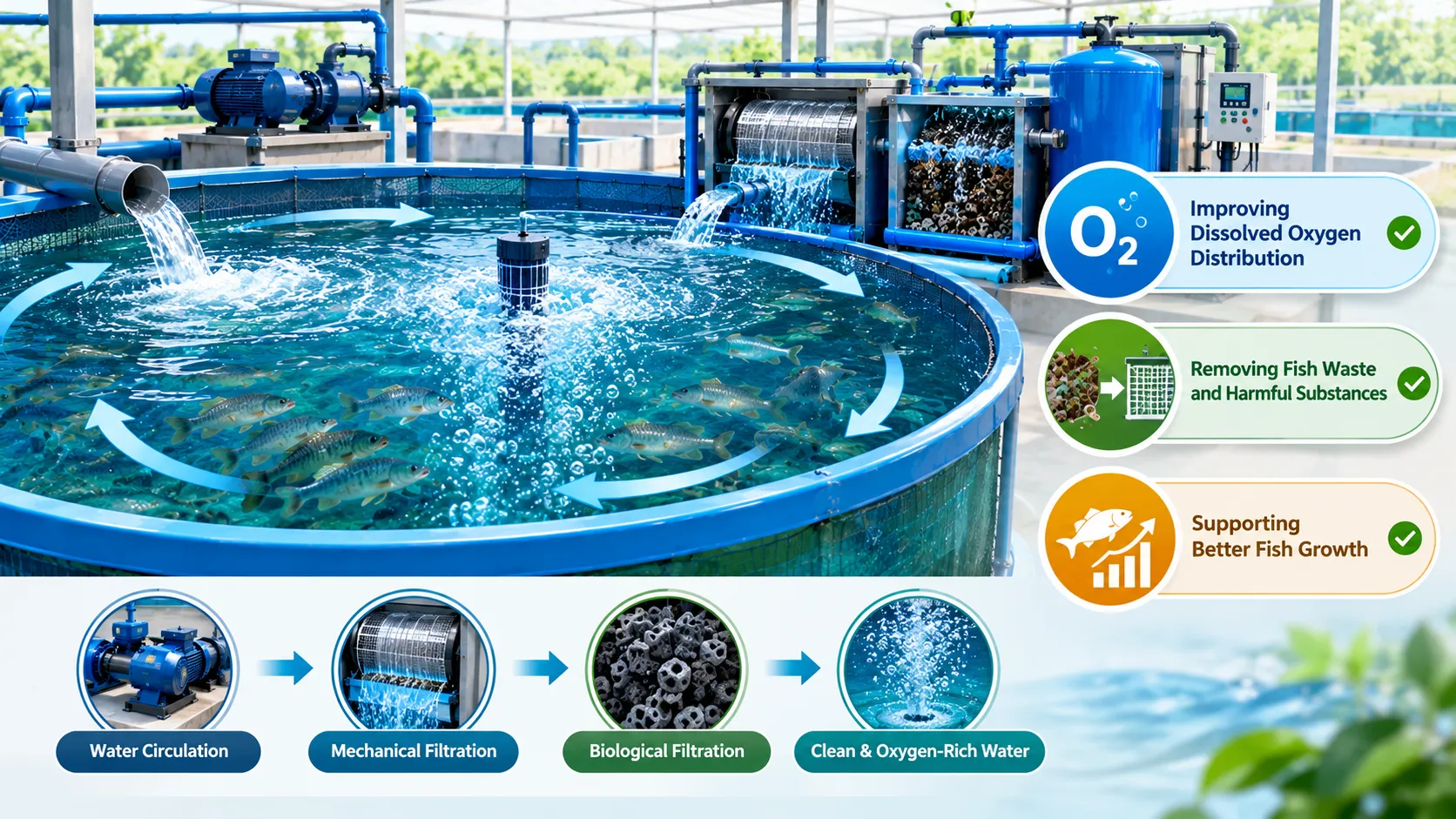
Efficient water circulation plays a critical role in maintaining a healthy environment for farmed fish. In aquaculture systems, fish continuously consume oxygen and release carbon dioxide, ammonia, and organic waste. Without proper water movement and treatment, these substances can accumulate and negatively affect fish health.
A reliable circulation system distributes oxygen throughout the culture tanks and helps move waste toward filtration equipment. It also reduces stagnant areas where debris can accumulate and water quality can deteriorate.
Improving Dissolved Oxygen Distribution
Fish require dissolved oxygen (DO) for respiration, metabolism, and normal growth. When water circulation is inadequate, oxygen levels may become uneven, particularly in densely stocked tanks.
A properly designed circulation system distributes oxygenated water throughout the tank and supports aeration equipment. This helps reduce the risk of oxygen shortages, especially during feeding periods when fish and beneficial bacteria may consume more oxygen.
For many warmwater aquaculture systems, maintaining dissolved oxygen around 5 mg/L or higher is a useful management target, although the appropriate level depends on the species, water temperature, stocking density, and production system.
Removing Fish Waste and Harmful Substances
Fish produce waste through respiration, digestion, and excretion. Uneaten feed and fecal matter can also accumulate in the water.
As organic waste decomposes, it increases oxygen demand and contributes to poor water quality. Ammonia released by fish and decomposing material can become particularly dangerous when concentrations rise.
Water circulation helps transport suspended solids to mechanical filters and delivers water to biological filters, where beneficial bacteria convert ammonia into nitrite and then nitrate.
Supporting Better Fish Growth
Healthy water conditions allow fish to feed efficiently, maintain normal activity, and convert feed into body mass more effectively.
Poor circulation can create oxygen-deficient zones, uneven temperatures, and areas where waste accumulates. These conditions may increase stress, reduce feeding activity, and make fish more vulnerable to disease.
An efficient water circulation system therefore supports better fish welfare, more consistent growth, and improved production management.
Main Components of an Aquaculture Water Circulation System
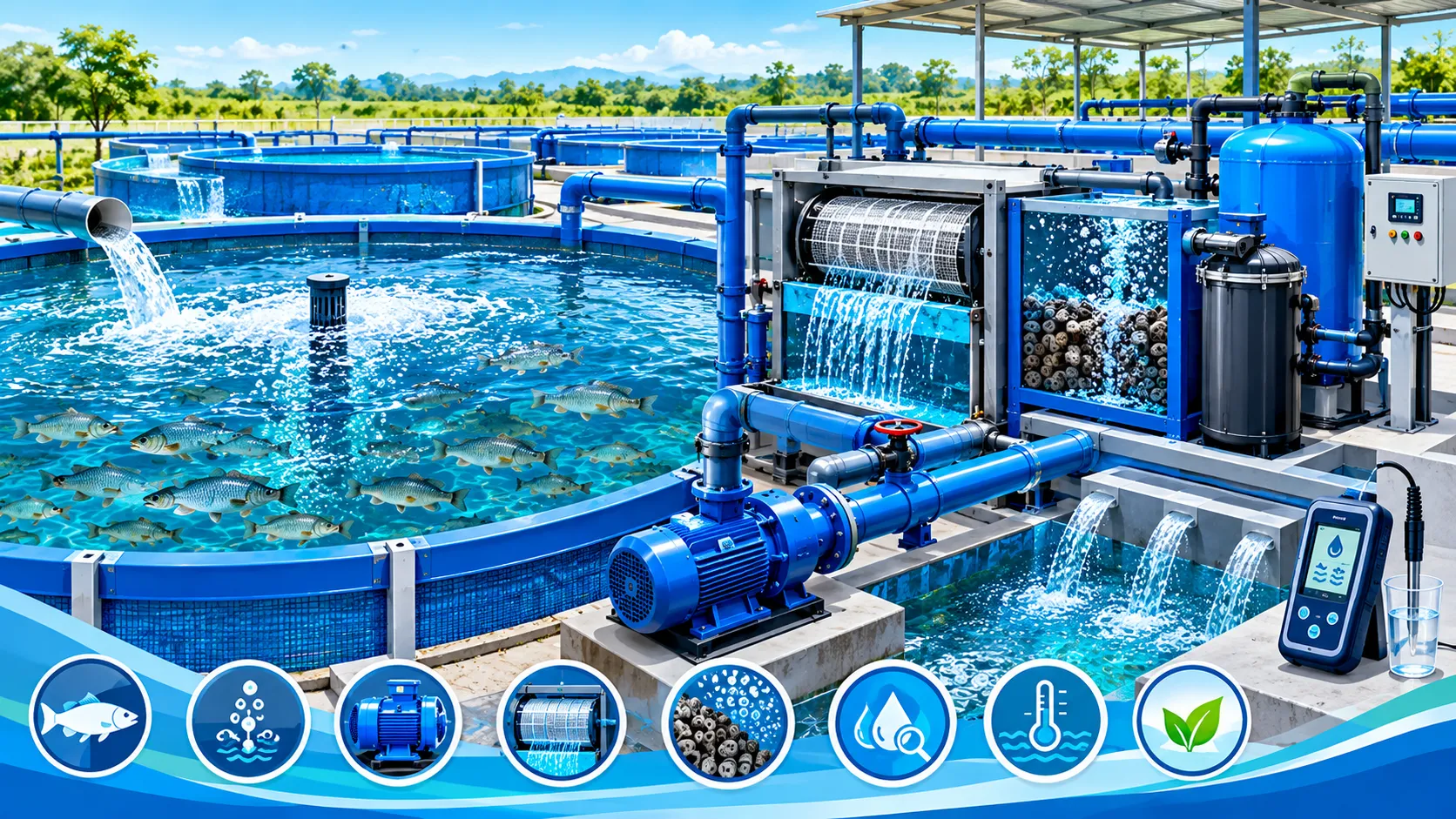
An aquaculture water circulation system consists of several interconnected components. The exact equipment depends on whether the farm uses ponds, flow-through tanks, raceways, or a recirculating aquaculture system (RAS).
Before purchasing equipment, farmers should determine the required water flow, daily feeding rate, stocking density, fish species, and available water supply.
- Water pump: Moves water through the system and provides the pressure required to overcome elevation differences and pipe resistance.
- Fish tanks or culture units: Hold the fish and provide the space needed for feeding, swimming, and growth.
- Pipes and plumbing: Transport water between tanks, pumps, filters, aeration equipment, and discharge points.
- Mechanical filtration: Removes suspended solids, including uneaten feed and fish feces.
- Biological filtration: Supports beneficial nitrifying bacteria that convert toxic ammonia into nitrite and then nitrate.
- Aeration or oxygenation equipment: Adds oxygen to the water to support fish respiration and biological filtration.
- Degassing equipment: Removes excess dissolved gases, particularly carbon dioxide, when required.
- Water quality monitoring equipment: Measures important parameters such as dissolved oxygen, pH, temperature, ammonia, and nitrite.
- Control and backup equipment: Includes valves, flow meters, alarms, backup aeration, and emergency power systems where appropriate.
In more advanced systems, ultraviolet (UV) disinfection or other water treatment technologies may also be installed to help manage specific microbial risks.
These components must be sized and arranged according to the farm's production requirements. A powerful pump cannot compensate for an undersized biofilter, inadequate oxygen supply, or poorly designed plumbing.
Designing an Efficient Water Circulation System for Aquaculture Farms
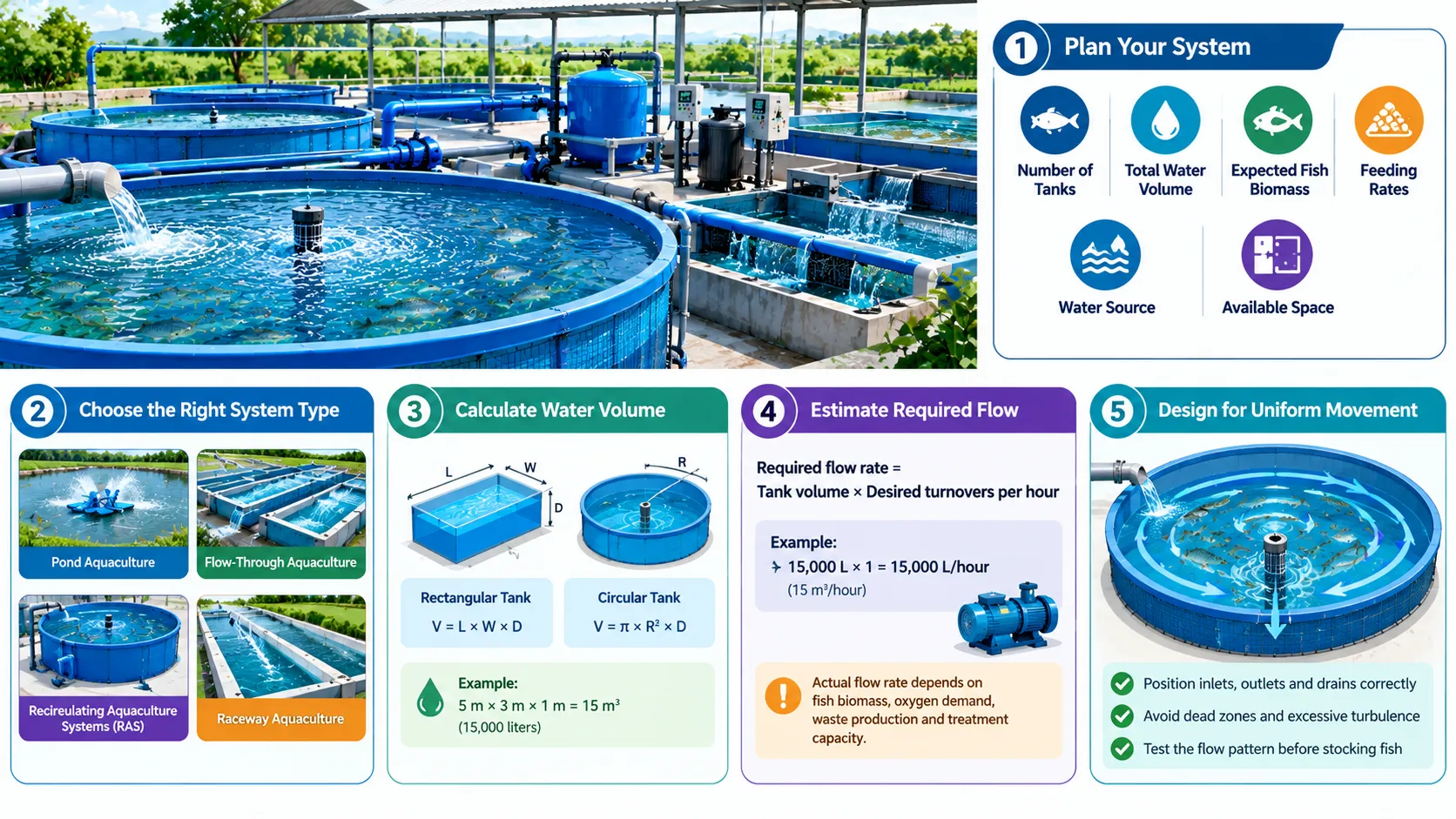
The first step in designing an efficient water circulation system is to understand the farm's production goals and hydraulic requirements.
Farmers should evaluate the number of tanks, total water volume, expected fish biomass, feeding rates, water source, and available space. These factors influence the amount of water that must circulate and the capacity of the treatment equipment.
Step 1: Determine the Type of Aquaculture System
Different production systems require different circulation strategies.
Pond aquaculture: Fish are raised in outdoor ponds. Circulation may involve aerators, paddlewheel aerators, water inlets, and drainage structures rather than continuous pumping through a complete filtration loop.
Flow-through aquaculture: Fresh water enters the culture tanks, passes through the fish-rearing area, and exits the system. Flow must provide suitable water quality while wastewater is managed responsibly.
Recirculating aquaculture systems (RAS): Water passes through filtration and treatment equipment before returning to the fish tanks. These systems require carefully coordinated pumping, filtration, oxygenation, and monitoring.
Raceway aquaculture: Fish are raised in elongated channels through which water moves continuously. The system must maintain appropriate flow distribution and remove waste before water quality deteriorates.
Step 2: Calculate the Total Water Volume
Calculate the water volume of each tank and add the volumes together.
For a rectangular tank:
Water volume = Length × Width × Water depth
For a circular tank:
Water volume = π × Radius² × Water depth
For example, a rectangular tank measuring 5 meters long, 3 meters wide, and 1 meter deep holds:
5 × 3 × 1 = 15 cubic meters.
Since one cubic meter equals 1,000 liters, the tank holds approximately 15,000 liters of water.
Knowing the total water volume helps establish preliminary circulation requirements and calculate the system's water turnover rate.
Step 3: Estimate the Required Water Flow
For a tank-based RAS, a preliminary calculation may use the desired tank turnovers per hour.
Required flow rate = Tank volume × Desired turnovers per hour
For the 15,000-liter tank, a hypothetical design target of one turnover per hour gives:
15,000 × 1 = 15,000 liters per hour.
This is approximately 15 cubic meters per hour.
However, one turnover per hour is not a universal requirement. Some systems may require more or less circulation depending on fish biomass, oxygen demand, waste production, tank geometry, and treatment capacity.
The final flow rate must also account for how efficiently the water moves through the tank and treatment equipment. Pump sizing should therefore follow a complete hydraulic and water-quality assessment rather than relying on turnover rate alone.
Step 4: Design for Uniform Water Movement
Water should circulate throughout the tank without creating excessive turbulence or leaving stagnant areas.
Tank inlets, outlets, and drains should be positioned to support effective mixing and waste removal. Circular tanks often use tangential water inlets to create a rotational flow that helps concentrate settleable solids near the central drain.
Before introducing fish, test the circulation pattern and inspect the tank for dead zones, excessive currents, and areas where waste collects.
Choosing the Right Water Pump for Aquaculture
- Pump Flow Rate: Select a pump that delivers the required water volume in liters per hour (LPH) or cubic meters per hour (m³/h).
- Total Dynamic Head (TDH): Calculate the total head, including elevation differences, pipe friction, bends, valves, and filtration equipment resistance.
- Centrifugal Pumps: Suitable for many aquaculture applications requiring reliable water transfer through tanks and filtration systems.
- Submersible Pumps: Useful for sumps, drainage pits, and underwater water-transfer applications.
- Axial-Flow Pumps: Ideal for moving large volumes of water at relatively low heads.
- Mixed-Flow Pumps: Suitable for applications requiring high water flow with moderate head pressure.
- Pump Performance Curve: Check the manufacturer's performance curve to determine the actual flow rate at the required operating head.
- Energy Efficiency: Choose an energy-efficient pump to reduce electricity costs and improve long-term farm profitability.
- Continuous-Duty Operation: Ensure the pump is designed to operate continuously under aquaculture farm conditions.
- Corrosion Resistance: Select pump materials compatible with freshwater or saltwater environments.
- Maintenance Accessibility: Choose a pump that allows easy inspection, cleaning, servicing, and replacement of components.
- Avoid Oversizing and Undersizing: An undersized pump may provide insufficient circulation, while an oversized pump can waste electricity and create excessive water velocity.
- System Compatibility: Ensure the pump meets the water circulation, filtration, and water-transfer requirements of the aquaculture system.
- Reliable Water Circulation: Prioritize consistent water movement to support dissolved oxygen distribution, filtration performance, and healthy aquatic organisms.
- Cost-Effective Pump Selection: Choose a pump that delivers the required flow at the actual operating head with minimum practical energy consumption.
Water Flow Rate Requirements for Different Aquaculture Systems
Water flow rate requirements depend on fish species, stocking density, feeding rate, tank size, and aquaculture system type. Tank turnover is calculated by dividing the hourly water flow rate by the tank volume.
For example, a 20,000-liter tank with a flow rate of 20,000 liters per hour has one turnover per hour. Pond, tank, raceway, and recirculating aquaculture systems (RAS) have different circulation needs based on oxygen demand, waste removal, and filtration capacity.
Proper flow rate calculations help maintain water quality, improve energy efficiency, and support healthy fish growth.
Water Pipe Layout and Plumbing for Fish Farms
- Suitable Pipe Materials: Choose PVC, HDPE, or other approved materials that are safe for aquaculture water systems.
- Correct Pipe Diameter: Select the appropriate pipe size to maintain the required flow rate and minimize friction losses.
- Efficient Pipe Layout: Keep pipe runs as direct as possible and minimize unnecessary bends, elbows, and restrictive fittings.
- Corrosion Resistance: Use pipes, fittings, seals, and metal components suitable for freshwater or saltwater environments.
- Isolation Valves: Install valves to isolate individual fish tanks, pumps, and filtration units during maintenance.
- Proper Drainage System: Use appropriately sized drainage pipes to remove wastewater and collected solids efficiently.
- Flow Meters and Pressure Gauges: Monitor water flow and pressure to identify blockages, leaks, and performance problems.
- Leak Prevention and Maintenance: Secure pipe connections, prevent water leaks, and ensure easy access for inspection and repairs.
- Gravity-Fed Water Distribution: Use gravity between treatment stages wherever practical to reduce pumping requirements and energy costs.
- Hydraulic Calculations: Consider flow rate, water velocity, pipe length, elevation changes, and friction losses when designing the plumbing system.
Water Filtration Systems for Aquaculture Farms
- Mechanical Filtration: Remove suspended solids, fish feces, uneaten feed, and other particles to maintain water quality.
- Drum Filters and Screen Filters: Use suitable filtration equipment to capture solid waste and reduce the organic load.
- Settling Tanks and Swirl Separators: Separate settleable solids from water before they reach other treatment stages.
- Biological Filtration: Use biofilters to support beneficial microorganisms that convert toxic ammonia into nitrite and then nitrate.
- Moving Bed Biofilm Reactors (MBBRs): Provide surfaces for beneficial bacteria and are commonly used in recirculating aquaculture systems (RAS).
- Biofilter Sizing and Maintenance: Size biofilters according to fish biomass, feeding rate, and total ammonia nitrogen (TAN) production.
- Water Quality Management: Maintain suitable dissolved oxygen, pH, alkalinity, and temperature for effective biological filtration.
- UV and Ozone Treatment: Apply appropriate disinfection technologies to help control microorganisms when properly designed and operated.
- Solids Removal and Waste Management: Remove accumulated waste promptly to reduce oxygen consumption and prevent deteriorating water quality.
- Integrated Water Treatment: Combine mechanical filtration, biological filtration, oxygenation, and carbon dioxide removal to maintain a stable environment for healthy fish growth.
Maintaining Proper Dissolved Oxygen Levels in Aquaculture Water
Dissolved oxygen is one of the most important water quality parameters in fish farming.
Fish use oxygen for respiration, while beneficial bacteria also consume oxygen as they break down waste and convert ammonia into nitrate. As a result, oxygen demand increases with fish biomass, feeding rate, and biological activity.
Insufficient oxygen can reduce feeding, slow growth, stress fish, and cause mortality in severe cases.
Methods to Increase Dissolved Oxygen
- Paddlewheel aerators: Commonly used in aquaculture ponds to increase oxygen transfer and improve water movement.
- Diffused aeration: Air compressors or blowers deliver air through diffusers, creating bubbles that transfer oxygen into the water.
- Venturi aerators: Use water flow to draw air into a moving stream, increasing contact between air and water.
- Oxygen cones and oxygenation systems: Used in some intensive facilities to transfer oxygen efficiently into circulating water.
The appropriate technology depends on the farm's design, stocking density, water depth, and oxygen requirements.
Monitor Oxygen Regularly
Use a calibrated dissolved oxygen meter or another suitable measurement method to monitor oxygen concentrations.
In outdoor ponds, oxygen often reaches its lowest level shortly before sunrise because aquatic plants and algae consume oxygen overnight. Hot weather, cloudy conditions, algae die-offs, and heavy organic loads can increase the risk of oxygen depletion.
In intensive tank systems, monitoring may need to be continuous because oxygen can decline quickly when pumps, aeration equipment, or oxygen supply systems fail.
For many warmwater systems, maintaining approximately 5 mg/L or higher is a useful starting target, but species-specific requirements and temperature must be considered.
Install backup aeration and alarms where practical. If oxygen drops unexpectedly, respond immediately by checking equipment, restoring aeration, and reducing additional oxygen demand as appropriate.
Water Quality and Temperature Management in Fish Farming
- Dissolved Oxygen: Maintain adequate oxygen levels to support fish health, growth, and beneficial bacteria.
- Water Temperature: Keep water within the suitable temperature range for the cultured fish species to support metabolism and feeding.
- pH and Alkalinity: Monitor pH and maintain sufficient alkalinity to stabilize water conditions and support biological filtration.
- Ammonia Management: Monitor ammonia levels regularly to prevent toxic accumulation caused by fish waste and decomposing organic matter.
- Nitrite and Nitrate Control: Test nitrite and nitrate to evaluate biofilter performance and prevent harmful waste accumulation.
- Temperature Control Systems: Use shading, insulation, heaters, heat exchangers, or cooling systems when necessary to prevent temperature stress.
- Regular Water Testing: Establish a consistent testing schedule for dissolved oxygen, temperature, pH, ammonia, nitrite, nitrate, and alkalinity.
- Species-Specific Water Quality: Set water quality targets according to fish species, growth stage, salinity, and aquaculture system requirements.
- Continuous Monitoring in Intensive Farms: Use sensors and alarms where appropriate to detect sudden changes in temperature or dissolved oxygen.
- Water Quality Records: Maintain accurate testing records to identify trends, detect problems early, and improve fish health and farm productivity.
Recirculating Aquaculture Systems (RAS) and Their Benefits
A recirculating aquaculture system (RAS) is a fish production system that treats and reuses a large proportion of its water.
Instead of continuously replacing most of the culture water, a RAS circulates water through treatment equipment and returns it to the fish tanks.
These systems are used for species such as tilapia, catfish, trout, and other freshwater or marine fish, provided that the facility is designed for the species' biological requirements.
How a RAS Works
- Water leaves the fish tank through an outlet or collection system.
- Mechanical filtration removes suspended solids.
- Biological filtration converts ammonia into nitrite and nitrate.
- Degassing removes excess carbon dioxide where necessary.
- Aeration or oxygenation restores suitable dissolved oxygen levels.
- Additional treatment, such as UV disinfection, may be used where appropriate.
- Treated water returns to the fish tanks.
The exact sequence varies according to system design and equipment requirements.
Benefits of Recirculating Aquaculture Systems
- Lower water consumption: Water reuse can substantially reduce freshwater demand compared with many flow-through systems.
- Greater production control: Indoor facilities can provide more consistent control over water quality and temperature.
- Efficient land use: Tank-based systems can support intensive production in relatively compact areas.
- Waste management: Concentrated solids can be collected and managed rather than dispersed immediately into the surrounding environment.
- Production flexibility: Farms may be able to operate in locations where water availability or environmental conditions make conventional systems less suitable.
Important Limitations
RAS technology also presents challenges.
The initial investment can be substantial, and the system requires reliable electricity, skilled management, regular water testing, and carefully maintained filtration equipment.
A pump failure, oxygen shortage, or biofilter problem can rapidly affect fish health. Therefore, backup power, emergency aeration, alarms, and clear operating procedures are important components of a commercial RAS design.
Energy-Efficient Water Circulation Solutions for Aquaculture Farms
- Energy-Efficient Pumps: Select pumps that deliver the required flow rate and head while minimizing electricity consumption.
- Pump Performance Curves: Check manufacturer specifications, motor efficiency, and operating conditions before purchasing equipment.
- Reduce Pipe Friction: Use appropriately sized pipes and minimize unnecessary bends, restrictive fittings, and excessive pipe lengths.
- Regular Equipment Maintenance: Clean filters, inspect pipes, and maintain pumps to prevent blockages and unnecessary energy use.
- Variable-Frequency Drives (VFDs): Adjust pump motor speed to match changing water circulation requirements where appropriate.
- Gravity-Fed Water Flow: Use gravity to move water between tanks and filtration stages wherever site conditions allow.
- Efficient Filtration Systems: Maintain clean filters and optimize treatment equipment to reduce hydraulic resistance and pumping demand.
- Renewable Energy Integration: Consider solar power to support suitable aquaculture operations and reduce dependence on grid electricity.
- Backup Power Systems: Provide reliable backup electricity to maintain essential water circulation and oxygen supply during power outages.
- Balance Energy Savings and Fish Health: Optimize electricity consumption without compromising dissolved oxygen, filtration efficiency, water quality, or fish welfare.
Water Circulation System Installation and Setup
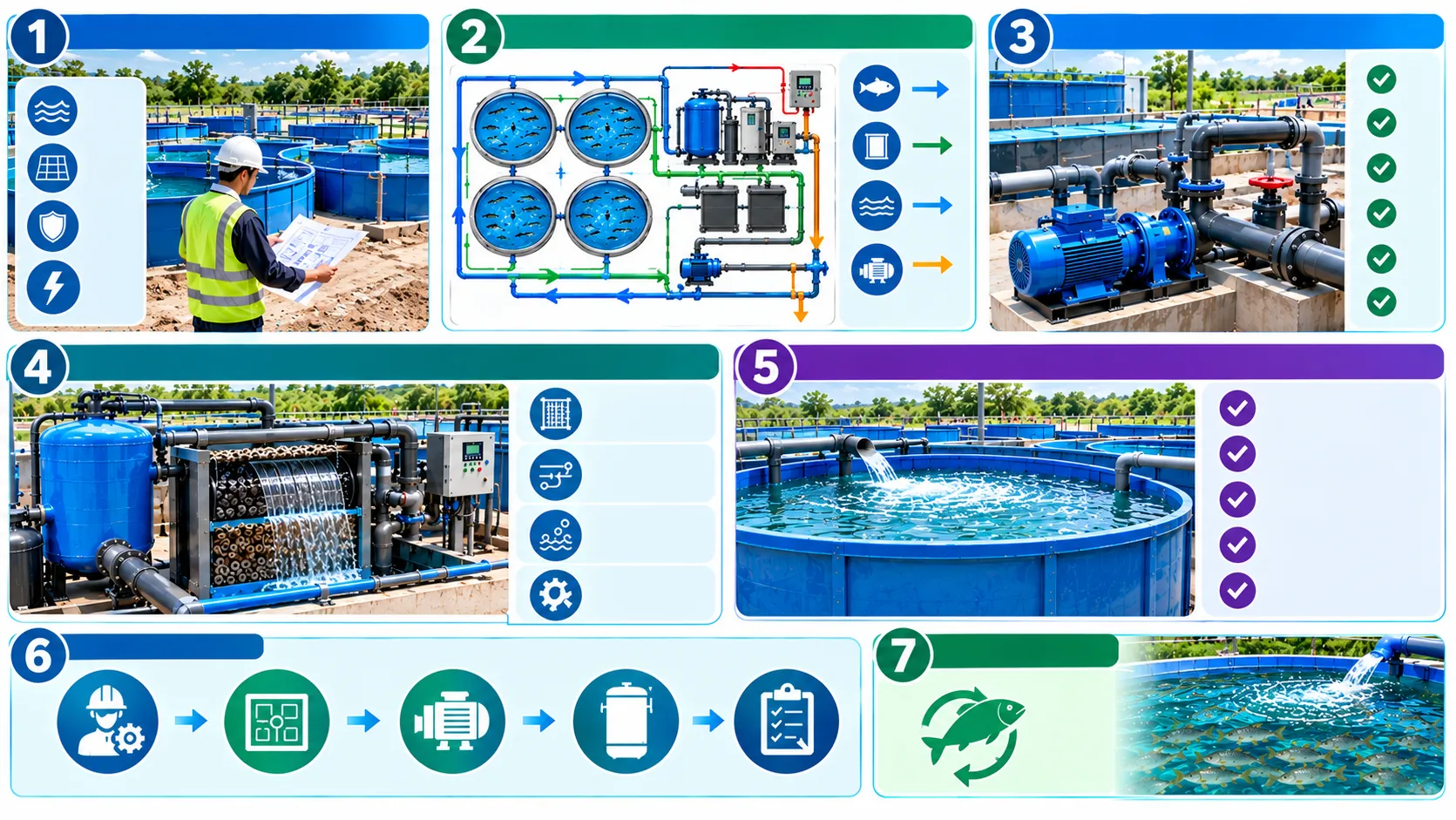
Proper installation ensures that the circulation system operates safely and delivers the expected performance.
Before installing equipment, prepare a layout showing fish tanks, pump locations, filtration units, water supply lines, return pipes, drainage points, and electrical connections.
Prepare the Installation Site
The site should provide adequate drainage, safe equipment access, and a stable foundation for tanks and machinery.
Check that the ground or building structure can support the combined weight of the tanks, water, equipment, and stored materials.
Electrical equipment must be installed in accordance with applicable electrical and safety requirements. Use suitable protective devices and have qualified professionals handle electrical work.
Install the Pump and Pipework
Position the pump according to the manufacturer's instructions.
Ensure that suction lines are appropriately sized and configured to reduce the risk of air entry, blockage, and cavitation. Follow the pump manufacturer's requirements for priming, suction lift, and installation.
Install valves and accessible connections so individual components can be isolated for maintenance.
Secure pipes properly and inspect joints for leaks before the system enters operation.
Connect and Test Filtration Equipment
Install mechanical filters and biofilters according to their design specifications.
Verify that the filters can handle the planned flow and waste load without excessive pressure loss or overflow.
Check aeration, oxygenation, and degassing equipment to confirm that each unit operates as intended.
Test the Complete System Before Stocking
Run the system without fish first.
Check for leaks, unusual vibrations, air entering the suction line, blocked outlets, uneven tank flow, and unexpected pressure changes.
Measure actual flow rates and confirm that water reaches all intended tanks and treatment units.
Test backup equipment and alarms before introducing fish.
Finally, establish and verify the biological filter. Fish should only be stocked at a level that the mature biofilter, oxygen supply, and circulation system can safely support.
Routine Maintenance of Aquaculture Water Circulation Systems
Routine maintenance is essential for protecting fish health and preventing expensive equipment failures.
Even a well-designed water circulation system can lose efficiency if filters become clogged, pumps wear out, or pipes accumulate debris.
Inspect Pumps and Motors
Check pumps for unusual noise, vibration, leaks, overheating, and changes in flow.
Inspect strainers and intake screens to prevent blockages.
Follow the manufacturer's maintenance schedule for bearings, seals, lubrication, and other serviceable components.
Clean Filters Regularly
Remove accumulated solids from mechanical filters before they begin to restrict flow or allow waste to decompose in the system.
Clean filters according to their design. Avoid unnecessary or excessive cleaning of biological filter media because it can damage the beneficial bacterial population.
Monitor filter performance through flow measurements, pressure differences, and water quality tests.
Monitor Water Quality
Record dissolved oxygen, pH, temperature, ammonia, and nitrite according to the farm's monitoring plan.
A sudden change in these parameters may indicate a circulation problem, excessive feeding, a malfunctioning biofilter, or another operational issue.
Respond to abnormal readings before they become serious.
Maintain Backup Equipment
Test standby pumps, emergency aerators, backup power supplies, oxygen systems, and alarms regularly.
Keep essential spare parts available where practical.
A written maintenance schedule helps ensure that critical equipment is inspected consistently rather than only after a failure.
Common Water Circulation Problems and Their Solutions
| Water Circulation Problem | Possible Causes | Recommended Solutions |
| Low Water Flow | Clogged filters, blocked pipes, closed valves, pump wear, or air entering the suction line. | Clean filters, inspect pipes and valves, check the pump intake, and measure the actual flow rate. |
| Low Dissolved Oxygen | Pump failure, inadequate aeration, high stocking density, high water temperature, or increased oxygen demand. | Restore circulation, activate backup aeration, measure dissolved oxygen, and reduce feeding temporarily when appropriate. |
| High Ammonia or Nitrite | Immature biofilters, overfeeding, organic waste buildup, low oxygen, or unstable water conditions. | Test water quality, inspect biofilters, remove excess waste, adjust feeding, and perform safe water exchange when necessary. |
| Uneven Water Distribution | Poor inlet placement, unbalanced pipe branches, incorrect valve settings, or hydraulic resistance. | Measure flow in individual tanks, adjust valves, remove restrictions, and improve water inlet placement. |
| Excessive Energy Consumption | Oversized pumps, restrictive pipes, clogged filters, inefficient motors, or excessive pumping head. | Check pump performance, clean filters, optimize pipework, and consider energy-efficient equipment. |
| Pump Failure or Power Outage | Electrical faults, motor overheating, mechanical wear, blocked intakes, or power interruptions. | Install alarms, maintain backup aeration, prepare emergency power, and keep essential spare parts available. |
| Excessive Carbon Dioxide | High fish biomass, inadequate degassing, poor ventilation, or insufficient gas exchange. | Inspect degassing equipment, improve gas exchange, and ensure adequate circulation through the treatment system. |
| Biofilter Performance Decline | Low dissolved oxygen, unsuitable pH, insufficient alkalinity, chemical damage, or excessive solids. | Monitor water quality, maintain suitable oxygen and alkalinity, clean accumulated solids, and protect beneficial microorganisms. |
Important: Regular maintenance, water quality monitoring, and emergency planning help maintain efficient circulation, protect fish health, and reduce production losses in aquaculture farms.
Conclusion
Building an efficient water circulation system for aquaculture farms requires more than selecting a pump and connecting a few pipes. It involves coordinating water flow, mechanical filtration, biological filtration, oxygenation, gas removal, and water quality monitoring to create a stable environment for fish.
Start by identifying your farm's production system, calculating tank volumes, estimating circulation requirements, and selecting equipment based on actual operating conditions. Use appropriate pipe diameters, install effective filtration, monitor dissolved oxygen, and maintain suitable temperature and water chemistry.
For intensive farms, a well-designed recirculating aquaculture system can reduce water consumption and provide greater control over production conditions. However, its success depends on reliable equipment, a mature biofilter, regular monitoring, and effective emergency planning.
Routine maintenance and early troubleshooting are equally important. By keeping pumps, pipes, filters, and aeration equipment in good condition, fish farmers can improve system reliability, protect fish health, reduce unnecessary energy consumption, and support long-term aquaculture productivity.
Frequently Asked Questions
1. What is a water circulation system in aquaculture?
A water circulation system moves water through fish tanks, filters, and aeration equipment to maintain healthy aquatic conditions.
2. Why is water circulation important in fish farming?
Water circulation distributes dissolved oxygen, removes fish waste, supports filtration, and maintains suitable water quality for healthy fish growth.
3. Which water pump is best for aquaculture farms?
The best pump depends on required flow rate, total dynamic head, tank size, energy efficiency, and the farm's specific circulation requirements.
4. How often should water circulate in fish tanks?
Many tank-based systems use one to two turnovers per hour as an initial guideline, but actual requirements depend on stocking density, species, and filtration capacity.
5. How can farmers improve dissolved oxygen levels?
Farmers can improve dissolved oxygen using paddlewheel aerators, diffused aeration, oxygenation equipment, and properly maintained water circulation systems.
6. What filtration systems are used in aquaculture?
Aquaculture farms commonly use mechanical filters to remove solids and biological filters to convert toxic ammonia into nitrite and then nitrate.
7. What are the benefits of a recirculating aquaculture system?
Recirculating aquaculture systems reduce water consumption, improve environmental control, support intensive production, and allow effective management of water quality.
8. How can aquaculture farms reduce water circulation costs?
Farms can reduce operating costs by selecting efficient pumps, optimizing pipe diameters, cleaning filters regularly, minimizing friction losses, and using gravity flow where practical.