

How Contractors Can Plan Aquaculture Infrastructure
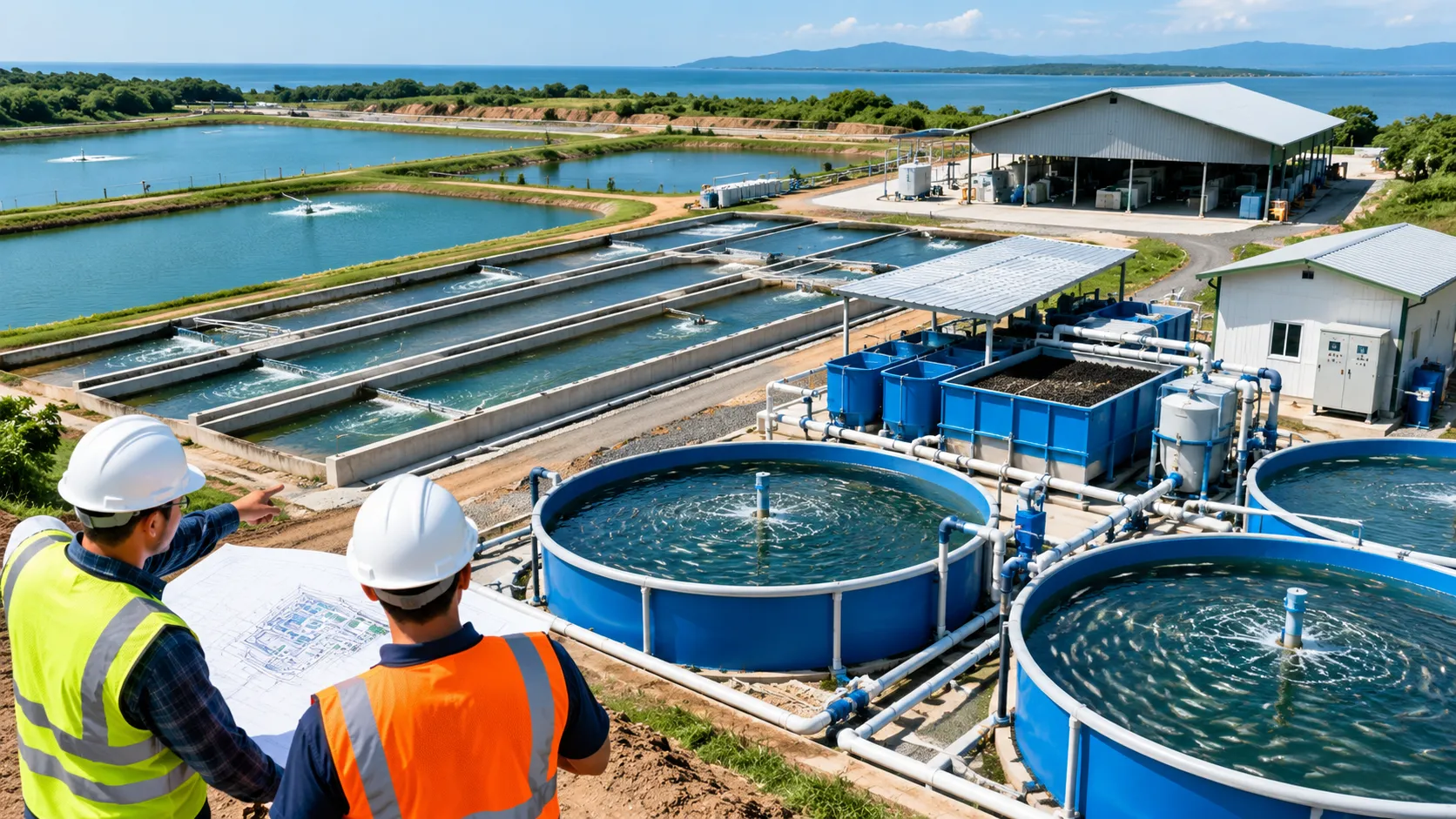
How Contractors Can Plan Aquaculture Infrastructure for Commercial Facilities
Commercial aquaculture is becoming an important part of modern food production, providing a reliable way to raise fish, shrimp, and other aquatic species for local and international markets. As demand for seafood increases, businesses need well-designed aquaculture facilities that support healthy aquatic life, efficient water management, and long-term profitability. For contractors, planning these facilities requires more than constructing fish tanks or ponds. It involves coordinating site development, structural engineering, plumbing, filtration, electrical systems, biosecurity, and environmental compliance.
A successful commercial aquaculture project begins with a clear understanding of the farming operation. Contractors must consider the species being raised, production targets, available land, water resources, construction materials, and the owner's operating budget before finalizing the design. These decisions influence the facility's layout, equipment requirements, construction schedule, and future expansion opportunities.
Modern fish farming operations may use traditional earthen ponds, concrete raceways, indoor tank systems, or Recirculating Aquaculture Systems (RAS). Each approach has different infrastructure requirements, operating costs, and water management needs. Selecting the right system helps contractors deliver a facility that meets production goals while reducing unnecessary construction expenses and maintenance challenges.
This guide explains how contractors can plan commercial aquaculture infrastructure, from site selection and facility design to water treatment, construction costs, safety requirements, and long-term maintenance. It also highlights essential industry concepts and practical considerations that help project owners, construction professionals, and aquaculture operators make informed decisions.
[ Discuss Your Aquaculture Project ]
Essential Components of Commercial Aquaculture Infrastructure
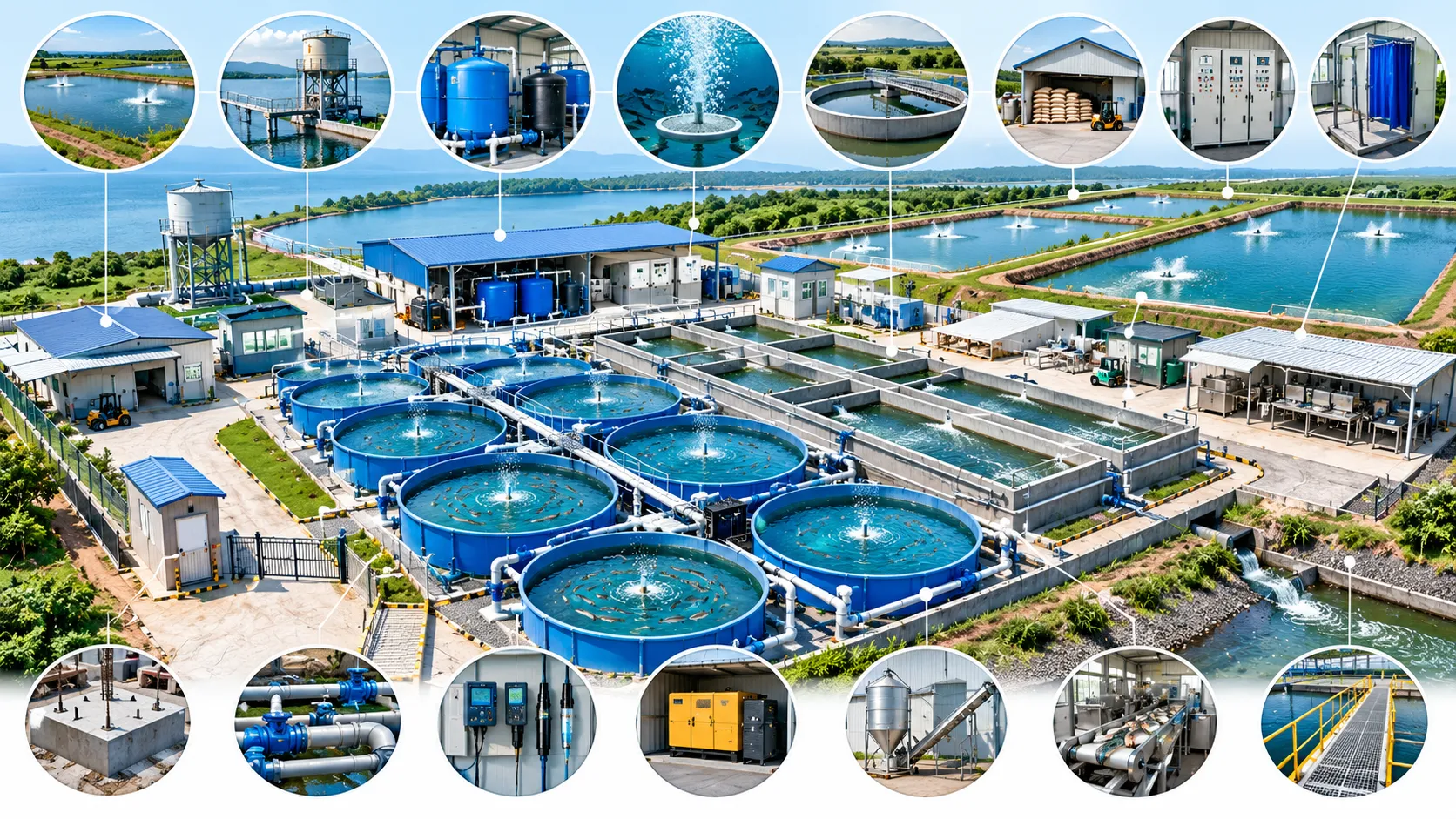
Commercial aquaculture infrastructure includes the buildings, equipment, utilities, and water management systems needed to operate a fish or seafood production facility successfully.
- Production Systems: Fish tanks, earthen ponds, concrete raceways, and specialized shrimp-rearing units.
- Water Supply Infrastructure: Wells, reservoirs, intake structures, pipelines, valves, and water distribution manifolds.
- Water Treatment Equipment: Mechanical filters, biological filters, settling tanks, and suitable disinfection units.
- Aeration and Oxygenation Systems: Air blowers, diffusers, oxygen cones, and equipment that maintains adequate dissolved oxygen levels.
- Drainage and Wastewater Management: Floor drains, sludge collection systems, sedimentation tanks, and approved wastewater discharge or reuse systems.
- Buildings and Storage Facilities: Pump rooms, feed storage areas, equipment rooms, laboratories, and processing spaces.
- Electrical and Control Systems: Pumps, electrical panels, sensors, alarms, automated feeders, and water quality monitoring equipment.
- Biosecurity Infrastructure: Controlled entry points, equipment sanitation stations, isolation tanks, and quarantine areas.
- Structural and Foundation Systems: Concrete foundations, tank supports, reinforced floors, and load-bearing structures designed for operational requirements.
- Plumbing and Pipe Networks: Properly sized supply pipes, drainage lines, valves, fittings, and manifolds for reliable water circulation.
- Environmental Monitoring Equipment: Temperature sensors, dissolved oxygen meters, pH meters, and systems for monitoring ammonia and other water quality parameters.
- Backup Power and Emergency Systems: Backup generators, emergency oxygen supplies, standby pumps, and alarms to protect fish during equipment failures.
- Feed Handling and Storage: Dry, secure storage areas, feed distribution equipment, and automated feeding systems where appropriate.
- Harvesting and Processing Areas: Harvesting equipment, handling stations, grading systems, and processing facilities when required.
- Maintenance and Access Areas: Service walkways, equipment access routes, inspection points, and safe working spaces for maintenance personnel.
Contractors should coordinate all these components during the planning and design stages. Proper coordination reduces construction conflicts, improves operational efficiency, simplifies maintenance, and supports long-term aquaculture production.
Site Selection and Land Planning for Commercial Aquaculture Facilities
- Water Availability and Quality: Ensure a reliable water source with suitable temperature, pH, salinity, and chemical properties for the selected aquatic species.
- Land Elevation and Topography: Evaluate land slopes, elevation, and surface conditions to reduce earthwork costs and improve drainage.
- Soil Conditions and Geotechnical Testing: Assess soil strength, permeability, groundwater levels, and settlement risks to design stable foundations and prevent pond seepage.
- Road Access and Transportation: Provide convenient access for feed deliveries, construction equipment, harvested fish, and other essential supplies.
- Electricity and Utility Access: Confirm reliable electricity, water supply connections, and backup power options for critical aquaculture equipment.
- Flood Risk and Environmental Protection: Evaluate stormwater drainage, flood hazards, nearby pollution sources, and measures to protect surrounding ecosystems.
- Location and Market Accessibility: Consider proximity to customers, suppliers, skilled labor, processing facilities, and distribution networks.
- Land Availability and Future Expansion: Reserve sufficient space for additional production units, wastewater treatment systems, storage buildings, and future development.
- Regulatory Compliance and Environmental Assessment: Review local land-use restrictions, water-use permits, wastewater discharge requirements, and applicable environmental regulations before construction.
Commercial Aquaculture Facility Design and Layout Planning
Commercial aquaculture facility design helps contractors create efficient, safe, and well-organized fish farming facilities by arranging essential infrastructure according to operational requirements. These facilities include production tanks, nursery areas, water filtration systems, pumps, drainage networks, feed storage, laboratories, harvesting zones, and wastewater treatment areas. Before construction begins, contractors should coordinate with farm owners, aquaculture specialists, and engineers to determine production capacity,
stocking density, fish species requirements, water quality needs, and suitable farming systems. The layout should support smooth workflows, efficient water circulation, effective biosecurity, convenient equipment access, and safe maintenance while separating clean supplies from waste-handling activities. Contractors must also provide sufficient space for walkways, pipe corridors, electrical controls, emergency exits, and future expansion to ensure long-term productivity, maintainability, and cost-effectiveness throughout the facility's operational life.
Water Supply and Distribution Systems for Fish Farming
- Water Demand Assessment: Calculate water requirements for tank filling, water replacement, cleaning, evaporation losses, and filter backwashing.
- Water Source Selection and Testing: Evaluate groundwater, rivers, reservoirs, and approved municipal supplies for availability, quality, and seasonal variations.
- Water Storage and Reservoirs: Install storage tanks and balancing reservoirs to maintain a dependable water supply during peak demand.
- Pumps and Distribution Pipelines: Select suitable pumps, pipe diameters, and distribution manifolds according to required flow rates, pressure losses, and elevation differences.
- Water Pretreatment and Filtration: Use screening, filtration, and appropriate treatment methods to remove suspended solids and address water quality risks.
- Flow Control and Monitoring Equipment: Install valves, flow meters, pressure gauges, and monitoring instruments to regulate and measure water delivery.
- Isolation Valves and Maintenance Access: Provide isolation points for individual tanks or production sections so maintenance can be completed without interrupting the entire farm.
- Backup Water Supply and Emergency Systems: Consider standby pumps, alternative water sources, and low-flow alarms to reduce the risk of production losses.
- Water Efficiency and Energy Management: Minimize leaks, control unnecessary water consumption, and optimize pump operation to reduce operating costs.
Contractors should design the water supply and distribution system according to the farm's production capacity, species requirements, and operating method. Proper planning improves water reliability, simplifies maintenance, and supports healthy fish growth.
Aquaculture Tank Construction and Fish Pond Design
Aquaculture tank construction and fish pond design depend on the species being raised, the production method, local soil conditions, and the farm's intended output. Contractors must choose structures that are durable, easy to clean, hydraulically efficient, and suitable for the operating environment.
Indoor aquaculture facilities commonly use fiberglass, polyethylene, coated steel, or reinforced concrete tanks. Each material offers different advantages in terms of durability, installation, maintenance, and cost. Reinforced concrete may be suitable for large permanent installations, while prefabricated tanks can offer faster installation and easier modification.
Tank design should consider water depth, operating volume, stocking density, circulation patterns, drainage arrangements, and access for cleaning. Smooth internal surfaces and well-designed outlets can make solids removal easier and reduce areas where waste accumulates.
Round tanks are frequently used in intensive fish production because their circulation can help move suspended solids toward a central or strategically positioned drain. However, tank geometry should be selected according to the species and hydraulic design rather than appearance alone.
Concrete structures require appropriate foundation design, reinforcement, concrete quality, curing, and waterproofing. Contractors must account for the weight of the structure and its water contents, as well as soil bearing capacity, groundwater pressure, and possible settlement.
- Clearing and preparing the site.
- Excavating and shaping the pond basin.
- Compacting suitable soil layers.
- Installing liners where required.
- Constructing inlet and outlet structures.
- Providing controlled overflow and drainage.
- Establishing embankments and erosion protection.
- Planning access for harvesting and maintenance.
Earthen ponds need adequate embankment stability and seepage control. Poorly compacted soil or badly designed outlets can cause water loss, erosion, and structural failure.
Pond depth, shape, and surface area should reflect the farmed species, climate, water exchange method, and harvesting requirements. Contractors should avoid choosing dimensions without consulting the aquaculture system designer.
Before introducing fish, tanks and ponds should be inspected for leaks, drainage problems, surface defects, and equipment failures. A controlled filling and operational test helps identify problems while repairs are still relatively straightforward.
Recirculating Aquaculture Systems (RAS) and Water Filtration
Recirculating Aquaculture Systems (RAS) are increasingly used in commercial fish farming because they allow water to be treated and reused within a controlled production environment. These systems can reduce water demand and provide greater control over environmental conditions, although they require careful engineering and ongoing technical management.
A typical RAS facility circulates water from fish tanks through treatment equipment before returning it to the production units. The process removes waste, supports biological filtration, and maintains suitable water conditions.
Mechanical filtration
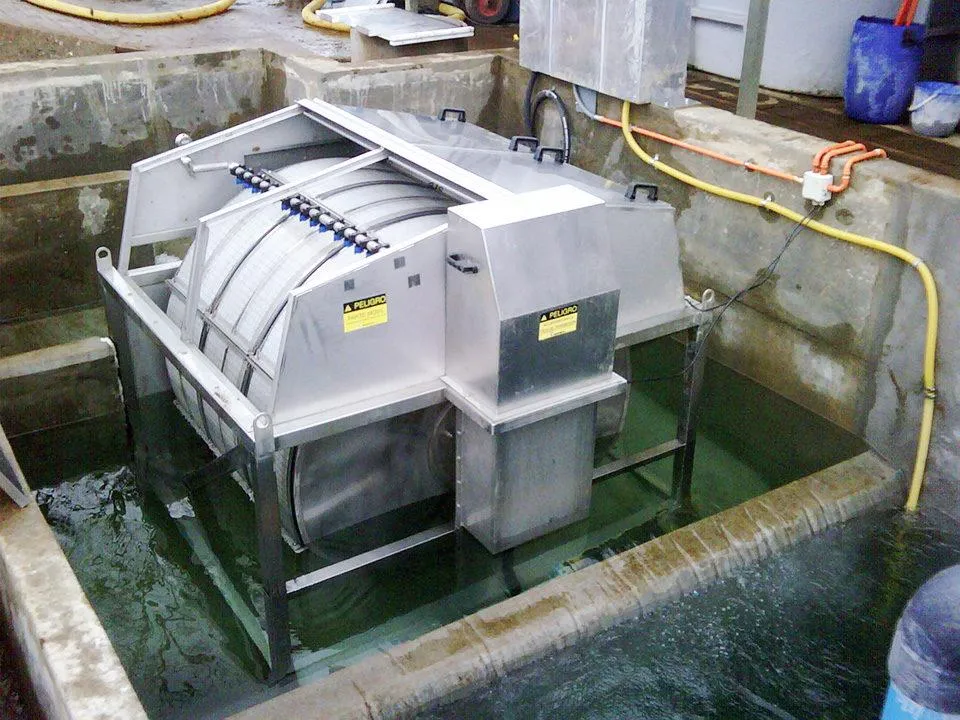
Removes suspended solids such as uneaten feed and fish waste. Drum filters, settling tanks, and other solids-separation equipment can reduce the organic load entering later treatment stages.
Biological filtration
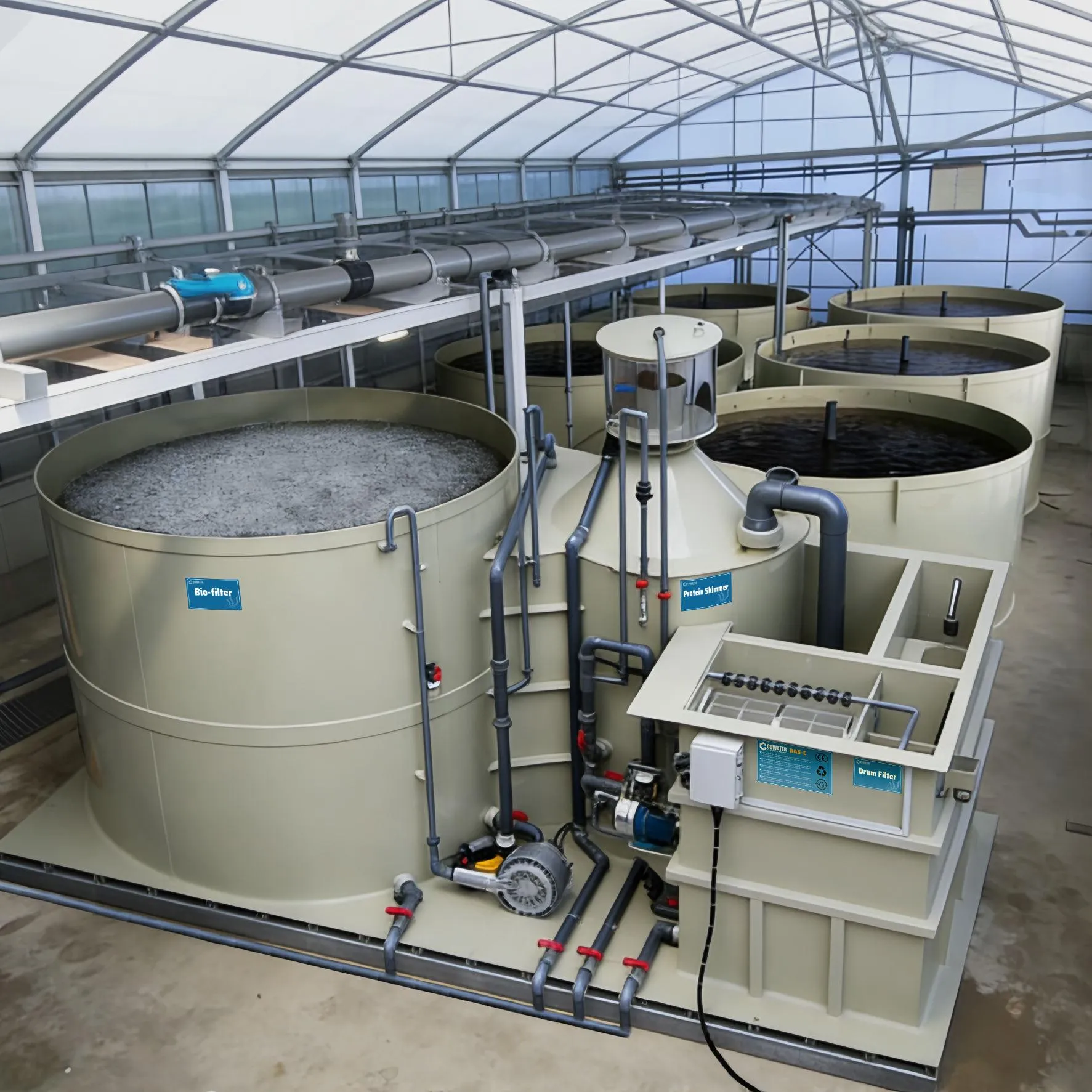
Supports beneficial microorganisms that convert toxic ammonia into nitrite and then nitrate through nitrification. Filter capacity depends on feed loading, water temperature, pH, and other operating conditions.
Disinfection and water conditioning
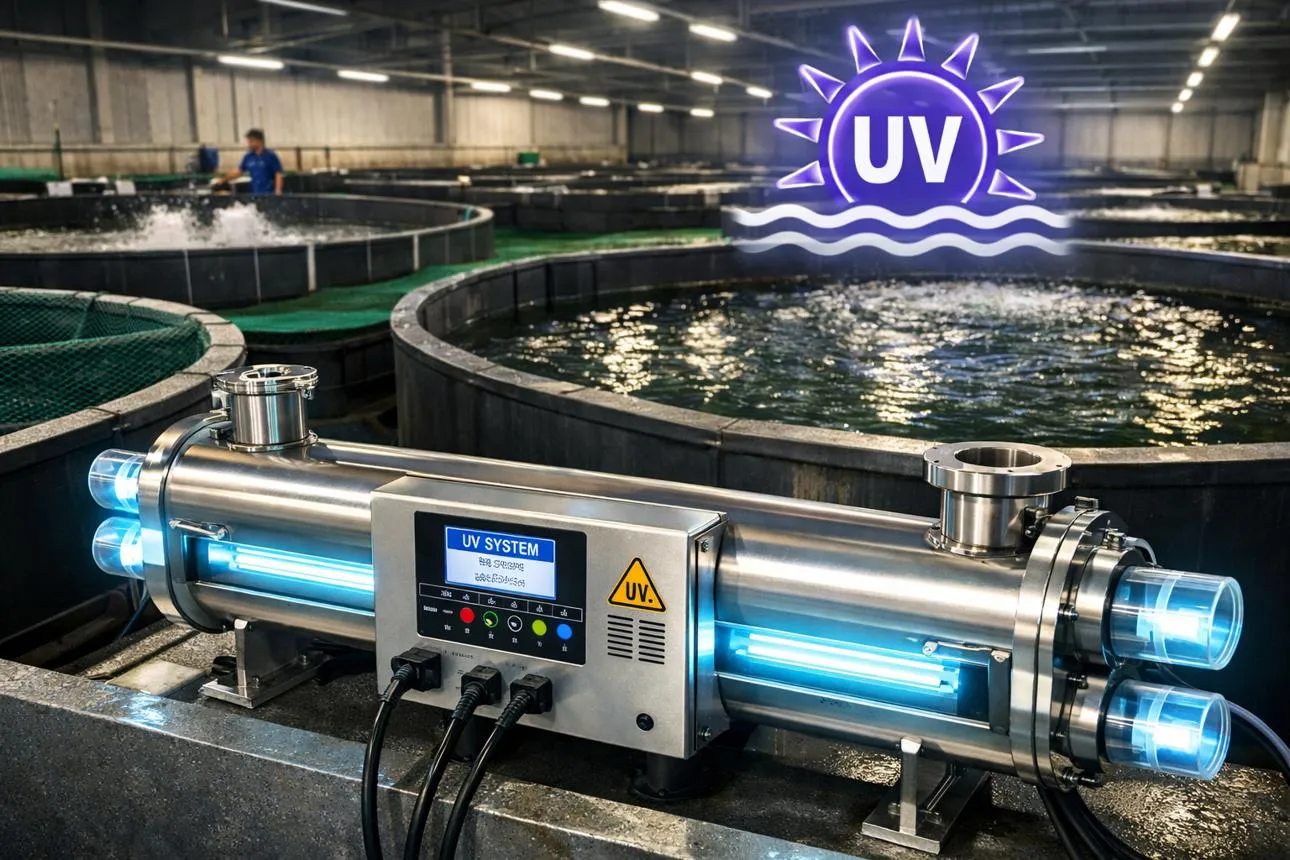
UV treatment or other suitable disinfection methods may help control selected pathogens. Their effectiveness depends on water clarity, equipment sizing, exposure conditions, and the target organism.
Pumping and circulation
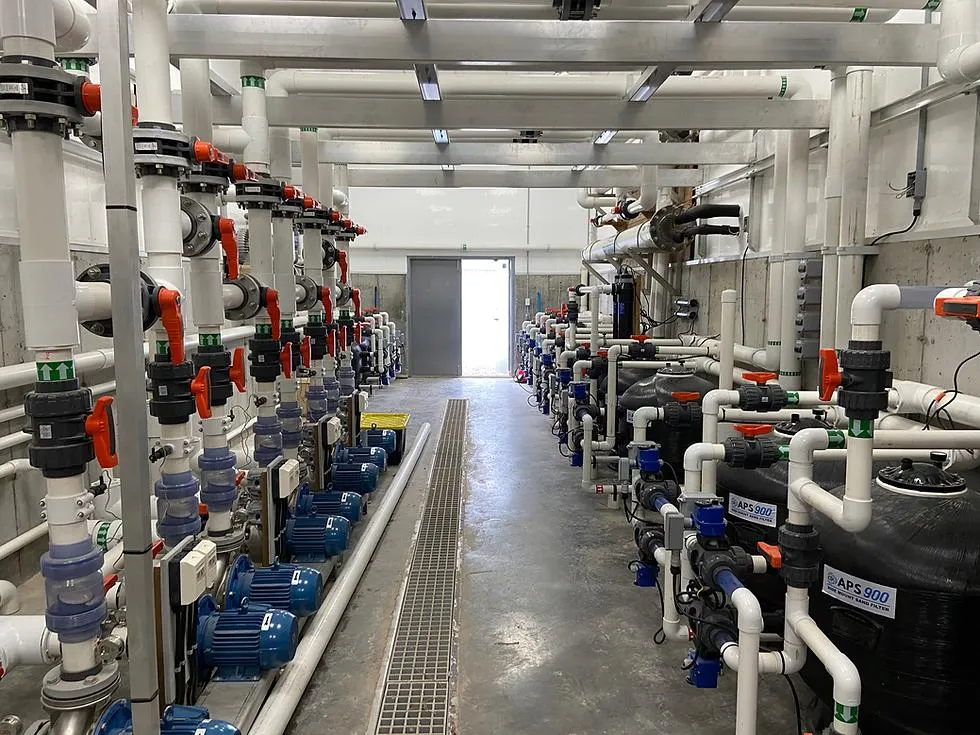
Moves water through tanks and treatment equipment at the required flow rate. Pump selection should account for total dynamic head, system resistance, efficiency, and backup requirements.
Depending on the system, additional equipment may be required for carbon dioxide removal, oxygen addition, temperature control, pH adjustment, and nitrate management.
Contractors must coordinate the hydraulic design with the equipment supplier. Pipe routing, elevation differences, tank outlets, and filter placement all affect system performance. Poorly designed circulation can create dead zones, increase pumping costs, or allow solids to accumulate.
Biological filters also need sufficient capacity to handle the expected ammonia load from feeding and fish metabolism. Installing equipment without accounting for the planned stocking density and feeding rate can lead to poor water quality.
RAS facilities often depend on continuous pumping, aeration, and monitoring. Backup power, emergency oxygen, high-water-level alarms, and documented emergency procedures should therefore be considered during design.
[ Discuss Your RAS Project ]
Drainage Systems and Aquaculture Wastewater Management
- Floor Drains and Tank Outlets: Install properly sized drains and tank outlet connections to remove wastewater efficiently and support routine cleaning.
- Solids Collection and Sludge Sumps: Collect fish waste, uneaten feed, and other solid materials before they accumulate in pipes or treatment systems.
- Settling Tanks and Sedimentation Basins: Allow suspended solids to settle out of wastewater before further treatment or discharge.
- Mechanical Filtration and Separation: Use suitable filtration equipment to remove suspended particles and improve wastewater quality.
- Wastewater Holding and Treatment Tanks: Provide adequate storage and treatment capacity based on wastewater volume and discharge requirements.
- Sludge Dewatering and Disposal: Manage collected sludge through appropriate dewatering, approved reuse, or compliant disposal methods.
- Stormwater and Drainage Separation: Keep clean rainwater separate from contaminated wastewater to prevent treatment systems from becoming overloaded.
- Wastewater Monitoring and Regulatory Compliance: Install sampling points and monitoring equipment to assess discharge quality and meet applicable environmental requirements.
- Recirculating Aquaculture System Waste Management: Collect concentrated waste from mechanical filters and manage sludge and water replacement streams separately where necessary.
Contractors should design drainage infrastructure according to wastewater volume, waste characteristics, site elevation, and local environmental regulations. Effective wastewater management protects water quality, simplifies maintenance, and reduces the environmental impact of commercial fish farming.
Aeration Systems, Oxygenation, and Water Quality Control
Maintaining adequate dissolved oxygen is one of the most important requirements in commercial aquaculture. Fish need oxygen for respiration, and beneficial bacteria in biological filters also consume oxygen during waste treatment. Insufficient oxygen can cause stress, reduce growth, and lead to fish mortality.
Contractors must select aeration and oxygenation equipment based on the species, biomass, feeding rate, water temperature, tank geometry, and operating conditions. Oxygen requirements often increase as water temperature and fish biomass rise, so the design should account for peak operating conditions rather than average demand alone.
- Air blowers and diffusers: Supply air through submerged diffusers to transfer oxygen and promote water movement.
- Paddlewheel aerators: Commonly used in outdoor pond systems to improve oxygen transfer and circulation.
- Surface aerators: Agitate the water surface to increase gas exchange.
- Pure oxygen systems: Supply concentrated oxygen where intensive production requires higher oxygen-transfer capacity.
- Oxygen cones and injectors: Improve oxygen dissolution in suitable tank and recirculating systems.
The most suitable equipment depends on the farming method. Large outdoor ponds may benefit from multiple aerators positioned to reduce poorly circulated areas, while indoor RAS facilities may require dedicated oxygen delivery equipment and precise control systems.
Water quality monitoring should extend beyond dissolved oxygen. Important parameters include temperature, pH, ammonia, nitrite, nitrate, alkalinity, and salinity where relevant. The importance and acceptable range of each parameter depend on the species and production system.
Building Materials and Structural Requirements for Aquaculture Facilities
Building materials and structural requirements are critical for aquaculture facilities because constant moisture, water pressure, cleaning chemicals, and corrosive environments can damage unsuitable materials. Contractors should prioritize durability, waterproofing, corrosion resistance, maintenance requirements, and compatibility with water chemistry when selecting construction materials.
Reinforced concrete is commonly used for foundations, tanks, water channels, and equipment bases because it provides strength and durability when properly designed, placed, cured, and protected against cracking. Fiberglass and high-density polyethylene (HDPE) are suitable for selected tanks, liners, and pipes because they offer corrosion resistance and easier cleaning, provided installation and support requirements are met. Stainless steel can be used for fittings, frames, and equipment components, but its grade must match the exposure conditions.
Contractors should also install waterproof and chemically compatible floor finishes, non-slip surfaces, corrosion-resistant fasteners, sealed joints, safe access platforms, handrails, and adequate ventilation. Foundations and floor slabs must withstand tank weight, water loads, machinery loads, soil pressure, and groundwater conditions. A qualified structural engineer should verify the supporting ground, slab capacity, and foundations before construction to ensure long-term safety and structural reliability.
Electrical Systems, Water Pumps, and Aquaculture Automation
- Electrical Load Assessment: Calculate the total power requirements of pumps, blowers, filtration units, lighting, oxygen generators, and automated equipment.
- Electrical Distribution and Control Panels: Install suitable distribution boards, motor control centers, protective devices, and dedicated circuits for essential equipment.
- Water Pump Selection and Installation: Choose pumps based on required flow rate, total dynamic head, hydraulic efficiency, and operating conditions.
- Electrical Safety in Wet Environments: Use appropriate enclosures, grounding, bonding, and protective devices in accordance with applicable electrical codes.
- Energy Efficiency and Motor Control: Use efficient motors, properly sized pipes, and variable-frequency drives where appropriate to reduce energy consumption.
- Aquaculture Monitoring and Automation: Integrate water-level sensors, dissolved oxygen monitors, temperature sensors, automatic feeders, and automated valve controls.
- Alarms and Remote Monitoring: Implement equipment fault alarms, data logging, and remote monitoring to identify problems and support timely intervention.
- Backup Power and Emergency Oxygen: Provide appropriately sized generators, backup power arrangements, and emergency oxygen supplies to protect fish during outages.
- System Testing and Commissioning: Test pump performance, electrical safety, sensor calibration, alarms, and simulated power failures before starting full production.
Biosecurity Measures and Disease Prevention in Aquaculture Facilities
- Controlled Access Points: Restrict entry for staff, visitors, and delivery personnel to reduce the risk of introducing pathogens.
- Sanitation and Disinfection Stations: Install handwashing facilities and appropriate footwear and equipment disinfection stations.
- Quarantine and Isolation Facilities: Provide separate tanks or designated areas for incoming fish and animals suspected of carrying diseases.
- Separate Water Circulation Systems: Use separate water circuits or isolation valves where appropriate to reduce disease transmission between production units.
- Dedicated Equipment for Each Production Area: Assign nets, containers, and other tools to specific tanks or groups of fish to prevent cross-contamination.
- Secure Feed Storage and Pest Control: Protect feed from moisture, contamination, rodents, insects, and other potential sources of infection.
- Routine Cleaning and Disinfection: Use accessible surfaces and suitable construction materials that withstand approved cleaning and disinfection products.
- Safe Removal of Dead or Diseased Fish: Establish procedures for collecting, handling, and disposing of dead or infected fish according to applicable regulations.
- Staff Training and Health Records: Train workers in biosecurity procedures and maintain records of fish movements, disease treatments, mortality, and sanitation activities.
Contractors should integrate biosecurity features into the facility design and coordinate with aquaculture health professionals. Combining suitable infrastructure, effective sanitation, quarantine procedures, and trained staff helps prevent disease outbreaks and supports reliable commercial fish production.
Commercial Aquaculture Construction Costs and Budget Planning
Commercial aquaculture construction costs vary according to facility size, production capacity, construction materials, water treatment requirements, labor rates, and local site conditions. Contractors should prepare a detailed project budget before construction begins to help owners understand the initial investment and the ongoing cost of operating the farm.
The first step is defining the project's scope. A small pond-based fish farm has very different cost requirements from a temperature-controlled indoor facility using a Recirculating Aquaculture System (RAS). Comparing these projects without accounting for their production methods can lead to unrealistic budgets.
A commercial aquaculture construction budget generally includes the following categories:
| Cost category | Main considerations |
| Land and site preparation | Land acquisition or lease, surveys, excavation, grading, and access roads |
| Foundations and structures | Concrete slabs, foundations, buildings, tanks, ponds, and waterproofing |
| Water infrastructure | Wells, reservoirs, pumps, pipework, valves, and water treatment |
| Filtration and oxygenation | Mechanical filters, biological filters, aerators, and oxygen systems |
| Electrical installation | Wiring, distribution panels, motors, sensors, and backup power |
| Wastewater management | Drainage, settling tanks, sludge handling, and discharge treatment |
| Professional services | Engineering, system design, testing, and regulatory approvals |
| Startup and contingency | Commissioning, initial supplies, training, and an appropriate contingency allowance |
Building Permits, Safety Standards, and Environmental Regulations
- Land-Use and Zoning Approvals: Confirm that the selected site is legally approved for commercial aquaculture activities and associated construction.
- Building Permits and Structural Compliance: Obtain required construction permits and ensure tanks, foundations, retaining walls, and buildings meet applicable structural standards.
- Water Abstraction and Groundwater Permissions: Verify permits for extracting water from wells, rivers, reservoirs, or other regulated sources.
- Environmental Assessments and Approvals: Complete environmental assessments where required and identify potential impacts on surrounding ecosystems and natural habitats.
- Wastewater Discharge and Waste Management: Follow applicable requirements for effluent quality, sludge disposal, nutrient discharge, and wastewater treatment.
- Electrical, Fire, and Workplace Safety: Implement appropriate electrical protection, fire prevention measures, safe equipment access, and occupational safety procedures.
- Aquaculture Licensing and Animal Health Requirements: Confirm applicable farm registration, aquaculture licensing, fish health, and disease-control obligations.
- Worker Protection and Hazard Management: Provide suitable protective equipment, warning signs, machine guards, safe chemical handling procedures, and emergency arrangements.
- Inspections, Documentation, and Final Commissioning: Maintain permit records, inspection reports, equipment test results, operating instructions, and maintenance documentation before handover.
Contractors should consult the relevant local building authority, environmental protection agency, fisheries department, and water-resource authority before construction begins. For projects in Pakistan, requirements may vary by province and location. Early compliance planning helps prevent costly delays, supports worker safety, and ensures that commercial aquaculture facilities operate within applicable legal and environmental requirements.
Strategies for Energy Efficiency, Facility Expansion, and Long-Term Maintenance
- Energy-Efficient Equipment Selection: Choose pumps, motors, blowers, filtration units, and oxygenation equipment that operate efficiently under the farm's actual operating conditions.
- Optimized Pipework and Hydraulic Design: Reduce unnecessary pipe lengths, restrictive fittings, and friction losses to improve water flow and reduce pumping costs.
- Variable-Frequency Drives and Automation: Use variable-frequency drives and automated controls where suitable to match equipment performance with actual demand.
- Routine Equipment Cleaning: Keep filters, pipes, diffusers, and water channels clean to maintain performance and prevent unnecessary energy consumption.
- Building Insulation and Temperature Control: Improve insulation in indoor facilities where heating or cooling is required to reduce energy losses.
- Energy Monitoring and Renewable Power: Track electricity consumption by equipment group and evaluate renewable energy and backup power options where feasible.
- Future Expansion Planning: Reserve sufficient land and provide suitable access routes and utility connections for additional tanks, production units, and storage facilities.
- Infrastructure Capacity Assessment: Evaluate whether the existing water supply, drainage, electrical distribution, filtration, and oxygenation systems can support future production increases.
- Preventive Maintenance and Asset Management: Inspect pumps, motors, valves, sensors, electrical panels, tanks, pond liners, and wastewater systems regularly. Maintain equipment records, warranties, service histories, and spare-parts recommendations.
Contractors should integrate energy efficiency, future expansion, and preventive maintenance into the initial facility design. This approach helps control operating costs, reduce equipment failures, protect fish health, and maintain reliable commercial aquaculture production over the long term.
Strategies for Energy Efficiency, Facility Expansion, and Long-Term Maintenance
- Energy-Efficient Equipment Selection: Choose efficient pumps, motors, blowers, filtration units, and oxygenation equipment suited to the facility's operating requirements.
- Optimized Pipework and Hydraulic Design: Use appropriate pipe diameters and efficient layouts to reduce friction losses, improve water flow, and lower pumping costs.
- Variable-Frequency Drives and Automation: Install variable-frequency drives and automated controls where suitable to match equipment operation with actual demand.
- Routine Equipment Cleaning: Keep filters, pipes, diffusers, and water channels clean to maintain performance and prevent unnecessary energy consumption.
- Building Insulation and Temperature Control: Improve insulation in indoor aquaculture facilities where heating or cooling is required to reduce energy losses.
- Energy Monitoring and Renewable Power: Monitor electricity consumption and evaluate renewable energy and backup power options where practical.
- Future Expansion Planning: Reserve sufficient land, access routes, and utility connections for additional tanks, production units, and storage facilities.
- Infrastructure Capacity Assessment: Evaluate whether existing water supply, drainage, filtration, electrical distribution, and oxygenation systems can accommodate future production increases.
- Preventive Maintenance and Asset Management: Regularly inspect pumps, motors, valves, sensors, tanks, electrical panels, and wastewater systems. Maintain equipment manuals, warranties, service histories, and spare-parts records.
Contractors should integrate energy efficiency, future expansion, and preventive maintenance into the initial facility design. This approach helps reduce operating costs, prevent equipment failures, protect fish health, and support reliable commercial aquaculture production over the long term.
Conclusion
Planning commercial aquaculture infrastructure requires a coordinated approach to construction, engineering, water management, fish health, and operational efficiency. Contractors must understand the requirements of the selected aquaculture production system before deciding on the site, building layout, structural materials, and equipment specifications.
From site selection and tank construction to Recirculating Aquaculture Systems (RAS), wastewater treatment, oxygenation, and electrical automation, every infrastructure component contributes to the performance of the finished facility. Careful planning helps prevent costly design changes, improves maintenance access, and supports reliable production.
Contractors should also account for construction costs, regulatory approvals, biosecurity, energy efficiency, and future expansion. Working with qualified engineers, aquaculture specialists, equipment suppliers, and facility operators helps ensure that technical decisions are appropriate for the intended production environment.
Ultimately, successful commercial aquaculture construction is about more than building a fish farm. It involves creating a safe, efficient, and sustainable production facility that maintains suitable water quality, protects aquatic animal health, and supports the owner's long-term business objectives.
Frequently Asked Questions
1. What is commercial aquaculture infrastructure?
Commercial aquaculture infrastructure includes fish tanks, ponds, water systems, filtration equipment, drainage, electrical controls, and essential production facilities.
2. How do contractors plan aquaculture infrastructure?
Contractors assess site conditions, water availability, production targets, facility layout, equipment requirements, construction costs, and regulatory approvals before construction.
3. What are the essential components of aquaculture facilities?
Essential components include fish tanks, water supply, filtration systems, aeration equipment, drainage, electrical infrastructure, biosecurity controls, and monitoring devices.
4. How do contractors select an aquaculture construction site?
Contractors evaluate soil stability, water quality, flood risks, electricity access, drainage, transportation, environmental restrictions, and future expansion opportunities.
5. Which materials are best for aquaculture tanks?
Reinforced concrete, fiberglass, and HDPE are common choices, depending on tank dimensions, durability requirements, water chemistry, installation costs, and maintenance needs.
6. What is a Recirculating Aquaculture System (RAS)?
RAS treats and reuses fish-farming water through filtration, biological treatment, and oxygenation, helping reduce water consumption and improve environmental control.
7. Why is water filtration important in aquaculture?
Water filtration removes suspended solids and supports biological processes that convert toxic ammonia into less harmful nitrogen compounds, protecting fish health.
8. How can contractors maintain oxygen levels?
Contractors install appropriately sized aerators, oxygen systems, dissolved oxygen sensors, emergency alarms, and backup power to maintain suitable oxygen levels.