

Living Fences & Privacy Hedges with Thuja, Arborvitae, Bamboo
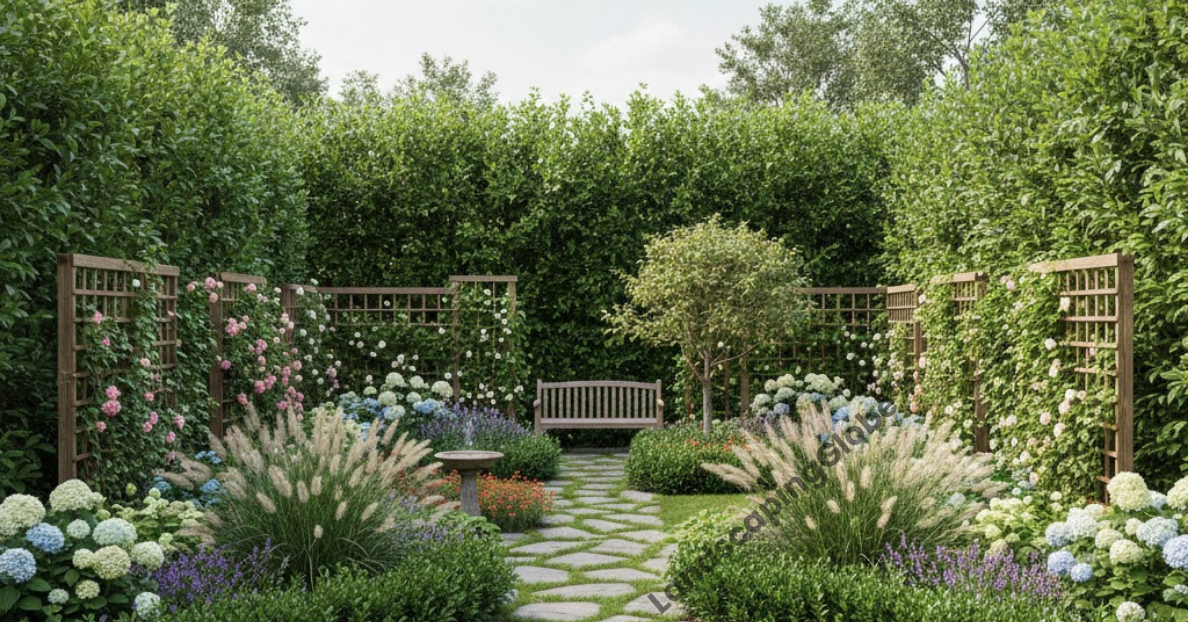
Living fences use trees, shrubs, and vines to form natural green barriers that give strong outdoor privacy in home landscapes. These privacy hedges grow close together and block neighbors, traffic views, and noise using eco-friendly plant screens.
Many homeowners choose Arborvitae, Thuja, Podocarpus, and Camellias for year-round privacy with thick green coverage. Green Giant Arborvitae grows fast and forms tall privacy screens for backyards, gardens, and property boundaries.
Spartan Juniper and American Holly create dense borders while supporting birds, butterflies, and pollinators. Red Twig Dogwood adds bright winter color, while Lilacs bring spring fragrance to living fence designs.
Dappled Willow offers soft pink and white leaves that improve garden beauty and natural fencing appearance. Climbing Roses and Honeysuckle grow on trellises, attracting hummingbirds and creating flowering privacy walls.
Ornamental grasses move with the wind and give soft texture to outdoor privacy hedge fences. These green barriers help with noise reduction, erosion control, and air quality improvement in residential landscapes.
Layered planting with evergreen and deciduous plants builds strong natural privacy screens for all seasons. Native plants support wildlife habitats and create healthy, sustainable living fence systems for gardens. Living fences cost less than wood fencing over time and improve property value with natural beauty.
Many people use Boxwood, Privet, Leyland Cypress, and Forsythia for classic hedge fence styles. These natural privacy solutions fit small yards, large gardens, and urban outdoor spaces. Living fences create calm outdoor areas with green walls, plant screens, and flowering borders.
What Are Living Fences & Privacy Hedges?
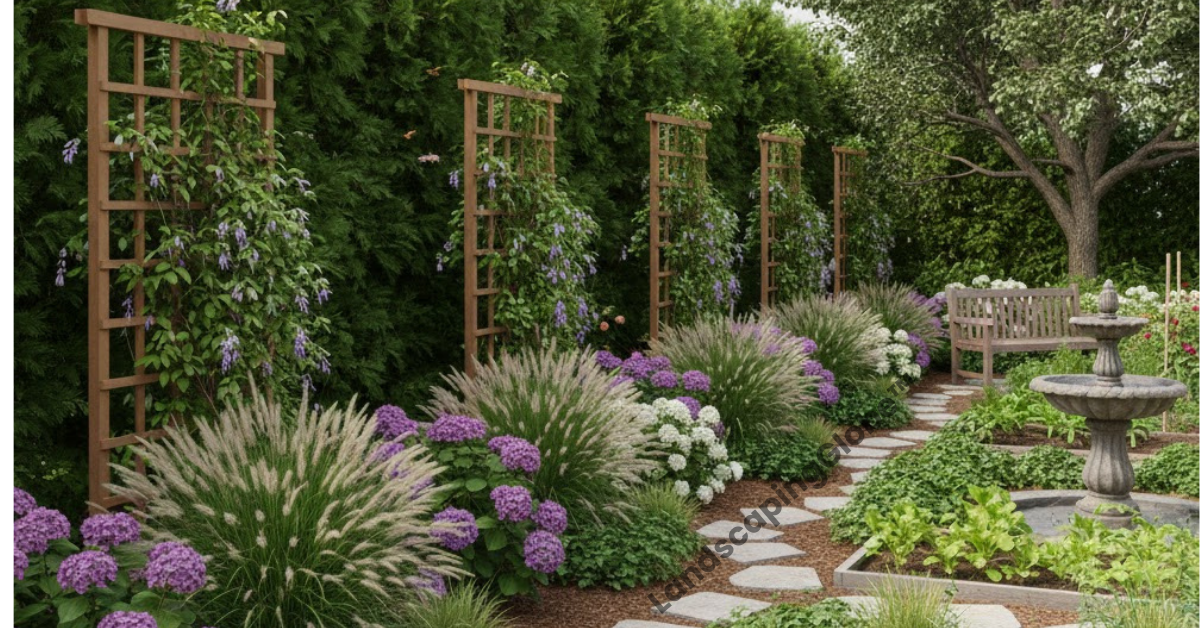
Living fences use trees, shrubs, and vines to form natural green walls for outdoor privacy and security. These privacy hedges act as softscape boundaries instead of wood or metal fencing.
Many people call them hedgerows, used for field borders and livestock control. They support birds, bees, and wildlife while improving air quality.
Evergreen plants like Arborvitae give year-round privacy screens. Willow, Viburnum, and Red-twig Dogwood add seasonal beauty to living hedge fences.
Ivy and Clematis climb on lattice fences for natural privacy walls. Most living fences take two to five years to grow fully. They also work as windbreaks and protect garden spaces.
Natural Green Alternatives to Traditional Fencing
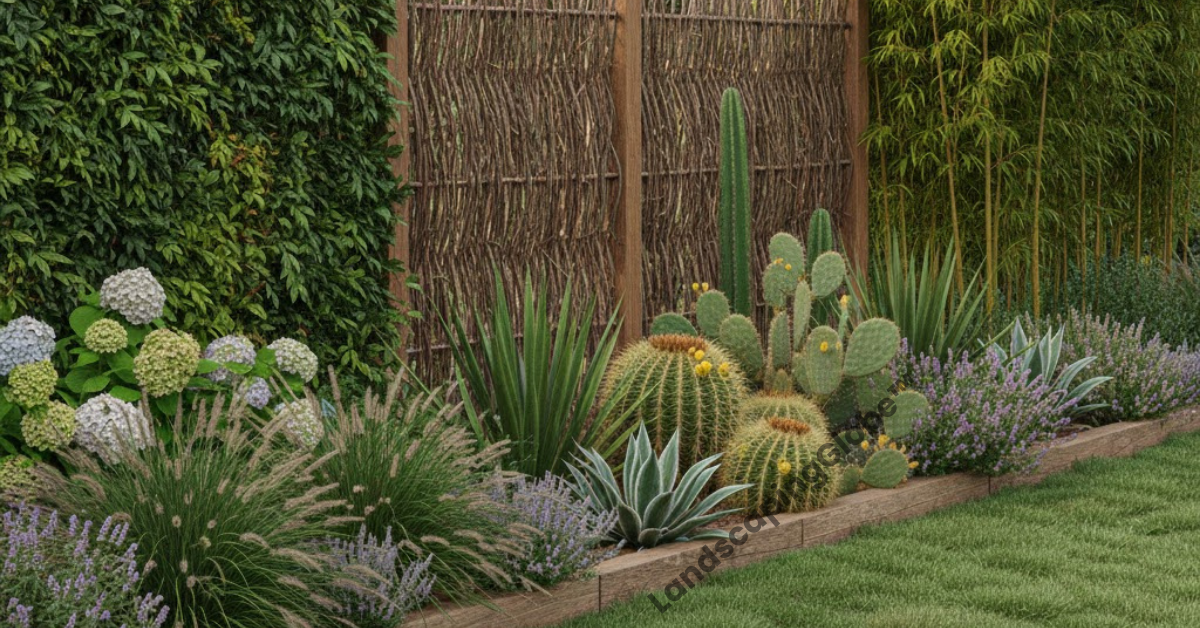
Living fences use hedges and willow plants to create natural green walls for privacy and outdoor beauty. Thuja Green Giant, Privet, and Boxwood grow fast and form dense green screens for homes. Willow fencing is woven while alive, making a flexible plant barrier for permaculture gardens.In dry areas, succulents, cacti, agave, and yucca create thorny natural fences with low water needs.
Bamboo fencing grows quickly, feels strong, and offers a tropical, eco-friendly look. Reclaimed wood fencing reduces waste and adds rustic charm to outdoor spaces. Composite fencing uses recycled plastic and wood fibers for durability and low maintenance. Recycled plastic and wheat straw fences provide paint-free eco options for green landscaping.
These sustainable materials reduce landfill waste and protect the environment . Living fences support biodiversity by helping birds, bees, and wildlife. Green fencing styles improve aesthetics with natural textures and outdoor beauty. Many green fences offer strong performance with pest resistance and long-lasting strength.
Key Advantages of Living Fences
• Living fences improve curb appeal and raise property value with natural seasonal beauty.
• They provide strong privacy and security by blocking outside views.
• These green borders support birds, bees, butterflies, and beneficial insects.
• Eco-friendly living fences improve air quality and lower the carbon footprint.
• Plant roots protect soil health and prevent erosion naturally.
• Living fences work as windbreaks and reduce outdoor noise pollution.
• Some plants add nitrogen to soil for healthier gardens.
• These natural fences are cost-effective and budget-friendly.
• Living fences help grow strong local ecosystems.
• They stay durable for many years with easy care.
Best Plants for Living Fences & Privacy Hedges
Evergreen Privacy Plants
• Thuja (Arborvitae) Privacy Trees grow tall with dense green foliage, making strong natural walls for year-round privacy.
• Green Giant Arborvitae offers fast coverage, tall height, and thick screening for large yards and outdoor boundaries.
• Spartan Juniper Hedge Plants provide soft evergreen needles and low-maintenance growth for clean, formal hedge lines.
• Podocarpus (Buddhist Pine) Screening Hedges create neat green barriers in warm climates with glossy leaves and slow, controlled growth.
• American Holly for Wildlife Gardens produces berries that attract birds while forming dense evergreen privacy hedges.
• Camellia Evergreen Flowering Hedges give colorful blooms and shiny leaves, adding beauty and screening to garden borders.
• Japanese Holly and Nelliet™ Holly form compact evergreen hedges with thick foliage for small privacy areas.
• False Cypress grows tall and pyramidal, making it useful for multi-level screening around homes and gardens.
• Skip Laurel has glossy leaves and fragrant flowers that grow fast for strong living fence coverage.
• Emerald Green Arborvitae stays narrow and upright, perfect for tight spaces needing tall privacy screens.
Deciduous Hedge Plants
• Red Twig Dogwood for Winter Color shows bright red branches that add beauty and seasonal privacy in cold months.
• Lilac Bushes for Fragrant Borders produce sweet-smelling flowers and create soft natural fences in spring.
• Dappled Willow Decorative Hedges offer silver-green leaves that bring texture and movement to garden screens.
• Forsythia Seasonal Privacy Screens bloom bright yellow flowers and grow fast for quick spring coverage.
• Rose of Sharon gives colorful summer flowers and thick growth for flowering privacy hedges.
• Hydrangea (Panicle) creates large blooms that change color, adding beauty to living fences.
• Ninebark features textured leaves and flowers, forming informal natural barriers for outdoor spaces.
Vines & Ornamental Options
• Climbing Roses for Trellis Fencing grow upward on supports, creating beautiful floral privacy walls.
• Honeysuckle for Pollinator Gardens attracts bees and butterflies while covering fences with sweet-smelling flowers.
• Bamboo for Tall Natural Screens grows quickly and forms dense green walls for instant backyard privacy.
• Ornamental Grasses for Soft Barriers sway in the wind and create gentle visual screens.
• Privet grows fast with thick leaves, making strong evergreen or semi-evergreen living fences.
• Viburnums (Arrowwood) produce berries that feed birds and build wildlife-friendly hedge borders.
• Chokeberry, Spicebush, and Winterberry Holly support ecosystems while forming colorful seasonal screens.
• Fargesia Bamboo stays non-invasive and creates safe, tall green fencing.
• Climbing Hydrangea covers walls and fences with flowers for decorative privacy.
Smart Plant Selection Tips
• Choose plants based on sunlight, because some thrive in shade while others need full sun exposure.
• Always match plants to your hardiness zone for healthy growth and long-lasting privacy fences.
• Decide between formal hedges or natural layered screens based on your garden style.
Fast-Growing Living Fence Plants
• Thuja 'Green Giant' (Arborvitae) grows 3–5 feet per year, forming a dense evergreen privacy screen for yards.
• Leyland Cypress is a very fast-growing conifer, perfect for tall, lush, green barriers around homes and gardens.
• Needlepoint Holly provides height and evergreen coverage with manageable width, ideal for quick privacy screens.
• English Laurel (Cherry Laurel) grows up to 3 feet yearly, tolerates heat, smog, salt, and deer, forming tall fences.
• Podocarpus Hedge (Buddhist Pine) creates fast-growing, dense hedges suitable for tropical and subtropical regions.
• Waxleaf Privet grows fast, offers thick foliage, and forms classic, fragrant privacy hedges.
• Full Speed A Hedge American Pillar Arborvitae grows quickly, is deer-resistant, and perfect for evergreen privacy.
• Hybrid Willow Tree Plants establish fast, ideal for quick backyard privacy and natural fencing.
Quick Coverage Hedges for Backyard Privacy
• Ligustrum (Privet) grows dense foliage, responds well to pruning, creating classic backyard privacy screens.
• Sweet Viburnum grows quickly, adds spring flowers and fall colors, forming large screening hedges.
• Butterfly Bush attracts pollinators while forming fast-growing flowering barriers.
• Cherry Laurel Shrub grows thick and tall, giving instant backyard screening in moderate climates.
• Clusia Hedge creates dense privacy walls quickly, suitable for tropical and subtropical landscapes.
Low-Maintenance Green Fence Options
• Clumping Bamboo grows upward fast, forming tall, dense, modern privacy screens without aggressive spreading.
• Honeysuckle Vines climb fences quickly, attract bees and butterflies, and provide instant visual privacy.
• Trumpet Vine, Clematis, Jasmine cover trellises or fences rapidly for green vertical barriers.
• Boxwood and Juniper Shrubs are evergreen, low-maintenance, and perfect for formal or informal hedges.
• Fast-growing plants like Arborvitae, Privet, Leyland Cypress, and Bamboo need pruning to maintain shape and density.
• Spacing young shrubs 2–4 feet apart ensures solid, fast-growing green fences.
Living Fence Design Ideas
Living fences use shrubs, trees, vines, and flowering plants to create natural boundaries and privacy.
They add beauty, wildlife support, and seasonal interest to gardens and yards.
Smart layering, native plants, and vertical designs make fences functional even in small spaces.
Creative Outdoor Privacy Concepts
- • Layered planting for dense coverage combines tall and short plants like Thuja, Box, Privet, and Leyland Cypress for privacy.
- • Mixed evergreen and flowering borders use Arborvitae, Forsythia, Camellia, and Honeysuckle to add beauty and seasonal interest.
- • Native plant privacy fences include region-friendly shrubs and trees like Firebush, Fakahatchee Grass, and Coral Honeysuckle for wildlife support.
- • Small yard living fence solutions use potted vertical gardens, compact Boxwood, or dwarf Arborvitae for limited space privacy.
- • Front yard green boundary designs use dense evergreens, layered shrubs, and flowering vines to create welcoming, secure edges.
- • Creative fences may mix willow or dogwood woven structures to add artistic flair to gardens.
- • Pollinator-friendly living fences attract bees, butterflies, and hummingbirds while providing natural privacy barriers.
- • Modern vertical planters hold herbs, ferns, or succulents to save space and add greenery to patios.
- • Train woody plants on lattices or trellises for sculptural fences using Trumpet Vine, Crossvine, or Climbing Roses.
- • Always consider climate, USDA zone, and soil conditions to ensure long-lasting, healthy living fences.
How to Plan a Living Fence: Step-by-Step Guide
Step 1: Define Your Purpose
• Decide why you want a living fence: for privacy, a property boundary, windbreak, or a wildlife habitat, to guide plant choice.
Step 2: Analyze Sunlight & Space
• Measure yard space and observe sunlight exposure to ensure Thuja, Leyland Cypress, Willow, Box, Forsythia, or Juniper grow healthy.
Step 3: Prepare the Soil
• Enrich well-drained soil with organic compost for dense growth of hedge plants like Thuja, Forsythia, or Willow.
• Remove weeds and loosen soil to help roots establish quickly and support long-term fence health.
Step 4: Choose the Right Plants
• Select plants suitable for your climate: mix evergreens (Thuja, Leyland Cypress, Juniper) and deciduous shrubs (Forsythia, Willow, Box).
• Include native species to attract birds, pollinators, and wildlife, making the fence eco-friendly.
Step 5: Plan Plant Spacing
• Plant Thuja, Leyland Cypress, or Willow 2–4 feet apart for dense coverage; closer spacing makes a solid privacy barrier.
• For woven fences, use whips 4–8 inches apart, then bend and tie branches for strong, natural walls.
Step 6: Control Height & Width
• Prune Thuja, Leyland Cypress, Forsythia, Box, and Juniper regularly to maintain desired height, width, and density.
• Use lattices, trellises, or wires to shape formal, sculptural, or layered living fences effectively.
Step 7: Watering & Maintenance
• Water new plants diligently during the first year to establish roots; mulch around them to retain moisture.
• Be patient: most fences take 2–5 years to fully mature into dense, green privacy screens.
Maintenance for Privacy Hedges
Keeping a privacy hedge healthy needs regular pruning, watering, and fertilizing for strong, dense growth. Seasonal care helps evergreen and flowering plants stay vibrant year-round.
Prevent pests and diseases early to maintain thick, beautiful, and long-lasting privacy hedges.
Pruning Techniques for Dense Growth
• Use pruning shears or electric trimmers on Thuja, Leyland Cypress, Boxwood, Cherry Laurel, or Pacific Wax Myrtle to encourage dense growth.
• Trim evergreen hedges in early spring and flowering shrubs like Oregon Grape or California Lilacs after blooming for fullness.
• Shape hedges with a slightly wider base to let sunlight reach lower leaves and maintain a uniform, thick privacy barrier.
Watering & Fertilizing Schedule
• Water new hedges deeply weekly for the first year to establish strong roots in well-drained soil.
• Apply nitrogen-based or balanced fertilizer to Thuja, Boxwood, Leyland Cypress, and Cherry Laurel in spring and fall for healthy growth.
• Mulch around hedge bases to retain soil moisture, regulate temperature, and reduce competition from weeds for nutrients.
Seasonal Care for Hedge Plants
• Monitor hedges in summer for drought stress, using deep watering; protect plants in winter from frost and harsh winds.
• Prune lightly after each season to maintain shape and encourage bushy growth in evergreen and deciduous species.
• Inspect soil, remove debris, and layer organic compost for better fertility and plant vigor before new growth starts.
Pest & Disease Prevention
• Inspect hedges for pests like aphids, scale, or mites; treat with organic sprays for Boxwood, Cherry Laurel, and Leyland Cypress.
• Remove infected leaves promptly to prevent fungal diseases and avoid overcrowding by maintaining proper plant spacing.
• Choose native and resilient species like Evergreen Huckleberry, Pacific Wax Myrtle, and Oregon Grape to naturally reduce disease risks.
Living Fence Cost & Budget Guide
Planning a living fence needs considering plant costs, installation fees, and long-term maintenance for lasting privacy and beauty.
Plant Cost Comparison by Type
• Evergreen trees like Arborvitae or Leyland Cypress cost $500–$2,000 for 100 ft, offering quick privacy and year-round coverage.
• Flowering shrubs like Cherry Laurel or Oregon Grape provide seasonal color, attracting pollinators, and are moderately priced for hedges.
• Vines and smaller shrubs like Honeysuckle or Boxwood cost less upfront but may require several years to create dense screening.
Installation vs DIY Pricing
• DIY planting of Thuja, Viburnum, or Leyland Cypress costs only the plant price plus basic soil preparation.
• Professional installation ranges $10–$20 per linear foot, covering labor, soil amendment, and plant positioning for proper growth.
• Larger plants bought for instant privacy increase installation costs, but they save years of waiting for mature hedges.
Long-Term Maintenance Expenses
• Ongoing costs include watering, pruning, mulching, and fertilizing for Cherry Laurel, Leyland Cypress, Boxwood, Thuja, and other hedges.
• Proper maintenance extends lifespan up to 30+ years, making a living fence more economical than wood, vinyl, or metal fences.
• Native, drought-tolerant species like Pacific Wax Myrtle or Evergreen Huckleberry reduce maintenance, saving money over time.
Fence Cost Comparison
| Fence Type | Average Cost per Linear Foot | Notes |
| Living Fence (Hedges) | $10 – $20 | Includes Arborvitae, Cherry Laurel, Boxwood; DIY cheaper than pro install |
| Wood Privacy Fence | $15 – $50 | Depends on lumber type, height, and installation |
| Vinyl Fence | $15 – $40 | Durable, low maintenance, higher upfront cost |
| Metal Fence | $25 – $55 | Long-lasting, minimal upkeep, and higher installation |
| Chain-Link Fence | $12 – $20 | Affordable, functional, but less private |
Living Fences vs Traditional Fencing
| Feature / Factor | Living Fence (Hedges/Plants) | Traditional Fencing (Wood, Vinyl, Metal) |
| Privacy & Security | Dense Thuja, Leyland Cypress, Cherry Laurel, and Boxwood provide growing, natural privacy over time. | Instant privacy from wood, vinyl, or metal panels, a static barrier. |
| Cost per Linear Foot | $10 – $20 (Arborvitae, Boxwood, Cherry Laurel, Leyland Cypress) | Wood: $15–$50, Vinyl: $15–$40, Metal: $25–$55 |
| Maintenance | Requires watering, pruning, mulching, and occasional fertilization | Needs painting, staining, or repairs; chemicals may harm the soil |
| Eco Benefits | Carbon sequestration supports pollinators, is biodegradable, and improves air quality | High production energy, petroleum-based (vinyl), ends in a landfill |
| Growth / Time | Takes years to fully mature; improves with age | Immediate privacy and structure |
| Durability / Lifespan | 30+ years with proper care; adapts to terrain and seasons | Can be damaged by wind, rot, pests; lifespan varies |
| Aesthetics / Landscape | Seasonal colors, dynamic textures, natural curb appeal | Fixed appearance; may fade or warp over time |
| Recommended Entities / Plants | Arborvitae, Thuja, Leyland Cypress, Cherry Laurel, Boxwood, Oregon Grape, Evergreen Huckleberry, Pacific Wax Myrtle | Wood, Vinyl, Metal fences (standard construction materials) |
Best Living Fence Ideas by Region
Natural Privacy vs Wooden Fences: Living fences with Thuja, Box, Privet, Leyland Cypress, Arborvitae, and Juniper give year-round privacy and natural beauty, unlike wood fences, which provide instant structure.
Green Barriers vs Metal Screens: Plants like Willow, Red-twig Dogwood, Viburnum, Elderberry, Pawpaw, Persimmon, and Plum form dense green barriers, supporting wildlife and reducing wind and noise, unlike metal fences.
Eco Benefits of Living Hedges: Living fences improve air quality, provide wildlife habitat, sequester carbon, enhance biodiversity, and adapt over time, making them more sustainable than traditional fencing.
FaQs
- Can Living Fences Provide Full Privacy?
Yes, evergreens like Thuja, Arborvitae, Leyland Cypress, and Yew form dense barriers that offer complete year-round privacy and security.
- Which Hedge Grows the Tallest?
Leyland Cypress, Thuja, and Bamboo are fast-growing species that can reach heights over 15–20 feet, perfect for tall privacy.
- Are Living Fences Low Maintenance?
With pruning, mulching, watering, and fertilizing, most Viburnum, Boxwood, and Red-twig Dogwood hedges remain healthy and visually attractive.
- How Long Do Privacy Hedges Take to Grow?
Depending on species like Leyland Cypress, Privet, or Holly, hedges take 2–5 years to reach dense, functional privacy coverage.
- Can Living Fences Support Wildlife?
Yes, species such as Elderberry, Viburnum, and Pawpaw provide food, nesting sites, and shelter for birds, pollinators, and beneficial insects.
- Are Living Fences Eco-Friendly?
Absolutely, living hedges reduce carbon footprint, improve air quality, prevent soil erosion, and support local biodiversity better than traditional fencing.