Best Natural Stone for Outdoor Landscaping | Granite, Slate, Travertine & Limestone
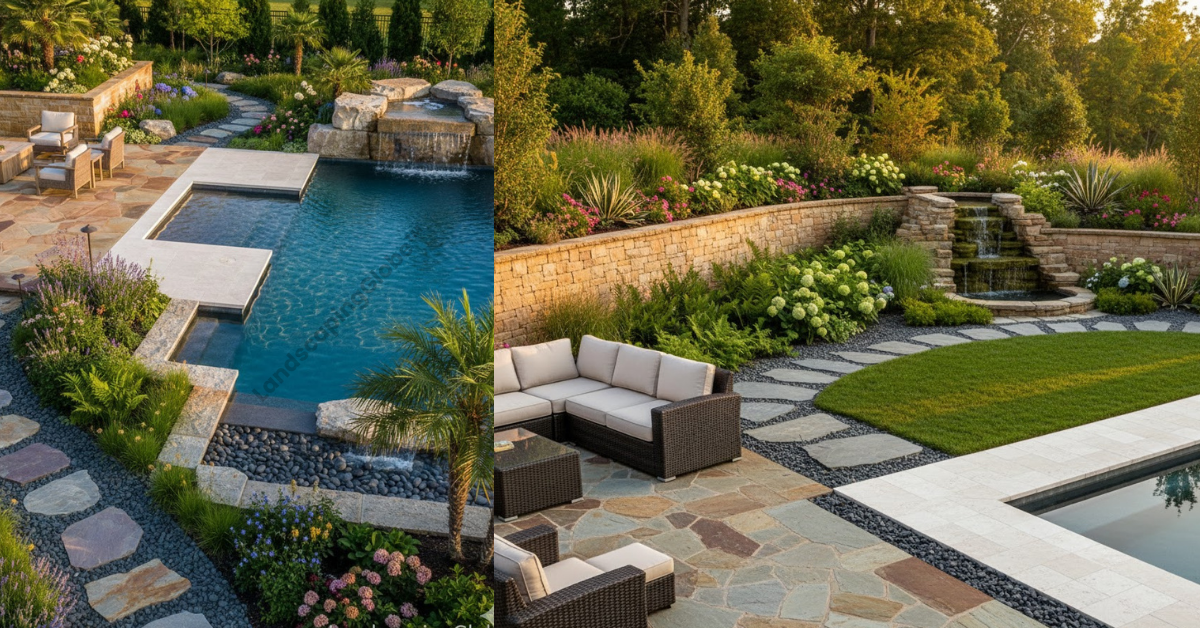
Ever wondered why natural stone changes a yard? Granite, flagstone, slate, sandstone, limestone, and basalt add texture, color, and elegance.
Each has unique veining, pattern, and color, perfect for patios, walkways, retaining walls, or decorative groundcover. Water features, pool decks, rock beds, and hardscaping become stunning with the right types of natural stone cuts and stone finishes.
Low-maintenance, durable, and sourced from a natural stone quarry, these stones last for generations. Knowing stone terminology and using landscaping rocks wisely ensures a functional, sustainable, and visually striking yard.
This natural stone guide helps create charm and style while keeping your outdoor space timeless.
Popular Types of Natural Stones for Outdoors – Names Only:
- Granite
- Flagstone
- Slate
- Bluestone
- Limestone
- Sandstone
- Travertine
- Marble
- Quartzite
Granite: Durable and Stylish Option
- Granite: Hard, dense, perfect for kitchen countertops and bath surfaces.
- Exceptional durability: Resists scratches, chips, and daily wear in high-traffic areas.
- Heat resistance: Handles hot cookware safely; trivets still recommended.
- Unique patterns & colors: Each granite slab offers one-of-a-kind character.
- Design versatility: Fits modern or traditional designs, with countless decor style options.
- Stain resistance: Easy to clean, works well when properly sealed.
- Adds home value: Enhances resale value and overall aesthetic appeal.
- Maintenance: Needs occasional sealing to maintain finish and stain resistance.
- Granite grades: Options range from affordable to luxury, depending on quality and origin.
- Environmental impact: Quarrying granite uses energy, but long-term durability offsets concerns.
Limestone: Elegant and Versatile
- Limestone: Soft, natural stone with neutral beiges, creams, and grays, adding timeless elegance to any space.
- Subtle texture: Gentle speckling and color shifts provide a sophisticated, organic look without busy patterns.
- Classic heritage: Used in iconic structures, bringing history and character to interior or exterior designs.
- Soft palette: Creamy whites, soft grays, and warm browns brighten areas and create fresh, airy environments.
- Versatile applications: Ideal for flooring, wall panels, backsplashes, countertops, hearths, patios, steps, and exterior cladding.
- Multiple finishes: Can be honed limestone, polished, or tumbled to suit modern, traditional, or contemporary styles.
- Design flexibility: Blends with bold or muted tones, enhancing kitchens, bathrooms, or living spaces elegantly.
- Thermal comfort: Remains cool to the touch, perfect for warm climates and outdoor areas.
- Porosity considerations: Softer and more porous than granite, requiring care in wet or busy areas.
Sandstone: Natural Warmth and Texture
- Sandstone: Natural sedimentary rock with earthy colors like beiges, golds, and reds, creating warm, inviting spaces.
- Natural texture: Offers unique grain patterns and subtle variations, ensuring one-of-a-kind applications indoors or outdoors.
- Warm aesthetic: Earthy tones create a cozy, nature-connected atmosphere suitable for rustic or modern designs.
- Rich finishes: Available in honed, tumbled, or sandblasted textures, offering smooth, aged, or rough tactile appeal.
- Durable & versatile: Resistant to weather and foot traffic, ideal for patios, walls, and floors with slip resistance.
- Common uses: Perfect for patios, walkways, fireplaces, hearths, walls, cladding, and flooring.
- Care tips: Seal regularly for protection against stains and moisture; avoid harsh cleaners or high-pressure washing.
- Visual appeal: Blends indoors and outdoors, creating grounded elegance while complementing interior and exterior spaces.
Slate: Sleek and Modern Look
- Slate: Modern, natural stone with a sophisticated finish.
- Finishes: Honed slate, smooth, matte; mixed textures add depth.
- Colors: Black, gray, brown for dramatic, cozy, or refined looks.
- Applications: Flooring, wall cladding, roofs, bathrooms, and living areas.
- Styling tips: Use contrasting grout, white walls, pair with wood, metal, glass.
Travertine: Timeless Beauty for Patios and Paths
- Travertine: Natural stone offering timeless beauty for patios and paths.
- Finishes: Tumbled, honed, brushed, or filled pores for rustic or smooth appearances.
- Cool Surface: Stays cool underfoot, ideal for hot climates and outdoor living.
- Durability: Strong enough for heavy foot traffic, resists cracking, fading, and weather damage.
- Maintenance: Porous stone requires periodic sealing to protect against stains and moisture.
- Patina Development: Natural aging adds unique character over time.
Choosing the Right Stone for Your Climate
| Category / Stone Type | Hot & Sunny (Southwest, Texas) | Cold & Freezing (Midwest, Northeast) | Humid & Wet (Coastal Areas) | General Considerations |
| Recommended Stones | Travertine, Quartzite, Granite | Granite, Slate | Granite, Slate, Quartzite, Travertine, Limestone | All stones based on traffic & usage |
| Reason / Benefits | Resist fading & heat absorption; remain cool underfoot | Low porosity prevents freeze-thaw damage, cracking | Resist moisture, mold, and algae when sealed | Match stone strength to foot/vehicular traffic; local sourcing suits the climate |
| Avoid / Caution | Dark Marble, Soapstone (retain heat) | Soft, porous stones prone to frost damage | Porous stones need sealing | - |
| Tips / Best Practices | Light-colored stones; honed/textured finishes to reduce slipperiness | Ensure proper sealing; install with good water drainage | Use non-slip surfaces for patios/pool decks; ensure sealing | Consider maintenance: Granite and Quartz have lower upkeep; others may need regular sealing |
Maintenance Tips for Outdoor Stones
- Sweep & Rinse Weekly: Remove dirt, leaves, and debris.
- Blot Spills Immediately: Prevent stains from oil or grease.
- Weed Control: Pull weeds or use polymeric sand.
- Deep Clean Seasonally: Use pH-neutral cleaners; avoid vinegar or bleach.
- Scrub Gently: Soft brushes or mops to protect stone surfaces.
- Rinse Thoroughly: Remove all soap residue.
- Power Wash Carefully: Low-pressure only to avoid damage.
- Ensure Drainage: Prevent water pooling and erosion.
- Repair Damage Early: Fix cracks, chips, or shifting stones promptly.
Cost Comparison: Different Stones
| Category | Stone / Gem | Price per Carat |
| Affordable Stones | Jasper | $2–$5 |
| Amethyst | $5 | |
| Citrine | $10–$30 | |
| Quartz (includes Agate) | $8–$65 | |
| Lapis Lazuli | $20–$50 | |
| Mid-Range / Valuable Stones | Tanzanite | ~$1,200 |
| Sapphire | Varies | |
| Tourmaline (Paraiba) | $5,000+ | |
| Rare & High-Value Stones | Red Beryl (Scarlet Emerald) | ~$10,000 |
| Black Opal | Up to $9,500 | |
| Demantoid Garnet | $2,851+ | |
| Musgravite | $6,000–$35,000 | |
| Jadeite | Up to $40,000+ | |
| Alexandrite | ~$70,000 | |
| Price Influencers | 4Cs: Carat, Cut, Clarity, Color | — |
| Rarity | — | |
| Demand & Origin | — |
Combining Stones for Creative Outdoor Designs
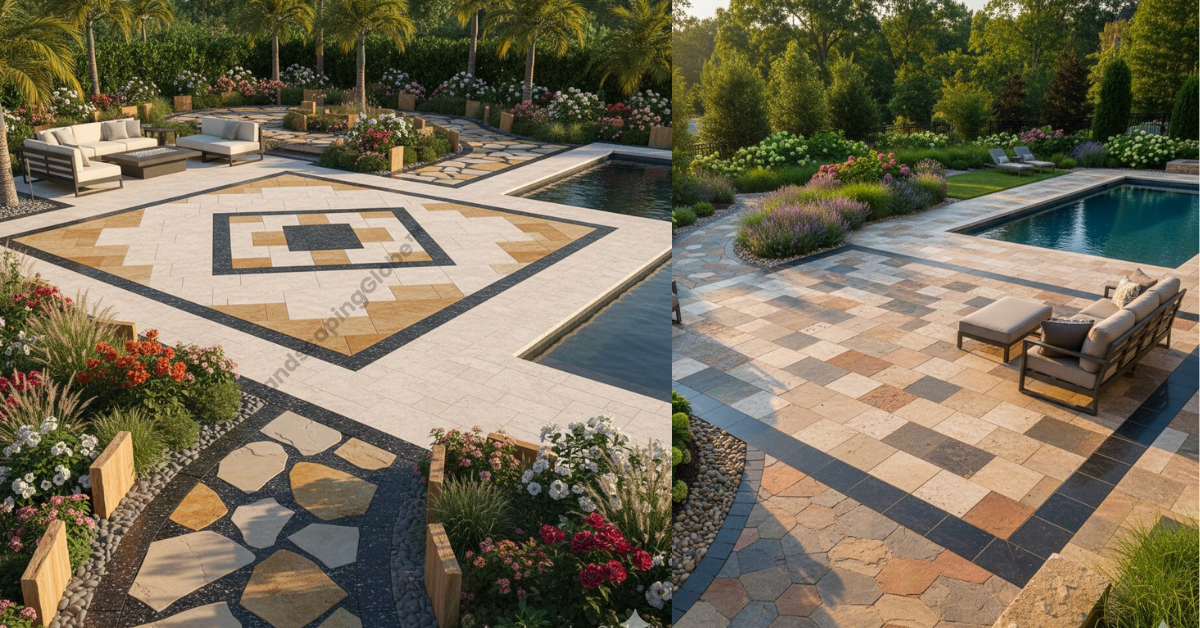
Blending different types of natural stones can transform outdoor spaces into visually stunning and functional areas. By mixing granite, travertine, slate, limestone, and sandstone, you can create textures, patterns, and color contrasts that elevate patios, walkways, garden paths, and pool decks. Using pavers of varied sizes, colors, and finishes like tumbled travertine, honed slate, or polished granite adds depth and dimension, while maintaining durability and slip resistance.
Proper design considers the stone’s natural properties, like heat retention, porosity, and weather resistance, ensuring longevity in all climates. Creative layouts, such as alternating patterns, borders, or mosaics, combine aesthetics with function, making your outdoor area unique and inviting.
Eco-Friendly and Sustainable Stone Options
- Reclaimed & Recycled Stone: Terrazzo or salvaged stones add character and reduce landfill waste.
- Durable Natural Stones: Granite, slate, quartzite, marble, limestone, sandstone, travertine.
- Local Sourcing: Reduces transport emissions and supports local economies.
- Low Embodied Carbon: Less environmental impact compared to concrete or synthetic materials.
- Energy-Efficient Processing: Stones are produced with minimal water and energy.
- Recyclable & Long-Lasting: Materials last centuries and can be repurposed.
Common Mistakes to Avoid When Using Natural Stone
- Avoid harsh cleaners: No vinegar, lemon, ammonia, or bleach; use pH-neutral cleaners.
- Seal properly: Apply and reseal marble, limestone, and other porous stones regularly.
- Use correct tools: Avoid steel wool or abrasive scrubbers; use soft cloths or stone-specific brushes.
- Blot spills immediately: Prevent deep stains from oil, wine, or acidic liquids.
- Leave expansion gaps: Maintain 1/8”–1/4” between stone and walls to avoid cracking.
- Choose the right stone: Use granite, slate, or bluestone for high-exposure and outdoor areas.
- Blend consistently: Dry-lay or mix tiles from multiple crates to balance natural color variations.
- Use correct adhesive/grout: Avoid mismatched types or colors to maintain performance.
- Regular maintenance: Dust mop and clean the stone routinely to prevent dirt and debris buildup.
Future Trends in Outdoor Stone Landscaping
Future trends in outdoor stone landscaping emphasize sustainability, functionality, and modern aesthetics. Designers are increasingly using recycled stone, permeable pavers, and decomposed granite to manage water runoff and create eco-friendly spaces.
Large-format slabs and monochromatic tones are popular for achieving clean, minimalist designs, while travertine, limestone, slate, sandstone, and dark marble provide natural, earthy palettes that blend seamlessly with the environment.
Split-face stone, 3D stacked walls, and patterns like herringbone or chevron add texture and visual interest, while stones are also integrated into functional elements such as low retaining walls, planters, outdoor kitchens, fire pits, and built-in seating.
By combining these materials and techniques, outdoor spaces become low-maintenance, nature-inspired, and timelessly stylish, balancing durability with modern design trends.
Conclusion
In conclusion, thoughtful selection, proper maintenance, and creative use of natural stones can transform outdoor spaces into durable, stylish, and eco-friendly environments.
By understanding stone types, climate suitability, cost factors, and sustainable options, while avoiding common mistakes, homeowners and designers can craft landscapes that are both functional and visually striking. Embracing future trends like large-format slabs, recycled materials, and integrated stone features ensures that outdoor spaces remain timeless, low-maintenance, and harmonious with nature for years to come.
FAQs:
1. What is the best stone for outdoor use?
Granite, slate, travertine, and quartzite are highly durable outdoor stones, resisting weather extremes while enhancing patios, walkways, and landscaping areas.
2. Is natural stone eco-friendly?
Yes, natural stone like granite, limestone, and marble is eco-friendly, recyclable, long-lasting, and locally sourced, minimizing environmental impact significantly.
3. What kind of stone is best for landscaping?
Granite, limestone, sandstone, slate, and travertine are ideal for landscaping, offering durability, visual appeal, and versatility for paths, patios, and walls.
4. What are the cons of natural stone?
Natural stone may require maintenance, sealing, careful cleaning, and proper installation to avoid stains, cracks, or weather-related damage outdoors.
5. Can you put natural stone outside?
Yes, natural stone like granite, slate, or travertine can be installed outdoors, ensuring durability, proper drainage, and climate-appropriate selection.