

Peat Moss for Lawns Grow Healthy Grass
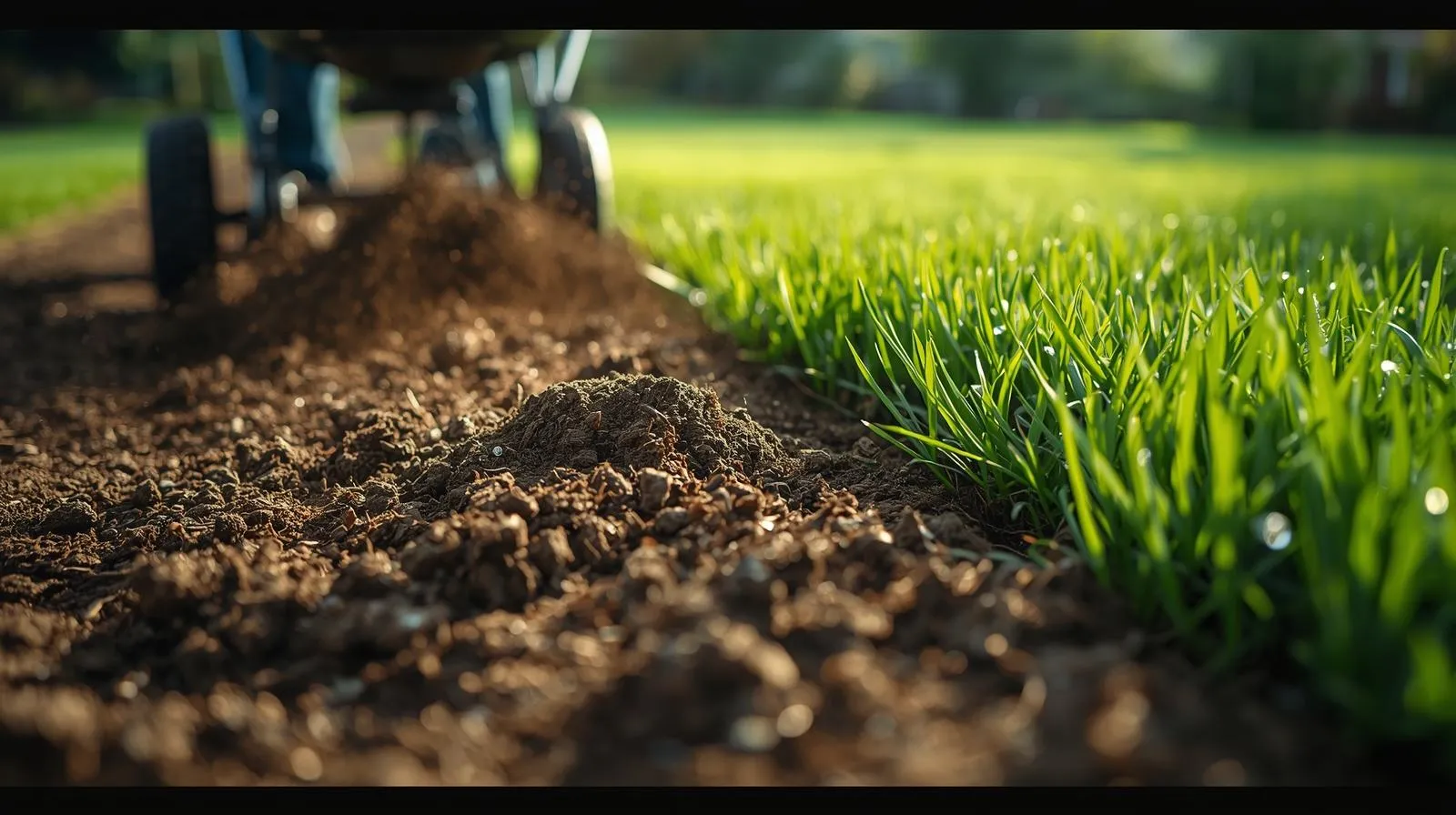
Peat Moss for Grass and Lawn Care Boost Your Lawn Naturally
Peat moss is a valuable tool for lawn and garden care. It improves soil, retains moisture, and promotes healthy grass growth. Gardeners often use peat moss in soil to strengthen lawns and flower beds.
Using peat moss correctly can transform a weak, patchy lawn into a lush, green carpet.
What Is Peat Moss and Why Use It for Lawns?
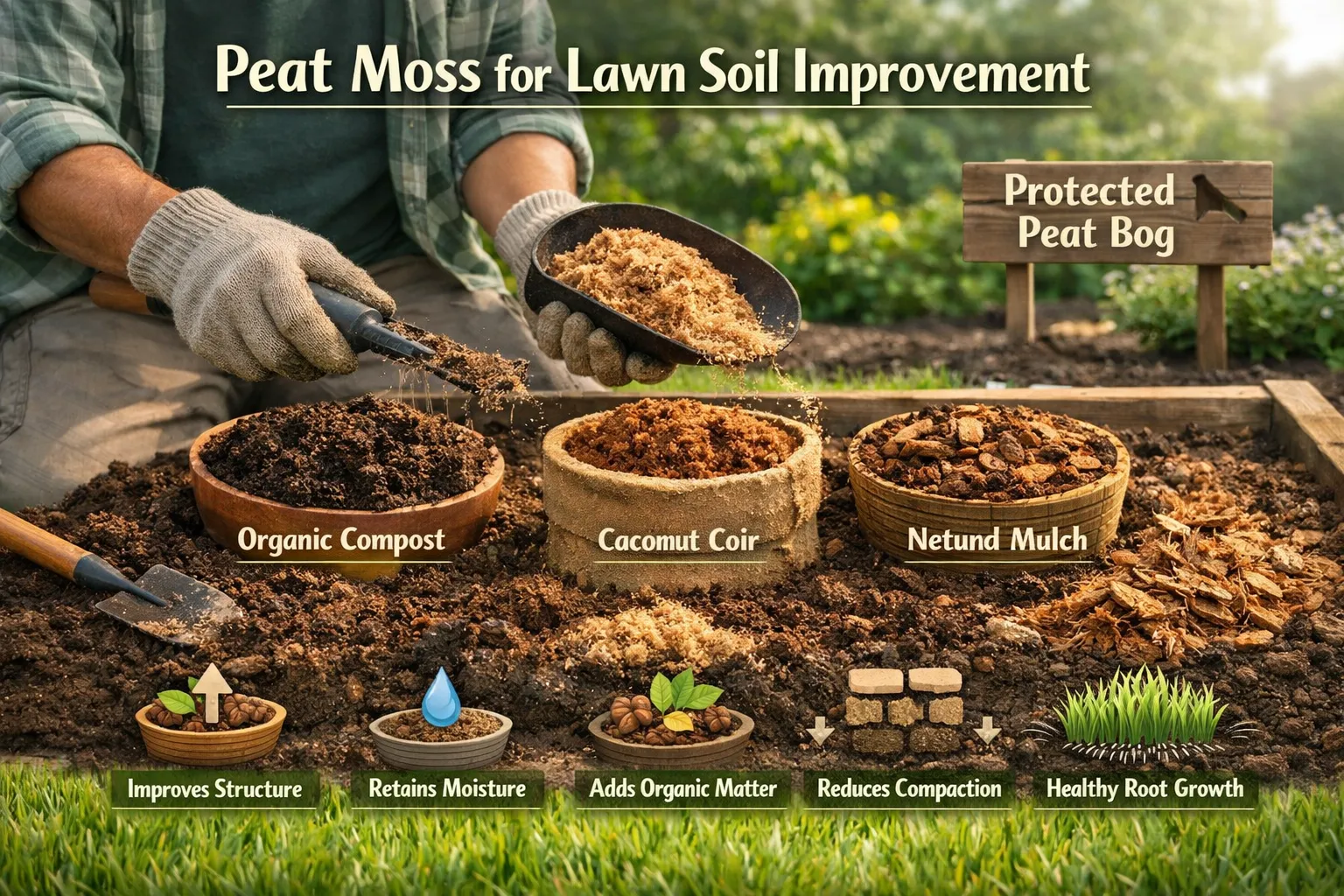
Peat moss is partially decomposed plant material harvested from bogs. It is light, spongy, and holds water well.
Key benefits for lawns:
- Improves soil structure
- Increases moisture retention
- Adds organic matter
- Reduces compaction
- Creates a healthy root environment
Peat moss works best when mixed with existing soil. It is not a fertilizer but improves soil for better nutrient use.
How to Add Peat Moss to Garden and Lawn Soil
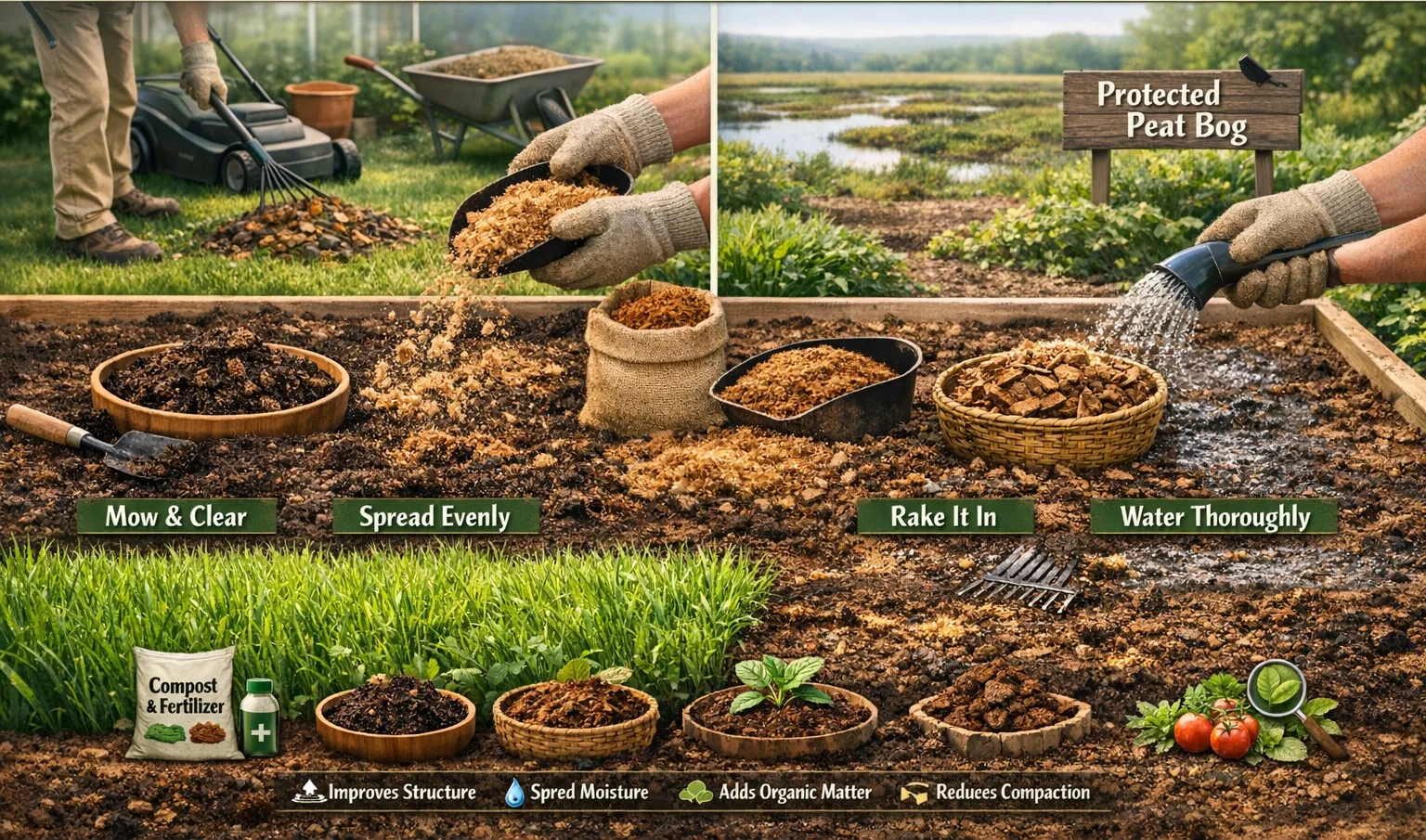
- Prepare the lawn or garden: Mow and remove debris
- Spread a thin layer: About ¼ to ½ inch across the soil
- Rake and mix: Blend into the top 2–3 inches of soil
- Water thoroughly: Helps peat moss settle and integrate
- Combine with compost or fertilizer: Provides nutrients for better growth
Regular application can improve the soil over time.
Benefits of Peat Moss for Grass and Lawns
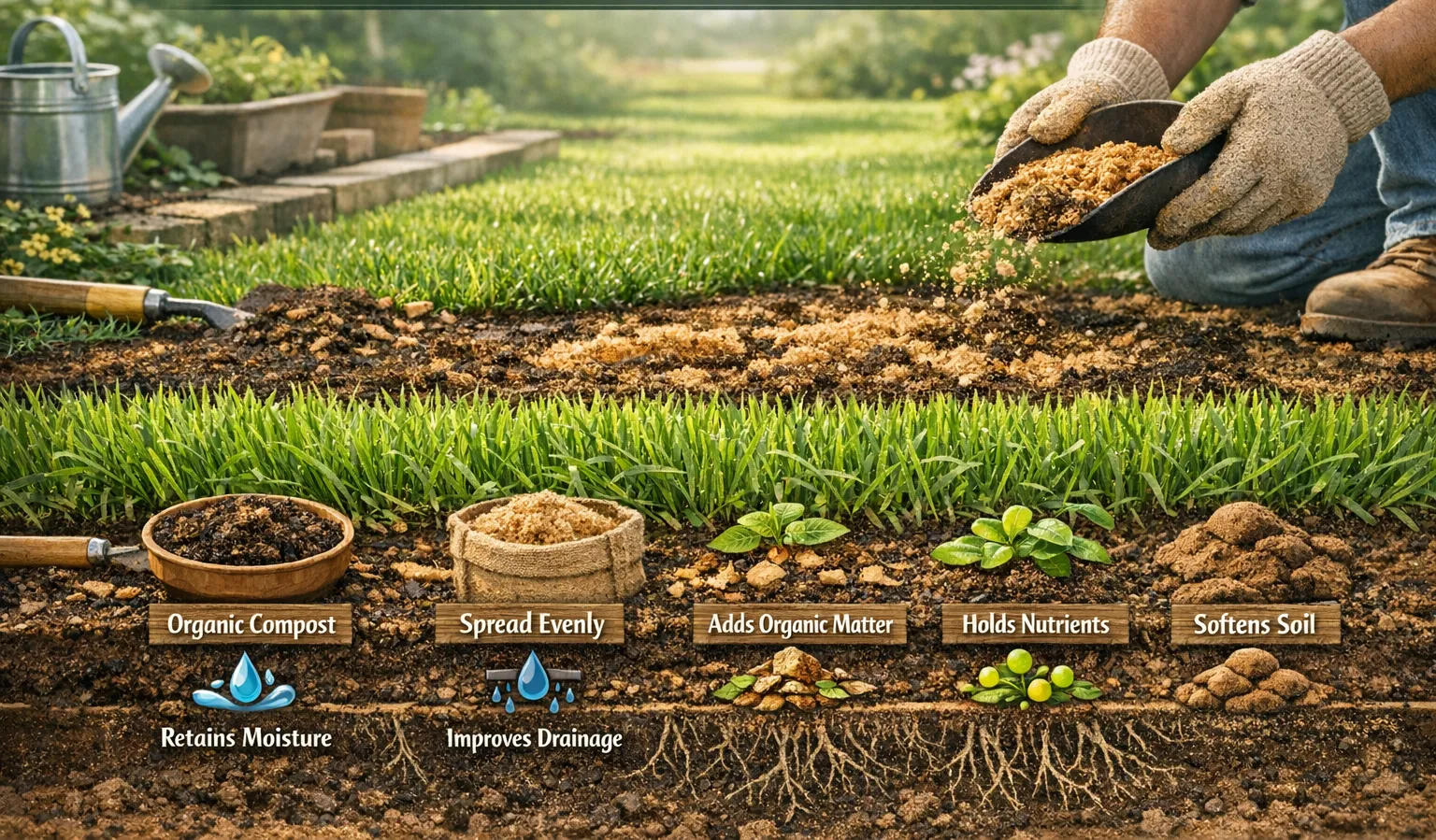
- Retains moisture during dry periods
- Improves drainage in clay soils
- Adds organic matter for stronger roots
- Helps soil hold nutrients for plants
- Creates soft, spongy soil ideal for grass growth
Peat moss makes lawns more resilient and green.
Tips for Using Peat Moss in Lawn Care
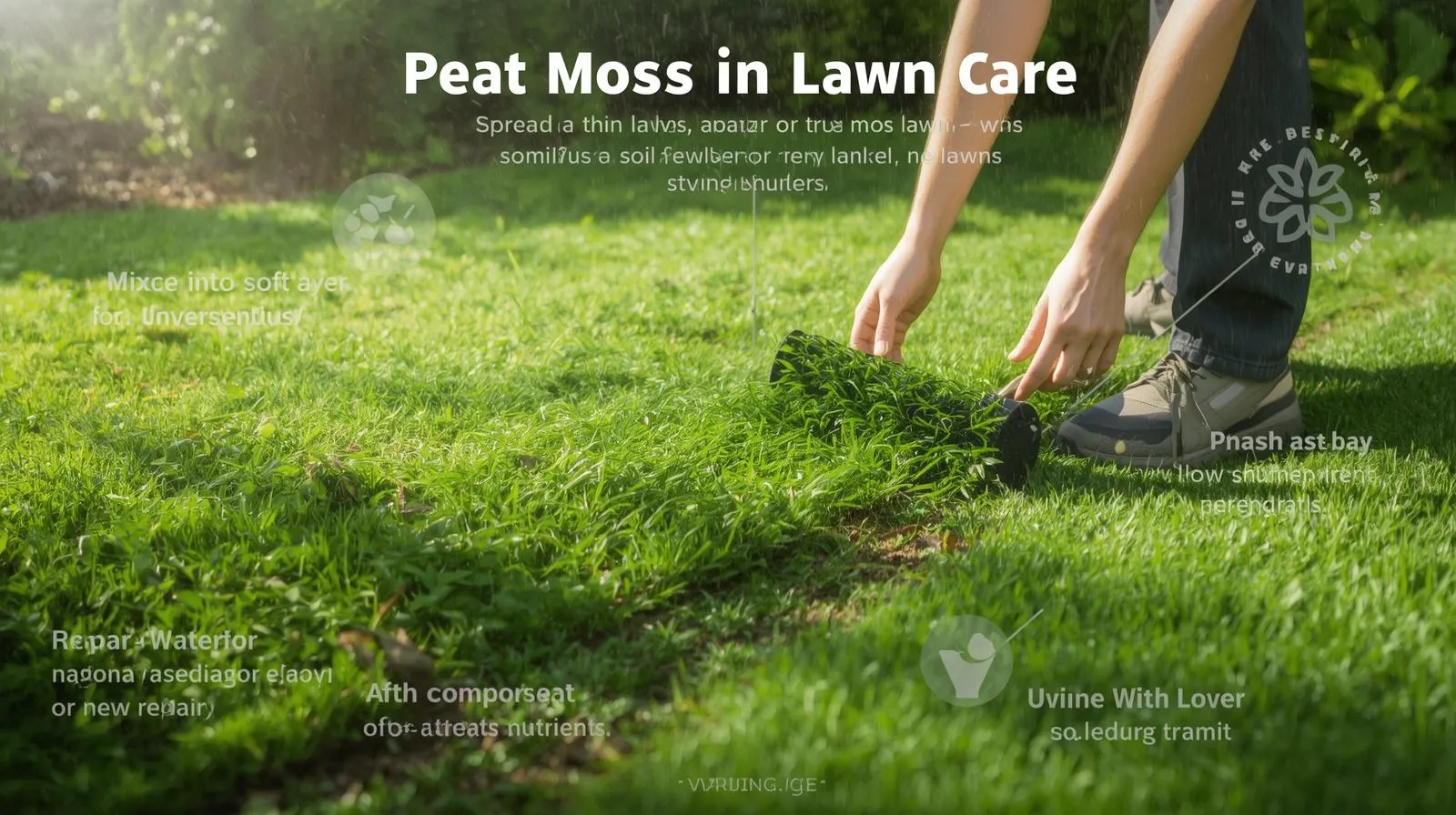
- Spread in thin layers to avoid smothering the grass
- Mix into soil for new lawns or patches
- Combine with compost for added nutrients
- Avoid overuse; too much can make the soil acidic
- Water regularly after application
Common Mistakes to Avoid
- Using dry peat moss without watering
- Applying too thick a layer at once
- Not mixing with soil for proper integration
- Relying on peat moss alone for nutrients
FAQs
Can I use peat moss on an established lawn?
Yes, it helps improve soil structure and moisture retention.
How often should I add peat moss?
Once or twice a year is usually enough.
Does peat moss fertilize grass?
No, it improves soil but does not supply nutrients. Combine with compost or fertilizer.
Can peat moss prevent soil compaction?
Yes, it loosens soil and helps roots grow stronger.
Is peat moss safe for vegetable gardens too?
Yes, it works for lawns, flowers, and garden beds alike.
Pro Tip
Mix peat moss with compost before adding to your lawn. It improves moisture retention and enriches the soil naturally.