

Permeable Paving Systems: Types, Costs, Pros and Cons
Permeable Paving: Types, Benefits, Drawbacks, Installation & Cost
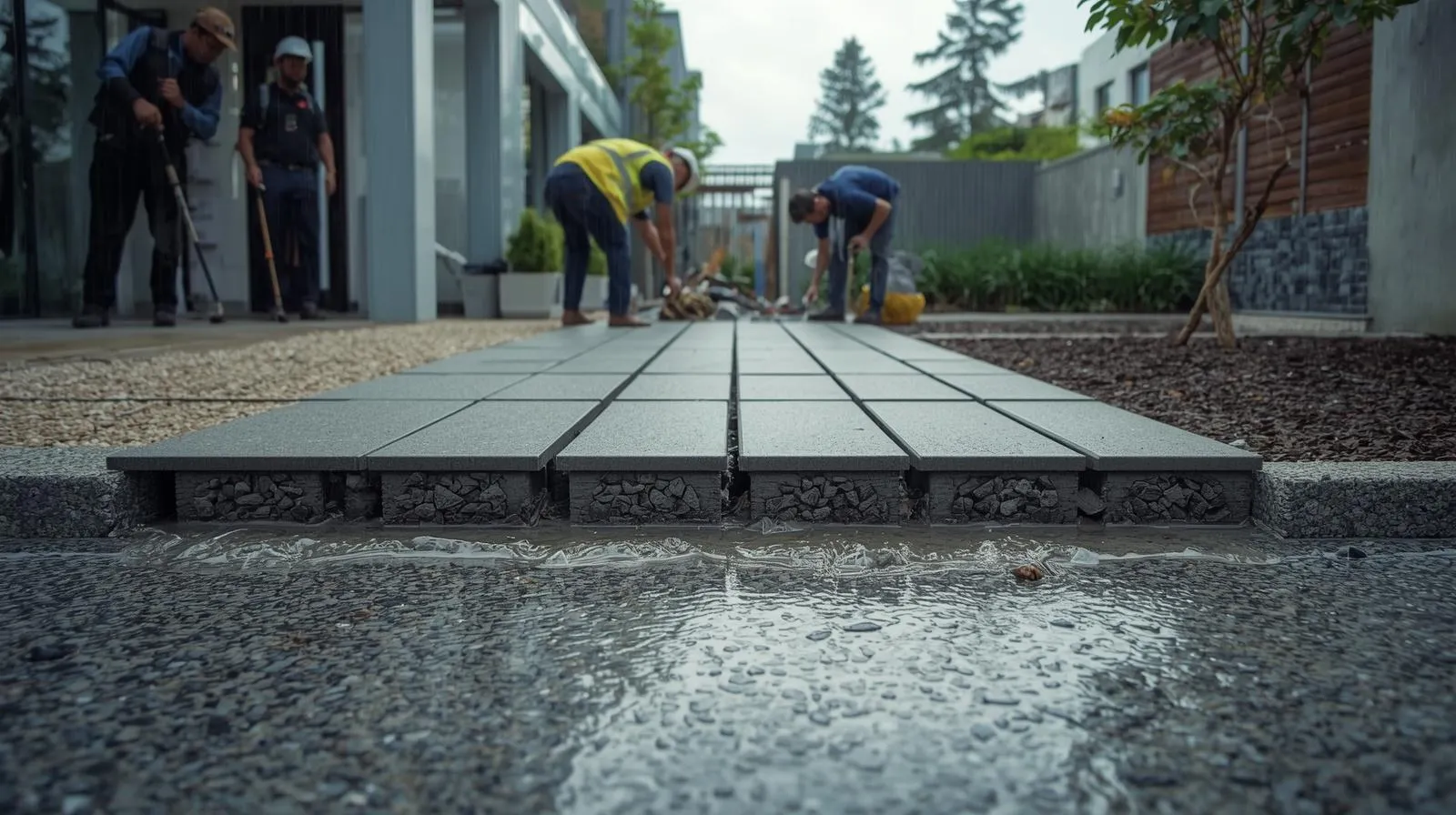
Permeable paving is a surface that lets rainwater pass through and soak into the ground below naturally.This system reduces stormwater runoff, limits surface flooding, and supports groundwater recharge in urban and residential areas.
Common materials include permeable interlocking concrete pavers (PICP), porous asphalt, pervious concrete, and plastic/grass grid systems.Some projects also use resin-bound gravel for a decorative and porous surface finish.
Major benefits include stormwater management, pollutant filtration, cooler surfaces, and reduced urban heat island effects.Surfaces stay drier, create less ice formation, and improve walking and driving safety year-round.
Drawbacks include higher costs, regular vacuum sweeping, and limits for heavy traffic zones.Installation requires excavation, sub-grade preparation, and an open-graded aggregate base layer for water storage.Most projects cost between $10–$30 per square foot, depending on materials and site conditions.Organizations like the U.S. Environmental Protection Agency (EPA) promote permeable pavement for sustainable infrastructure.
What Is Permeable Paving?
Permeable paving is a porous surfacing material that lets rainwater move through the surface into the ground.It includes pervious concrete, porous asphalt, and interlocking concrete pavers designed for stormwater management.
These surfaces reduce runoff, filter pollutants, and support groundwater recharge in developed areas.Cities and agencies like the U.S. Environmental Protection Agency (EPA) promote this system for sustainable drainage.
Definition of Permeable Pavement Systems
Permeable pavement systems use surfaces with voids that allow water to pass downward.
Below the surface sits an open-graded gravel base that works as a stone reservoir.Water slowly moves from this reservoir into the soil beneath the pavement.This structure mimics natural hydrology found in undisturbed landscapes.Common systems include plastic grid systems, permeable interlocking concrete pavers (PICP), porous asphalt, and pervious concrete.
How Permeable Surfaces Allow Water Infiltration
Rain enters through surface openings or aggregate-filled joints.Water flows into the bedding layer and reaches the aggregate base.The base stores water and releases it gradually into the ground.This process reduces pressure on storm drain systems.Regular vacuum sweeping keeps pores clear and maintains permeability.
Difference Between Permeable and Impervious Surfaces
Permeable surfaces absorb water and allow infiltration into soil.Impervious surfaces like traditional concrete block water movement.Impervious pavement creates surface puddles and faster runoff.Permeable pavement reduces flooding and improves site drainage.Common uses include driveways, walkways, parking lots, and sidewalks.
Types of Permeable Paving Materials
Permeable paving materials are sustainable surfaces that allow water to move into the ground.They help reduce stormwater runoff, support green infrastructure, and limit surface pollution.
These materials work well for driveways, parking lots, and walkways.Most systems require a stone aggregate base for water storage and drainage.
Permeable Concrete
Previous concrete is made with cement, water, and coarse aggregate only.This mix creates high-void content for fast water drainage.Water flows through the slab into the aggregate base below.It handles heavy traffic when properly installed.
Porous Asphalt
Porous asphalt looks like traditional asphalt but contains fewer fine particles.Small openings allow rainwater to pass through easily.It drains into a stone reservoir under the surface.This option suits roads, parking areas, and driveways.
Permeable Interlocking Concrete Pavers (PICP)
Permeable interlocking concrete pavers (PICP) are solid concrete units.They have aggregate-filled joints between each paver.Water moves through joints into the base layer.They provide strength and design flexibility.
Grid Pavers and Plastic Cellular Systems
Plastic grid systems use open-cell interlocking grids.Cells are filled with gravel or grass.These systems support light loads and emergency lanes.They allow full water infiltration.
Turfstone and Grass Pavers
Turfstone pavers combine concrete frames with grass openings.Grass roots absorb water and reduce runoff.These surfaces blend pavement with vegetation.They work well for overflow parking and paths.
Advantages of Permeable Paving
- Permeable pavement provides strong stormwater management for residential and commercial surfaces.
- It manages rainwater on-site and supports green infrastructure projects.
- These systems create cleaner water and healthier urban environments.
Stormwater Runoff Reduction
- Permeable surfaces allow rain and snowmelt to soak into soil.
- This lowers runoff volume and reduces flood risk.
- Water enters soil instead of storm drain systems.
- Nearby waterways stay cleaner.
Groundwater Recharge
- Water passes through pavement into underground soil layers.
- This supports aquifer replenishment.
- It nourishes tree roots and vegetation.
- Soil moisture stays balanced.
Urban Heat Island Mitigation
- Permeable pavement absorbs less surface heat.
- Open pores allow evaporative cooling.
- Surface temperatures remain lower.
- Surrounding air becomes cooler.
Improved Traction and Reduced Standing Water
- Water drains quickly through surface openings.
- Fewer puddles form after rainfall.
- Surfaces provide better traction.
- Less ice formation occurs.
Long-Term Surface Durability
- Permeable systems resist cracking and rutting.
- The aggregate base supports loads evenly.
- Proper maintenance extends lifespan.
- Surfaces remain functional for decades.
Enhanced Property Appearance
- Permeable pavers come in many styles and colors.
- Decorative patterns improve curb appeal.
- Landscapes look organized.
- Property value may increase.
Municipal Incentives and Rebates
- Some cities offer rebates for permeable installations.
- Programs encourage on-site water control.
- Incentives lower project cost.
- Systems help meet stormwater regulations.
Disadvantages of Permeable Paving
- Permeable pavement has some limitations that affect cost, durability, and long-term performance.
- These drawbacks should be reviewed before choosing installation.
Higher Initial Installation Cost
- Higher upfront cost compared to traditional pavement options.
- Specialized materials increase project pricing.
- Specialized installation requires experienced contractors.
- Labor costs are higher due to complex construction steps.
Routine Maintenance Requirements
- Surfaces need regular vacuum sweeping.
- Leaves and debris must be removed often.
- Maintenance keeps permeability working properly.
- Neglect reduces drainage performance.
Clogging and Sediment Buildup
- Sediment, sand, and dirt block surface pores.
- Clogged pores reduce water infiltration.
- Blocked joints hold muddy material.
- Cleaning restores drainage capacity.
Load-Bearing Limitations
- Lower load capacity than conventional pavement.
- Not suitable for highways, airports, or heavy truck routes.
- Heavy vehicles can collapse pore spaces.
- Best for low-speed traffic areas.
Unsuitable Soil and Slope Conditions
- Poor soils reduce infiltration.
- Steep slopes cause drainage problems.
- Cold climates create freeze-thaw stress.
- Extreme heat can soften porous materials.
Permeable Paving Cost Breakdown
- Permeable paving prices depend on material type, surface area, labor, and site preparation needs.
- Most projects combine material cost, labor cost, and base construction cost.
- Final pricing changes based on driveways, patios, walkways, and parking areas.
Average Cost Per Square Foot
- Permeable paving typically costs $4 to $40 per square foot installed.
- Most homeowners pay $10 to $20 per square foot for standard installations.
- Prices include materials, labor, and base layers.
- Higher-end pavers increase total square foot pricing.
Residential Project Cost Estimates
- A two-car driveway usually measures about 640 square feet.
- Typical residential projects range between $5,000 and $12,000.
- Complex designs may exceed $25,000.
- Driveways, patios, and walkways fall within similar ranges.
- Some homeowners qualify for rebates up to $15 per square foot.
Commercial Installation Pricing
- Commercial projects cost more due to size and structure.
- Parking lots and access roads need thicker base layers.
- Installed costs often range $12 to $30 per square foot.
- Heavy-use zones require stronger materials.
Material Cost Comparison
- Grass pavers and plastic pavers cost $3 to $9 per square foot.
- Porous asphalt typically costs $7 to $13 per square foot.
- Pervious concrete usually ranges $8 to $16 per square foot.
- Interlocking concrete pavers (PICP) cost $4 to $12 per square foot.
- Premium PICP systems may reach $40 per square foot.
- Natural stone pavers range $10 to $30+ per square foot.
Labor and Base Preparation Costs
- Labor often equals 40% to 60% of total project cost.
- Site preparation includes excavation and grading work.
- Gravel sub-base depth commonly reaches 6 to 18 inches.
- Aggregate material costs $40 to $86 per cubic yard.
- Annual maintenance equals about 1% to 2% of installation cost.
- Maintenance includes vacuum sweeping and joint re-sanding.
Permeable Pavers vs Traditional Pavers
- Permeable pavers have wide joints filled with coarse aggregate, letting water infiltrate into the soil, reducing stormwater runoff significantly.
- Traditional pavers feature narrow joints with polymeric sand, shedding water across the surface, requiring separate drainage systems for heavy rainfall.
Drainage Performance Comparison
- Permeable pavers allow rainwater to flow into the gravel base, recharge groundwater, and prevent puddles on driveways or patios.
- Traditional pavers direct water along slopes, increasing runoff and potentially causing flooding or ice in winter conditions.
Lifespan Comparison
- Properly installed permeable pavers can last decades while handling residential and light commercial traffic, similar to non-permeable pavers.
- Non-permeable pavers are extremely durable under heavy traffic, including roads and commercial parking lots, with minimal performance loss.
Maintenance Comparison
- Permeable paving needs regular vacuum sweeping to remove sediment, keeping wide joints clear for consistent water infiltration.
- Traditional pavers require less specialized care but may need periodic cleaning and occasional joint re-sanding for aesthetics.
Installation Complexity Comparison
- Permeable pavers demand precise installation, including gravel reservoir base, correct joint width, and slope considerations for optimal drainage.
- Traditional pavers are simpler to install, with standard base and tight joints, reducing labor time and installation cost.
Visual Appearance Comparison
- Permeable pavers offer eco-friendly aesthetics with varied textures, colors, and patterns while supporting sustainable drainage design.
- Non-permeable pavers provide timeless designs, classic uniform looks, and consistent surfaces suitable for high-traffic areas or formal layouts.
Installation Process for Permeable Paving
The goal of this section is to outline the step-by-step installation process for permeable paving, highlighting techniques, materials, and layers that ensure proper water drainage, structural integrity, and durability. It also emphasizes using ASTM-standard aggregates, geotextile fabrics, edge restraints, and joint filling methods to create a functional permeable surface.
Site Evaluation and Soil Testing
Entities & Key Concepts:
- Site evaluation: assessing the suitability of the location
- Soil testing: checking permeability and soil type
- Drainage check: ensuring subgrade allows water infiltration
- Slope assessment: minor slope for overflow management
- Root/obstruction removal: clearing rocks, roots, debris
Explanation:
Before installation, it’s essential to evaluate the site and perform soil tests to determine if the ground can handle a permeable surface. Sites with shallow foundations, tree roots, or steep gradients may require adjustments or special drainage systems.
Excavation and Subgrade Preparation
Entities & Key Concepts:
- Excavation depth: typically 8–20 inches depending on use (foot traffic vs. driveway)
- Subgrade preparation leveling and lightly compacting the soil
- Non-woven geotextile fabric: separates soil from aggregate base
Explanation:
The site is excavated to the required depth, ensuring space for the multiple layers. Geotextile fabric is laid to prevent soil contamination of the aggregate base while maintaining water permeability.
Crushed Stone Reservoir Layer
Entities & Key Concepts:
- Open-graded aggregate base: usually ASTM No. 57 stone
- Layer lifts: compacted in 2–4 inch increments
- Reservoir layer function: stores and drains water efficiently
Explanation:
This crushed stone layer acts as a water reservoir and provides structural support. Proper compaction and sizing of aggregates are critical for durability and drainage.
Bedding Layer Installation
Entities & Key Concepts:
- Bedding layer: 1–2 inches of smaller open-graded stone (ASTM No. 8 or 9)
- Function: provides a level base for paver placement
- Do not compact before paver placement: ensures correct settling
Explanation:
The bedding layer allows the pavers to sit evenly, maintaining the intended pattern and permeability. This layer bridges the gap between the reservoir base and the paver surface.
Paver Placement or Pouring
Entities & Key Concepts:
- Paver types: permeable pavers such as Aqua-Bric®, Eco-Stone®, Andover 5511™
- Placement patterns: herringbone, running bond, or custom
- Mechanical or manual installation: depending on size and layout
Explanation:
Pavers are laid in the desired pattern, ensuring alignment and spacing. This step determines the final look and structural interlock of the permeable surface.
Edge Restraints and Joint Filling
Entities & Key Concepts:
- Edge restraints: concrete, steel, or other materials to hold pavers
- Joint filling: small clean aggregates (ASTM No. 8, No. 9, or No. 89)
- Sweeping and compaction: locks pavers in place
- No fines: do not use sand or soil to preserve permeability
Explanation:
Edge restraints keep the pavers in place and prevent shifting. Joint filling with proper aggregates ensures water can pass through while stabilizing the surface. Final compaction ensures durability and a level finish.
Best Applications for Permeable Paving
Driveways
Permeable paving works great for residential driveways, letting water soak into soil and reducing puddles after rainstorms.
Patios and Walkways
Patios and walkways built with permeable pavers create dry, stable, and attractive surfaces for garden and landscaping areas.
Parking Lots
Commercial parking lots can use permeable paving to manage runoff and help municipal drainage during heavy rain.
Pool Decks
Pool decks benefit from permeable pavements, providing safe, non-slippery surfaces that prevent water pooling and reduce erosion.
Commercial Plazas
Commercial plazas with permeable pavers reduce urban heat islands while supporting pedestrian traffic and green infrastructure.
Design Options and Appearance
Cobblestone driveways offer many design options that improve style, function, and visual appeal.
These features combine shape, color, texture, and borders to create unique surfaces.
Well-planned designs increase curb appeal and overall property value.
Shape and Pattern Choices
Cobblestones are available as water-rounded stones and cut cobblestone setts.Popular layouts include fan pattern, herringbone pattern, running bond, and random pattern.Circular medallion designs add visual focus at driveway entrances.Pattern selection influences strength and surface stability.
Color Selections
Common colors include gray, charcoal, black, beige, tan, and brown.Materials like granite, basalt, and sandstone provide natural color variety.Multi-tone blends combine light and dark stones for depth.Color choices should match home architecture and landscaping.
Texture and Finish Options
Cobblestones may have tumbled, natural split, or lightly textured finishes.Textured surfaces provide strong slip resistance.Smooth finishes create a refined appearance.Finish selection affects walking comfort and maintenance needs.
Decorative Border Features
Borders use contrasting stones for definition.Granite edging and concrete restraints keep pavers in place.Borders highlight driveway shape and pattern layout.Decorative edging adds a polished final look.
Suitability Based on Climate
Cobblestone driveways perform well across many climate conditions.Natural stone structure supports long-term outdoor exposure.
Proper installation improves weather resistance and surface stability.
Freeze-Thaw Resistance
Granite cobblestones handle repeated freeze-thaw cycles without cracking.Basalt and quartzite also provide strong cold-weather durability.
Tight joint sand and stable base layers prevent heaving.These stones resist moisture penetration and surface damage.
Hot Climate Performance
Cobblestones absorb less heat than asphalt surfaces.Lighter colors reflect sunlight and stay cooler.
Sandstone and limestone perform well in warm regions.Low heat absorption supports walking comfort.
Heavy Rainfall Regions
Permeable pavement systems allow water infiltration.Open joints and drainage layers reduce surface pooling.
Cobblestone driveways manage stormwater runoff efficiently.Proper slope and grading improve water flow.
Choosing a Permeable Paving Contractor
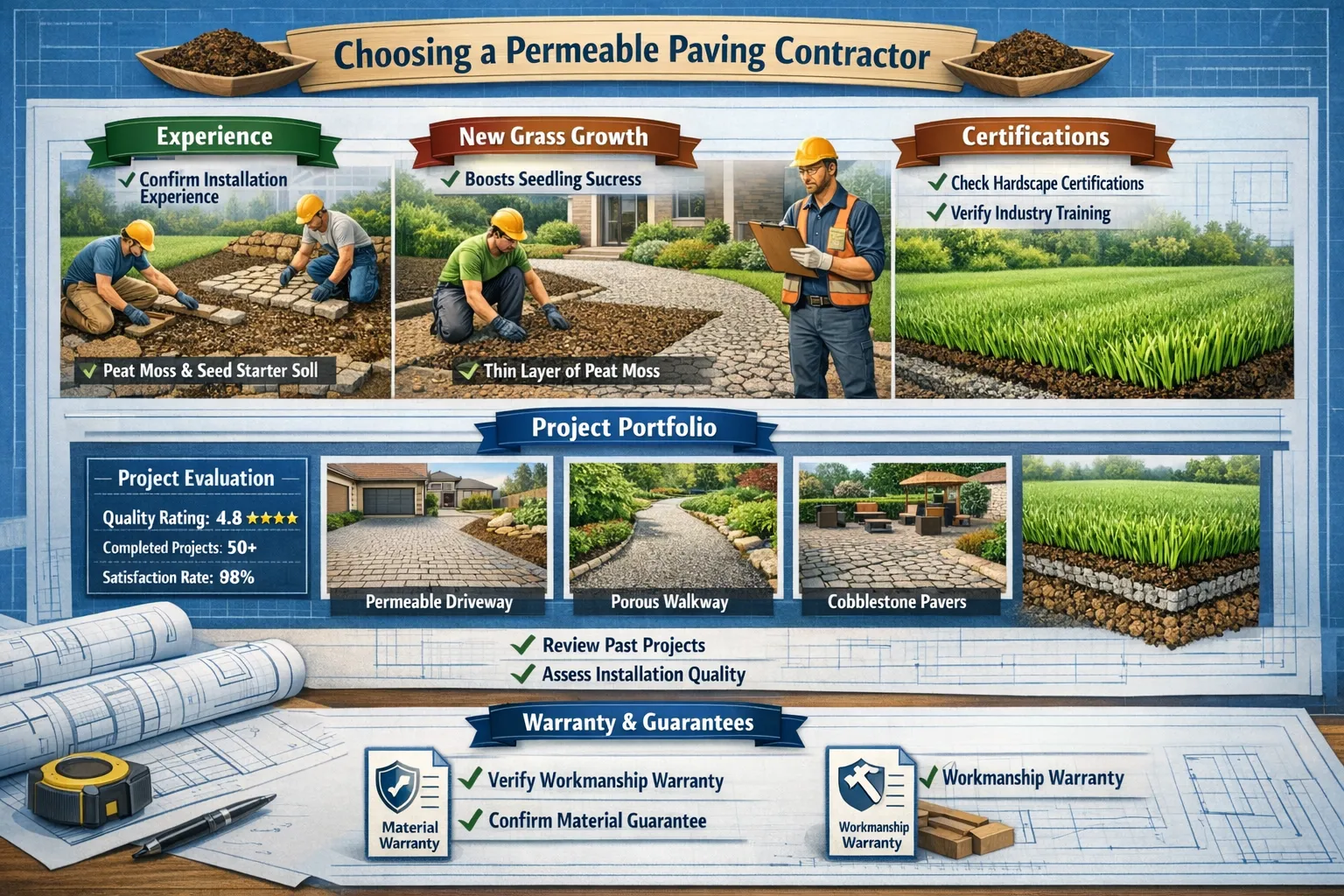
Follow these steps to select a reliable permeable paving contractor for long-term performance.
Experience with Permeable Systems
Step 1: Confirm experience installing permeable pavement systems for driveways and walkways.
Step 2: Ask about projects using permeable pavers, porous concrete, and open-graded base layers.
Step 3: Verify knowledge of drainage and water infiltration methods.
Certification and Training
Step 4: Look for valid industry certifications in hardscape construction.
Step 5: Check training in hardscape installation and permeable surfaces.
Step 6: Confirm the contractor follows recognized installation standards.
Portfolio Review
Step 7: Review photos of completed permeable driveway installations.
Step 8: Check examples featuring cobblestone pavers and permeable pavers.
Step 9: Evaluate design quality and workmanship details.
Warranty Coverage
Step 10: Ask for written workmanship warranty details.
Step 11: Confirm material warranties for pavers and base materials.
Step 12: Choose contractors offering clear warranty terms.
FAQS
Can Permeable Pavers Handle Vehicle Traffic?
Yes, permeable pavers support cars when installed over a strong open-graded base.They provide excellent load-bearing capacity for residential driveways.
Do Permeable Surfaces Freeze in Winter?
Permeable pavement systems drain water quickly, reducing surface ice formation.
This improves freeze-thaw resistance in cold climates.
How Often Is Cleaning Required?
Light sweeping and occasional rinsing keep permeable surfaces working properly.
Annual vacuum cleaning maintains good water infiltration.
Can Existing Pavement Be Replaced With Permeable Paving?
Yes, old concrete or asphalt can be removed and replaced.Proper base preparation is required before installation.
Are Permeable Pavers Environmentally Friendly?
Permeable paving reduces stormwater runoff and supports groundwater recharge.
This helps protect local water systems.
Do Permeable Pavers Require Sealing?
Most permeable pavers do not need sealing.Natural drainage performance remains unchanged without sealers.