

Sustainable Aquaculture Systems for Commercial Fish Farming
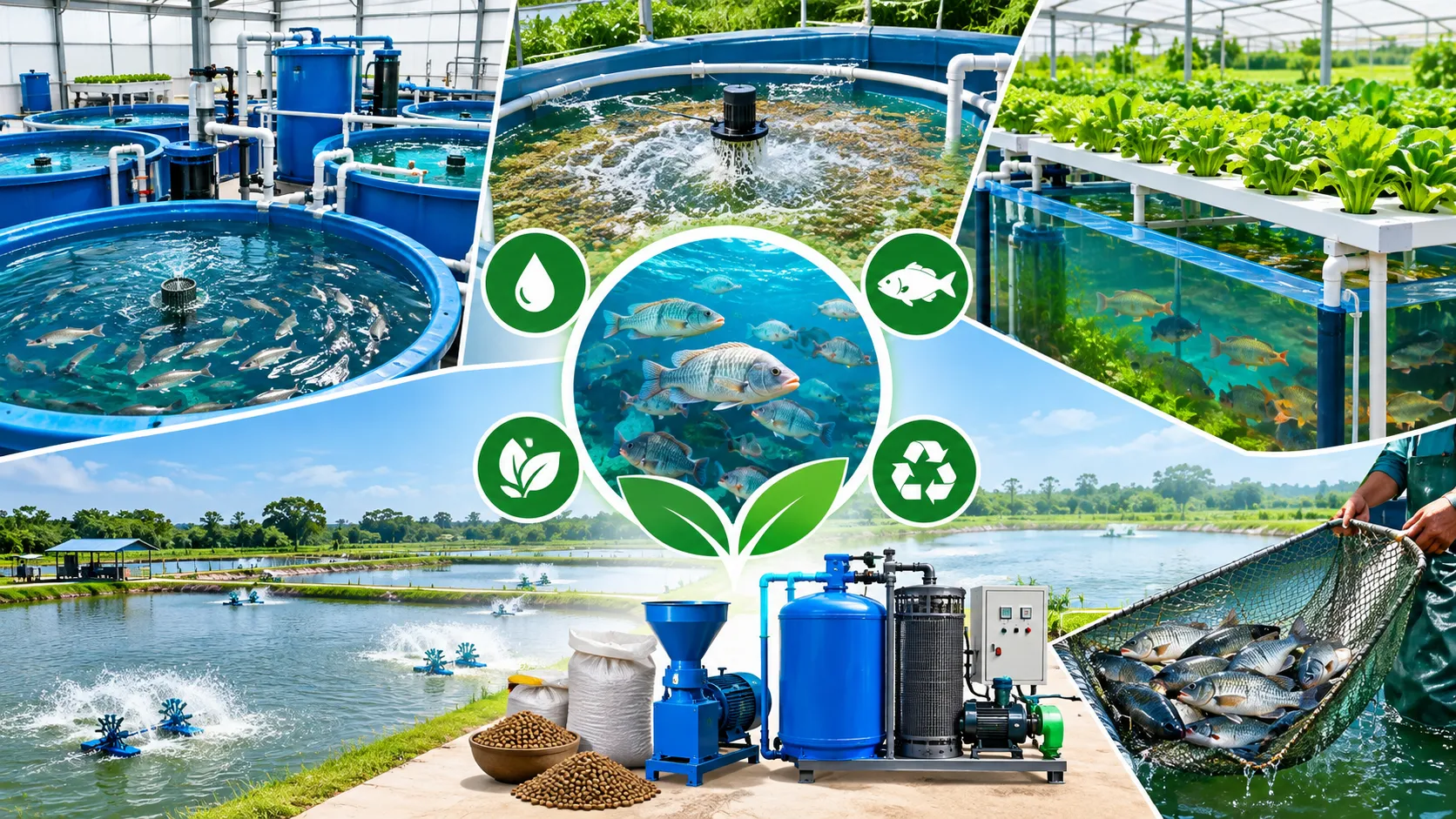
Sustainable Aquaculture Systems for Commercial Fish Farming Projects
Sustainable aquaculture systems are becoming increasingly important for commercial fish farming projects as global demand for seafood continues to grow. Fish farming provides an efficient way to produce high-quality protein while reducing pressure on wild fish populations. However, successful aquaculture requires proper water management, balanced fish nutrition, efficient equipment, disease prevention, and environmentally responsible production practices.
Modern aquaculture technologies, including Recirculating Aquaculture Systems (RAS), Biofloc Technology, Aquaponics, and pond-based fish farming, allow commercial fish farmers to improve production efficiency and manage resources more effectively. The right system depends on fish species, available land, water supply, energy costs, investment capacity, and local market demand.
For entrepreneurs planning a commercial fish farming business, understanding sustainable aquaculture is essential for building a profitable and environmentally responsible operation. This guide explains the main aquaculture systems, essential equipment, farm management practices, project costs, and important factors to consider before investing in a fish farming project.
What Are Sustainable Aquaculture Systems in Commercial Fish Farming?
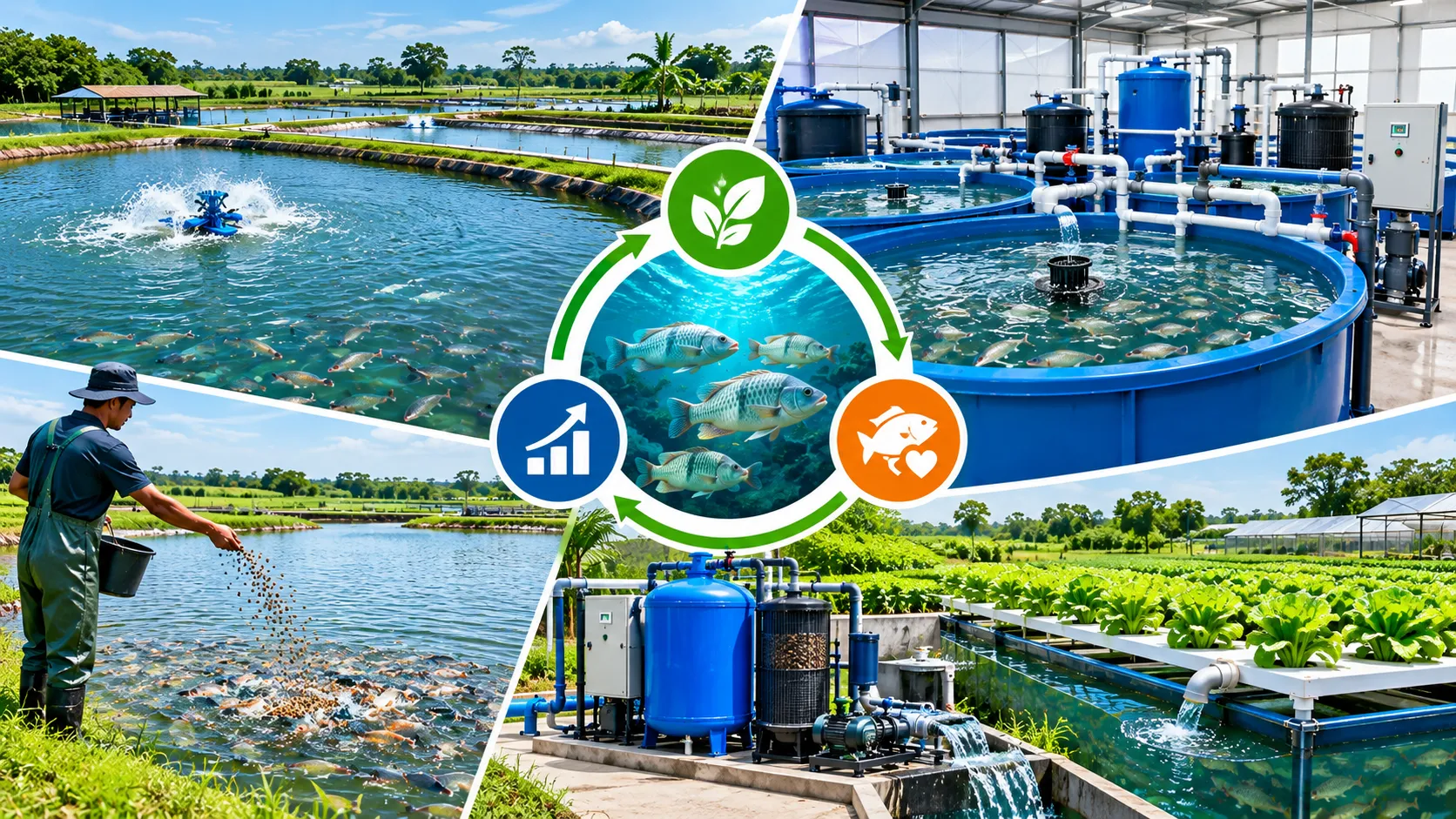
Sustainable aquaculture systems are fish farming methods designed to produce fish efficiently while minimizing environmental damage and unnecessary resource consumption. These systems focus on responsible water use, effective waste management, healthy fish populations, efficient feeding, and long-term business performance.
Commercial aquaculture can operate through freshwater ponds, tanks, indoor production facilities, or integrated farming systems. Depending on the production goals, farmers may use technologies such as Recirculating Aquaculture Systems, biological filtration, automated feeding, and dissolved oxygen monitoring.
A sustainable fish farm aims to balance three important objectives: environmental responsibility, economic profitability, and animal health. For example, a properly managed fish pond can reuse nutrient-rich water for agricultural irrigation where appropriate, while a well-designed RAS facility can treat and recirculate much of its production water.
Sustainable aquaculture does not mean that every farm must use advanced technology. Traditional pond farming can also be sustainable when farmers maintain appropriate stocking densities, protect water quality, use suitable feed, and prevent untreated waste from entering natural waterways.
Benefits of Sustainable Aquaculture for Commercial Fish Farming Projects
Sustainable aquaculture offers several advantages for commercial fish farming businesses. Its benefits depend on the chosen production system, farm design, and quality of daily management.
- Improved resource efficiency: Water recirculation, controlled feeding, and efficient aeration can reduce unnecessary resource consumption.
- Better fish growth: Maintaining suitable temperatures, dissolved oxygen levels, and balanced nutrition supports healthy growth and consistent production.
- Reduced environmental impact: Proper waste collection, responsible chemical use, and wastewater treatment help limit pollution.
- Greater production control: Indoor tanks and controlled-environment systems can provide more consistent conditions than farms exposed entirely to changing weather.
- Efficient land utilization: High-density systems, including RAS and Biofloc Technology, can produce substantial quantities of fish within relatively small areas when properly managed.
- Improved biosecurity: Controlled water supplies, quarantine procedures, and equipment sanitation can reduce the introduction and spread of fish diseases.
- Potential long-term profitability: Lower feed waste, better survival rates, and improved resource efficiency can strengthen financial performance.
Nevertheless, sustainability does not guarantee profitability. Electricity prices, feed expenses, labor requirements, market access, and maintenance costs must be evaluated before selecting a commercial aquaculture system.
Types of Sustainable Aquaculture Systems for Fish Farming
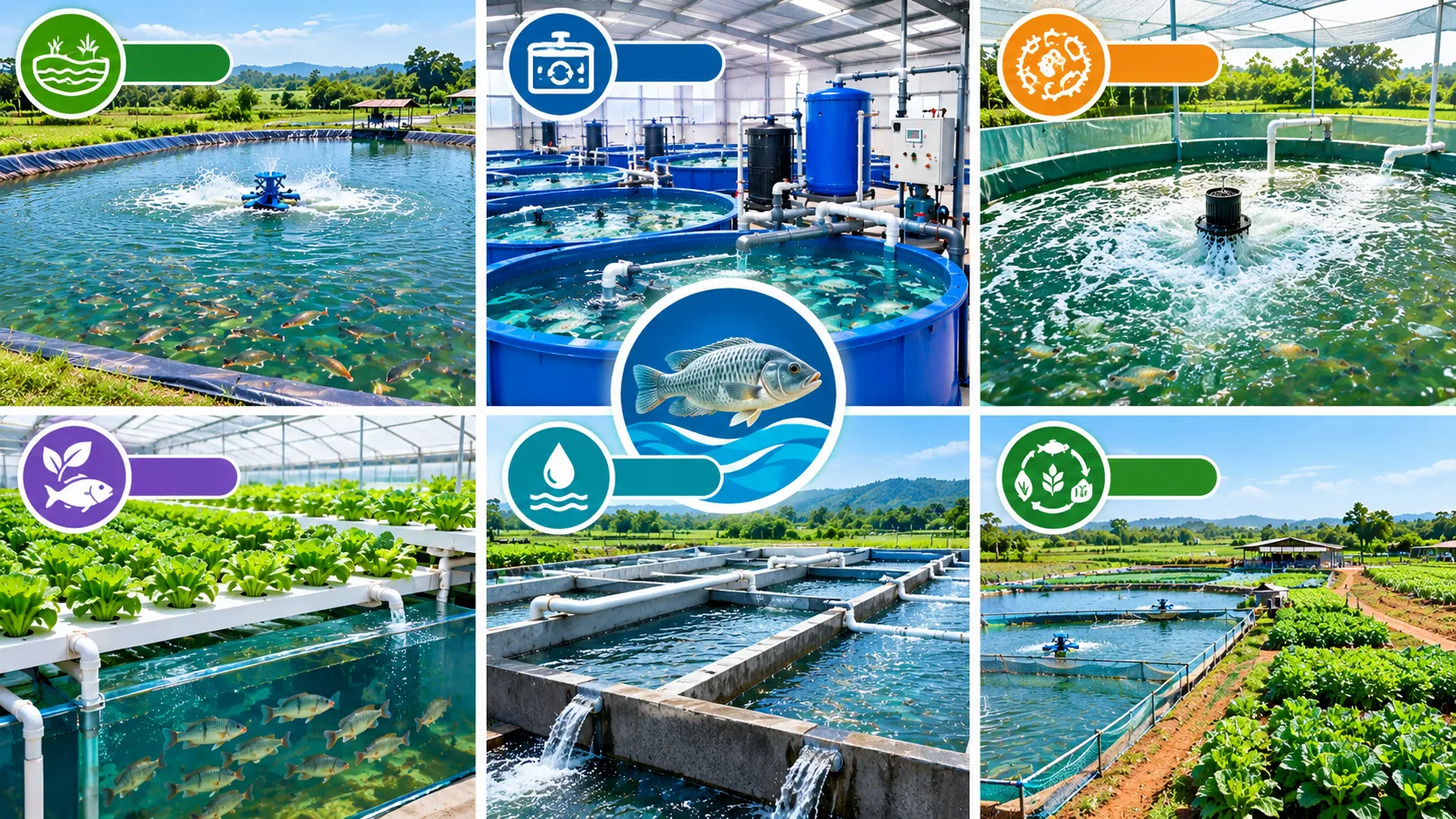
Several aquaculture systems are suitable for commercial fish production. Each offers different advantages and operational challenges.
- Pond-based aquaculture: Fish grow in earthen or lined ponds. This method is widely used for species such as tilapia and carp, particularly where suitable land and water are available.
- Recirculating Aquaculture Systems (RAS): Water passes through mechanical and biological filtration equipment before being returned to fish tanks. These systems offer greater environmental control but require higher investment and technical expertise.
- Biofloc Technology: Beneficial microbial communities convert certain nitrogen-containing waste products into microbial biomass that can contribute to fish nutrition. Continuous aeration and careful water monitoring are essential.
- Aquaponics: Fish production is integrated with hydroponic plant cultivation. Nutrients generated by fish waste support plant growth after suitable biological processing.
- Flow-through systems: Fresh water continuously enters production tanks and exits after passing through the fish-rearing area. Their sustainability depends heavily on water availability, effluent management, and site conditions.
- Integrated aquaculture: Fish farming can be combined with agriculture or other suitable production activities to improve resource utilization.
Choosing the right system requires comparing construction expenses, water availability, energy requirements, production targets, and the biological needs of the selected fish species.
Recirculating Aquaculture Systems (RAS) for Commercial Fish Farms
Recirculating Aquaculture Systems are advanced fish farming systems designed to reuse water through a series of treatment processes. Instead of continuously replacing large volumes of water, RAS facilities remove suspended solids, convert toxic ammonia into less harmful compounds, and maintain suitable conditions for fish growth.
A typical RAS installation includes fish tanks, mechanical filters, biological filters, pumps, aeration equipment, oxygen monitoring devices, and water treatment components. Depending on the design, additional equipment may include protein skimmers, ultraviolet disinfection units, ozone treatment, and temperature-control systems.
RAS is useful for commercial projects that need controlled production, limited water consumption, or year-round fish farming. It can also support production near urban markets, reducing transportation distances.
However, these systems require significant capital investment, dependable electricity, trained staff, and regular maintenance. Pump failures, oxygen shortages, or biological filtration problems can quickly affect fish health.
Farmers considering RAS should establish backup power, emergency aeration, alarm systems, and an appropriate maintenance schedule before stocking fish.
Biofloc Technology for Sustainable Fish Production
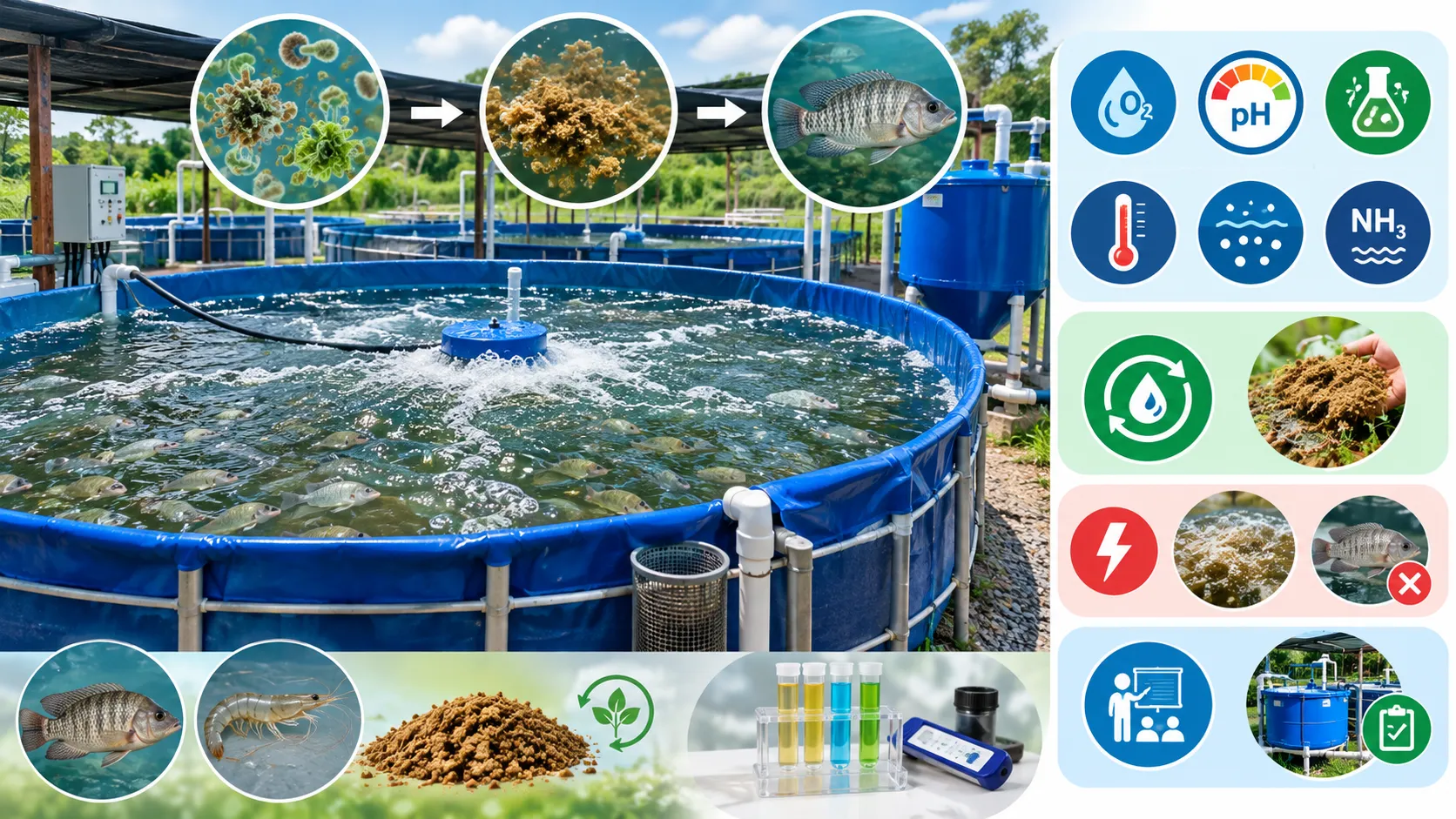
Biofloc Technology is an aquaculture approach that encourages beneficial microorganisms to convert nitrogenous waste into microbial biomass. This biomass may provide an additional food source for suitable species, helping improve nutrient utilization.
Biofloc systems are commonly associated with species such as tilapia and some shrimp species, although suitability depends on species-specific requirements and local farming conditions.
The system generally uses tanks or lined ponds, strong aeration, regular water testing, and careful management of organic carbon and nitrogen. Microorganisms help process waste, but they do not eliminate the need for monitoring or responsible feeding.
Important management factors include dissolved oxygen, pH, alkalinity, temperature, suspended solids, and total ammonia nitrogen. Farmers may need to adjust carbon inputs based on feed composition, waste production, and water test results.
The main advantage of Biofloc Technology is the potential to improve water reuse and nutrient recovery. However, electricity consumption can be considerable because aeration must remain reliable. Excessive suspended solids, oxygen depletion, and poor microbial balance can also reduce fish performance.
Before implementing Biofloc Technology, commercial operators should receive appropriate training and conduct a pilot trial to determine suitable operating conditions.
Aquaponics Systems for Fish Farming and Hydroponic Crop Production
Aquaponics combines aquaculture with hydroponics, allowing fish and plants to be cultivated within an integrated production system.
Fish release waste into the water, and beneficial bacteria convert toxic ammonia into nitrite and then nitrate. Plant roots absorb available nutrients, while the water is returned to the fish production system after suitable treatment.
Common aquaponic components include fish tanks, solids filters, biofilters, water pumps, plant-growing beds, aeration equipment, and water quality monitoring devices.
Tilapia is frequently considered for aquaponics because it can adapt to various controlled farming conditions. Leafy vegetables, including lettuce and certain herbs, are popular plant choices because they can grow efficiently in suitable hydroponic systems.
Commercial aquaponics requires careful balancing of fish stocking density, feed input, plant nutrient demand, water chemistry, and production schedules. Fish and plants may have different ideal pH and temperature requirements, so system design is important.
Although aquaponics can improve water and nutrient efficiency, it is not automatically more profitable than conventional fish farming. Farmers should evaluate vegetable markets, fish demand, equipment expenses, labor requirements, and system complexity before investing.
Pond-Based Aquaculture Systems and Sustainable Fish Farming Practices
Pond-based aquaculture remains an accessible option for many commercial fish farming projects, particularly in regions with suitable land, soil, and freshwater supplies.
Earthen ponds can support natural food production, while lined ponds offer greater control over leakage and some aspects of maintenance. The best design depends on soil permeability, drainage, topography, water availability, and the intended fish species.
Sustainable pond management begins with proper site selection and preparation. Farmers should ensure reliable water access, adequate drainage, appropriate pond depth, and protection against flooding or contamination.
Stocking density must match the pond's carrying capacity. Overstocking can increase competition, reduce dissolved oxygen, and raise disease risks.
Responsible feeding, regular water testing, sediment management, and appropriate aeration help maintain production conditions. Where practical and legally permitted, nutrient-rich pond water may be reused for crops after evaluating its quality.
Pond farming generally has lower technical complexity than intensive RAS production, although yields per unit of land may be lower. Its success depends on careful management rather than stocking the maximum possible number of fish.
Essential Aquaculture Equipment for Commercial Fish Farming Projects
The equipment required for a commercial fish farm depends on the production system, stocking density, species, and farm capacity.
Essential equipment may include:
- Fish tanks or ponds: Provide suitable space for fish growth and feeding.
- Water pumps: Circulate or transfer water between production and treatment areas.
- Aerators and oxygen systems: Maintain dissolved oxygen at suitable levels.
- Mechanical filters: Remove suspended solids from recirculating water.
- Biological filters: Support microorganisms that convert ammonia into less toxic nitrogen compounds.
- Water testing kits: Measure pH, dissolved oxygen, ammonia, nitrite, alkalinity, and other relevant parameters.
- Automatic feeders: Deliver controlled feed quantities and help reduce waste.
- Backup generators: Maintain essential equipment during power interruptions.
- Monitoring and alarm systems: Alert operators to oxygen shortages, temperature changes, or equipment failures.
Larger facilities may also require oxygen concentrators, temperature-control equipment, sludge collection systems, disinfection equipment, and automated water monitoring.
When selecting equipment, farmers should compare energy efficiency, durability, maintenance requirements, spare-part availability, and local technical support. Buying equipment that is inexpensive initially but unreliable can create substantial operational losses.
Water Quality Management in Sustainable Aquaculture Systems
Water quality is one of the most important factors affecting fish health, growth, survival, and feed conversion.
The most suitable water conditions vary by species and life stage. Farmers should establish target ranges before stocking and monitor the variables that matter most for their production system.
- Dissolved oxygen: Many commercially farmed fish perform best when dissolved oxygen remains around 5 mg/L or higher, although requirements differ by species, temperature, and stocking density. Intensive systems may require stricter monitoring and emergency oxygen capacity.
- Temperature: Water temperature influences fish metabolism, feeding, growth, and oxygen demand. Tilapia, carp, and trout have different temperature preferences.
- pH: Many freshwater aquaculture systems operate within approximately pH 6.5–8.5, but the appropriate range depends on species and system design.
- Ammonia and nitrite: These compounds can harm fish, even at relatively low concentrations. Toxicity depends on factors including pH, temperature, and chemical form.
- Alkalinity: Adequate alkalinity helps stabilize pH and supports biological filtration.
- Water clarity and suspended solids: Excessive solids can affect fish gills, reduce system performance, and increase treatment requirements.
Farmers should maintain written water quality records, investigate unusual changes, and avoid making sudden adjustments without understanding the cause. Regular monitoring is especially important during hot weather, heavy feeding, transport, and changes in stocking density.
Aquaculture Filtration Systems, Aeration, and Oxygen Management
Filtration and oxygen management are essential for maintaining stable conditions in intensive aquaculture systems.
Mechanical filtration removes uneaten feed, fish feces, and other suspended particles. Common options include screen filters, drum filters, settling chambers, and appropriately designed sedimentation units.
Biological filtration uses beneficial bacteria to convert ammonia into nitrite and then nitrate. This process, known as nitrification, requires suitable oxygen levels, water flow, alkalinity, and sufficient biofilter surface area.
Aeration introduces oxygen into water and can help remove excess carbon dioxide. Common technologies include paddlewheel aerators, diffused-air systems, air blowers, and oxygen injection equipment.
The right combination depends on pond size, tank volume, stocking density, and water circulation requirements. Farmers should calculate oxygen demand based on fish biomass, feeding rates, microbial activity, and equipment performance.
Emergency oxygen equipment is particularly important in intensive facilities because fish can become stressed quickly when oxygen levels fall. Backup systems should be tested regularly rather than waiting for an emergency.
Sustainable Fish Feed and Nutrition Management for Aquaculture
Fish feed is often one of the largest operating expenses in commercial aquaculture. Efficient nutrition management can improve growth, reduce waste, and support environmental sustainability.
Commercial aquaculture feeds typically contain carefully balanced amounts of protein, fats, carbohydrates, vitamins, and minerals. Requirements vary by species, fish size, growth stage, water temperature, and production goals.
Farmers should select feed formulated for their fish species rather than relying on a single feed type for every production stage. Fingerlings often require different nutrient levels and pellet sizes than market-size fish.
Feeding schedules should reflect fish appetite, biomass, water temperature, and dissolved oxygen. Overfeeding increases expenses and contributes to waste accumulation, while underfeeding can reduce growth and production efficiency.
One useful performance measure is the Feed Conversion Ratio (FCR), which compares the amount of feed supplied with the weight gained by the fish. Lower FCR values generally indicate better feed efficiency when measured under comparable conditions.
Sustainable feed strategies may include responsibly sourced fishmeal alternatives, suitable plant proteins, improved feed formulation, and accurate feeding systems. However, alternative ingredients must still provide adequate nutrition and be appropriate for the target species.
Fish Health Management, Disease Prevention, and Biosecurity
Fish health management protects commercial production against avoidable mortality, poor growth, and financial losses.
Disease prevention begins with purchasing healthy fingerlings or juveniles from reputable hatcheries. Farmers should inspect incoming stock, follow appropriate quarantine procedures, and avoid introducing fish from unknown or potentially contaminated sources.
Good biosecurity practices include cleaning equipment, disinfecting suitable surfaces, controlling visitor access, separating production units where practical, and preventing contact with wild fish or contaminated water.
Daily observation helps identify early signs of disease. Warning signs may include reduced feeding, unusual swimming, skin lesions, damaged fins, abnormal breathing, or unexpected mortality.
Water quality should be investigated whenever fish show signs of stress because poor oxygen levels, ammonia toxicity, and temperature changes can resemble or worsen infectious disease problems.
When disease is suspected, farmers should consult a qualified aquatic animal health professional or relevant fisheries authority. Treatments should be selected carefully, used according to applicable regulations, and never applied indiscriminately.
A written health management plan, stocking records, mortality logs, and routine equipment sanitation can strengthen long-term farm performance.
Energy-Efficient Aquaculture Systems and Renewable Energy Solutions
Energy efficiency is particularly important for intensive aquaculture systems that rely on pumps, blowers, aerators, filtration equipment, and temperature control.
Farm operators can reduce energy consumption by selecting correctly sized equipment, maintaining pumps, cleaning filters, preventing unnecessary water losses, and improving pipework design.
Variable-speed drives may help adjust pump performance to actual system demand. Efficient aerators and properly designed air distribution systems can also improve operational efficiency.
Solar photovoltaic systems can provide electricity for suitable aquaculture applications, especially where sunlight is abundant. However, energy storage, backup power, and system sizing must be evaluated carefully.
A solar installation should be designed around the farm's actual electrical load, including nighttime aeration requirements. Battery systems or generators may be necessary to maintain critical operations during periods without solar production.
Renewable energy can reduce dependence on grid electricity and potentially lower long-term operating costs. Farmers should compare installation costs, maintenance expenses, equipment lifespan, and expected energy savings before investing.
Wastewater Treatment and Waste Management in Sustainable Fish Farming
Fish farming produces waste through uneaten feed, feces, dissolved nutrients, and water treatment processes. If these materials are released without appropriate management, they can contribute to nutrient pollution and harm nearby ecosystems.
Sustainable waste management begins with preventing excess feed and maintaining suitable stocking densities. Efficient feeding reduces the amount of organic material entering the water.
Mechanical filtration and settling systems can capture solids for removal. In RAS facilities, collected sludge may require thickening, dewatering, composting, or another approved treatment method.
Wastewater treatment can include sedimentation, biological treatment, nutrient removal, and disinfection where appropriate. The specific process depends on wastewater characteristics, discharge requirements, and the receiving environment.
Treated water may sometimes be reused for irrigation or other suitable purposes, subject to water quality, crop requirements, and local regulations.
Commercial operators should develop a documented waste management plan, monitor discharge quality, and follow applicable environmental permits. Effective waste treatment protects surrounding water resources while improving the overall efficiency of aquaculture operations.
Best Fish Species for Sustainable Commercial Aquaculture
Selecting the right fish species is essential for building a successful commercial fish farming business. Farmers should consider local climate, water quality, feed availability, growth rate, disease resistance, market demand, and regulatory requirements.
- Tilapia: Tilapia is popular in warm-water aquaculture because several commercially farmed varieties grow well under suitable conditions and accept formulated feeds. It is commonly considered for ponds, Biofloc systems, and RAS facilities.
- Carp: Common carp and other carp species are widely farmed in freshwater ponds. Their suitability depends on local markets, water conditions, and production practices.
- Catfish: Suitable catfish species can perform well in ponds and intensive systems. Their temperature, oxygen, and stocking requirements vary by species.
- Rainbow trout: Trout is suitable for cooler, oxygen-rich water and is often produced in flow-through facilities or specialized recirculating systems.
- Barramundi: Barramundi is a commercially valuable species for appropriate warm-water aquaculture operations, subject to local demand and production requirements.
- Pangasius: Pangasius is important in certain commercial freshwater aquaculture markets and may be suitable where hatchery supply, growing conditions, and buyers are available.
Before investing, farmers should confirm local permissions, identify reliable fingerling suppliers, and research buyer specifications. A species that grows well biologically may still be unsuitable if its market price is low or demand is unreliable.
Commercial Fish Farm Design, Planning, and Infrastructure Requirements
A successful commercial fish farm starts with careful planning and a site assessment.
The first step is to evaluate land availability, water supply, soil conditions, drainage, electricity, transportation access, and proximity to target markets. Water sources should be tested for relevant chemical, physical, and biological characteristics before construction begins.
The farm layout should allow efficient movement between fish production, feed storage, water treatment, equipment maintenance, and harvesting areas. Facilities should also provide appropriate access for workers, vehicles, and emergency services.
A detailed project plan should identify production capacity, stocking schedules, expected harvest sizes, mortality assumptions, feed requirements, labor needs, and sales channels.
Infrastructure may include ponds or tanks, pumps, filtration equipment, aeration systems, storage facilities, backup electricity, security measures, and wastewater treatment units.
Farmers should also review land-use permissions, water extraction rules, environmental requirements, and aquaculture licensing obligations that apply in their location.
Working with an experienced aquaculture engineer or fisheries specialist can help prevent expensive design errors and ensure that the facility meets the biological needs of the selected species.
Sustainable Aquaculture Project Costs and Equipment Investment
The cost of a sustainable aquaculture project depends on its size, production method, location, construction materials, equipment specifications, and target output.
Pond-based fish farming may require investment in land preparation, excavation, water supply, fingerlings, feed, aeration, and harvesting equipment. Intensive RAS projects generally require additional spending on tanks, pumps, mechanical filtration, biological filtration, sensors, oxygen systems, and backup power.
Biofloc facilities need suitable tanks or lined ponds, blowers, aeration equipment, water testing tools, and reliable electricity. Aquaponics projects require additional plant-growing infrastructure and suitable nutrient management systems.
A commercial project budget should separate initial capital expenses from ongoing operating expenses.
Capital expenses may include:
- Land preparation and construction
- Fish tanks, ponds, or production units
- Pumps, filters, aerators, and monitoring equipment
- Electrical installation and backup power
- Water treatment and waste management infrastructure
Operating expenses may include:
- Fingerlings and replacement stock
- Fish feed and supplements
- Electricity, water, and fuel
- Labor and technical services
- Maintenance, testing, and fish health management
- Packaging, transportation, and marketing
Before construction, prepare a financial feasibility study that includes realistic selling prices, expected survival rates, feed conversion ratios, production cycles, and working capital requirements.
Avoid estimating profitability from maximum production capacity alone. Actual performance depends on operating efficiency, market conditions, and the ability to manage risks.
How to Choose the Right Aquaculture System for Your Fish Farming Business
Choosing the right aquaculture system requires matching your business objectives with local resources and technical capabilities.
Start by identifying the fish species you want to produce and confirming that suitable fingerlings, feed, and buyers are available. Next, evaluate your water supply, land, climate, electricity costs, and available investment.
Pond-based farming may be appropriate for entrepreneurs with sufficient land and dependable freshwater. Biofloc Technology can suit operators seeking intensive production in a smaller area, provided they can manage aeration and water quality reliably.
RAS may be a good option for businesses requiring greater control over water conditions and production schedules, especially when water is limited. However, its higher capital and technical requirements make financial planning particularly important.
Aquaponics may appeal to businesses with established markets for both fish and vegetables, although managing two production systems simultaneously can increase complexity.
Before making a final decision, compare expected production, construction costs, operating expenses, energy demand, labor requirements, environmental impacts, and potential market revenue.
A small pilot project can help validate assumptions before a larger investment. Start with a manageable production scale, record operating results, and expand only when the system demonstrates reliable biological and financial performance.
Conclusion
Sustainable aquaculture systems provide commercial fish farmers with practical ways to produce fish while improving resource efficiency and managing environmental impacts. Pond-based aquaculture, Recirculating Aquaculture Systems, Biofloc Technology, and Aquaponics each offer different opportunities for commercial production.
The right approach depends on fish species, water availability, investment capacity, energy costs, technical expertise, and market demand. By prioritizing water quality management, efficient fish nutrition, biosecurity, reliable equipment, and responsible waste treatment, farmers can build stronger and more resilient aquaculture businesses.
Before launching a commercial fish farming project, conduct a feasibility study, evaluate local regulations, and develop a realistic operating budget. Careful planning and consistent management are essential for achieving sustainable fish production and long-term business success.
Frequently Asked Questions
What is the most sustainable aquaculture system for commercial fish farming?
RAS, Biofloc, Aquaponics, and pond-based systems are sustainable options depending on budget, water, land, and fish species.
Is Recirculating Aquaculture System farming profitable?
Yes, RAS can be profitable with efficient management, healthy fish, controlled costs, and strong market demand.
Which fish species are best for sustainable aquaculture?
Tilapia, carp, catfish, trout, barramundi, and pangasius are popular options depending on local conditions and demand.
How can commercial fish farmers reduce water consumption?
Use water recirculation, effective filtration, leak prevention, and wastewater treatment.
What equipment is essential for a sustainable fish farm?
Essential equipment includes pumps, aerators, filters, water testing kits, feeders, and backup power.
How important is water quality in aquaculture?
Good water quality supports fish growth, health, and survival. Monitor oxygen, temperature, pH, ammonia, and nitrite.
Can renewable energy be used in commercial aquaculture?
Yes, solar energy can reduce electricity costs, but backup power is essential.
What is the biggest operating expense in commercial fish farming?
Fish feed is often the largest expense. Efficient feeding helps reduce costs and waste.
Is Biofloc Technology suitable for beginners?
Yes, with proper training, reliable aeration, and regular water quality monitoring.
How can a fish farm become more environmentally friendly?
Reduce feed waste, conserve water, manage wastewater, prevent diseases, and use energy-efficient equipment.