

Vinyl vs Wood Fencing: Cost, Durability, Pros and Cons
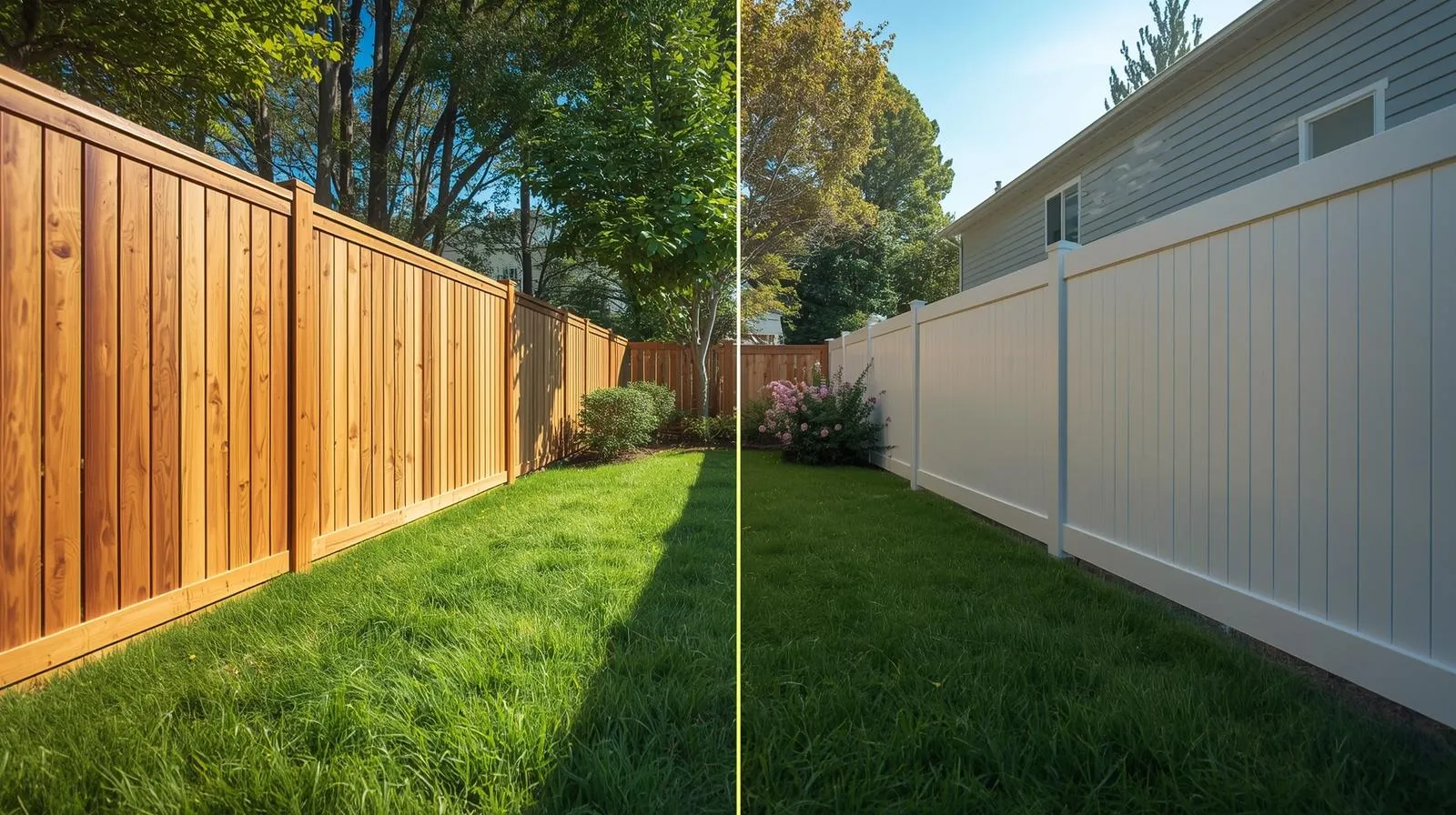
Vinyl vs Wooden Fencing: Pros, Cons, Cost and Lifespan
Wood and vinyl fencing remain top choices for home boundaries and outdoor privacy. Both materials serve different needs, budgets, and home styles. Homeowners often compare wood fencing and vinyl fencing before installation.
Wood fencing offers a natural look and design flexibility. It uses materials like cedar, pine, and redwood. Vinyl fencing uses PVC panels built for strength and long life.
These fences differ in cost, maintenance, durability, and lifespan. Climate, property size, and upkeep effort shape the right choice. Understanding both options helps homeowners plan smarter fencing solutions.
Vinyl Fencing
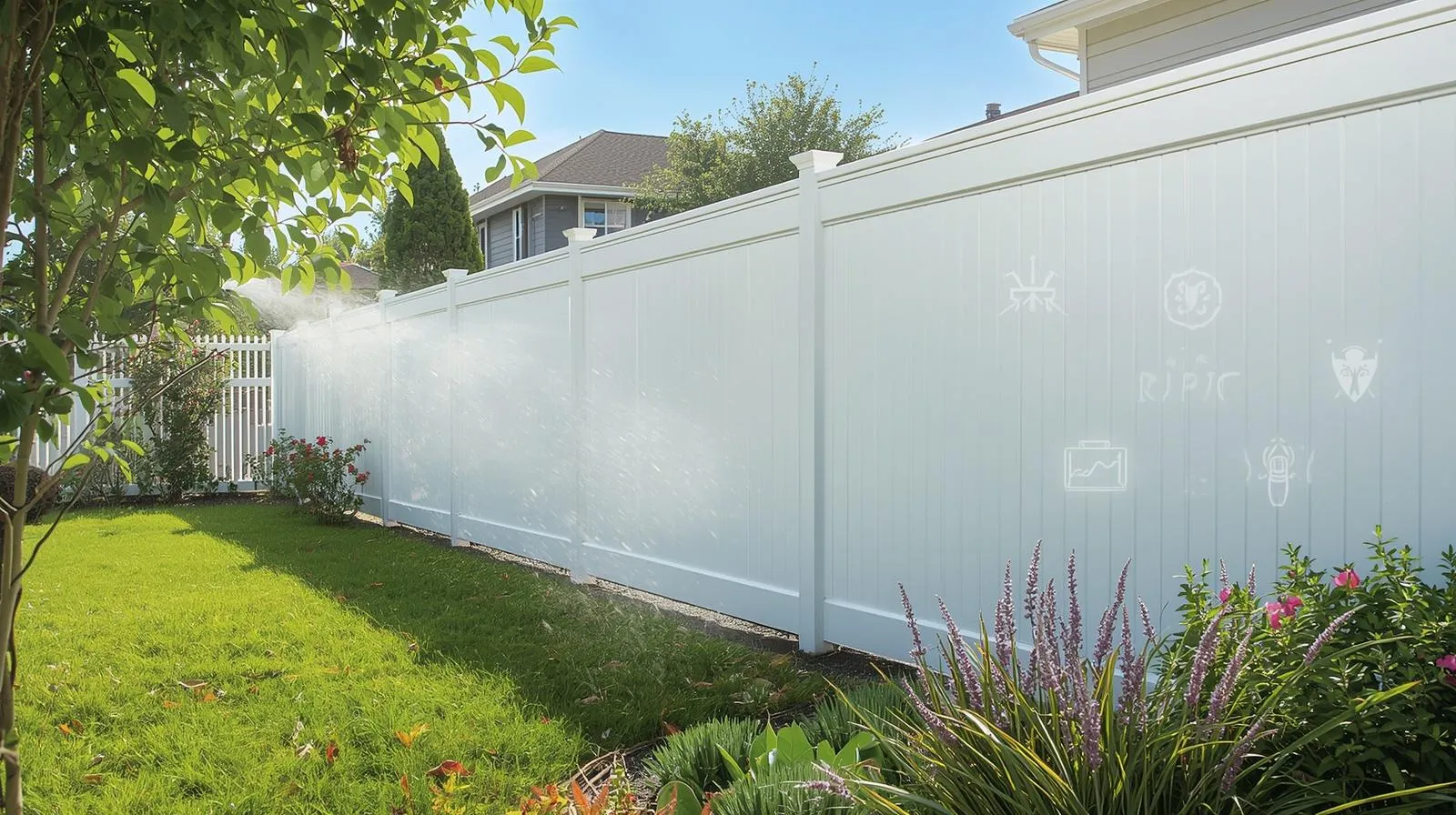
Vinyl fencing is durable and low-maintenance, made from PVC panels that resist rot, warping, and pests.
It requires only occasional cleaning with soap and water and lasts 20–30 years, making it ideal for modern homes and harsh weather.
Available in privacy, picket, and horizontal slat styles, it offers flexible designs and long-term value for homeowners.
Benefits of Vinyl Fencing
- Durable & Long-Lasting: Resists rot, warping, and pests, lasting 20–30+ years.
- Low Maintenance: No painting or staining needed, only occasional cleaning.
- Weather Resistant: Withstands UV rays, rain, and extreme temperatures without damage.
- Versatile Styles: Available in privacy panels, picket designs, and horizontal slats, some mimicking wood aesthetics.
- Enhances Property Value: Improves curb appeal and increases property value.
- Cost-Effective: Saves money long-term due to minimal upkeep.
- Privacy & Security: Provides effective boundaries for homes and yards.
- Ideal for Modern Homes: Suitable for busy lifestyles and areas with harsh climates.
Popular Vinyl Fence Styles
- Solid Privacy: Full-height panels providing maximum seclusion, ideal for backyards and pools.
- Shadowbox: Alternating panels allow airflow and light while maintaining semi-privacy.
- Picket (Spaced, Scalloped, Classic): Charming fences for defining property lines with decorative tops.
- Lattice Top: Adds decorative flair and openness, perfect for gardens.
- Ranch/Post & Rail: Simple horizontal rails for large properties or a rustic look.
- Crossbuck: Rustic, traditional style with intersecting “X” shapes, similar to farm fencing.
- Modern/Horizontal: Sleek, contemporary fences with horizontal boards for a modern aesthetic.
- Wood Grain: Vinyl fences that mimic the appearance of natural wood with low maintenance.
- Common Colors: White (classic), Almond/Tan (warm alternative), Gray/Stone (modern/natural feel).
Wooden Fencing
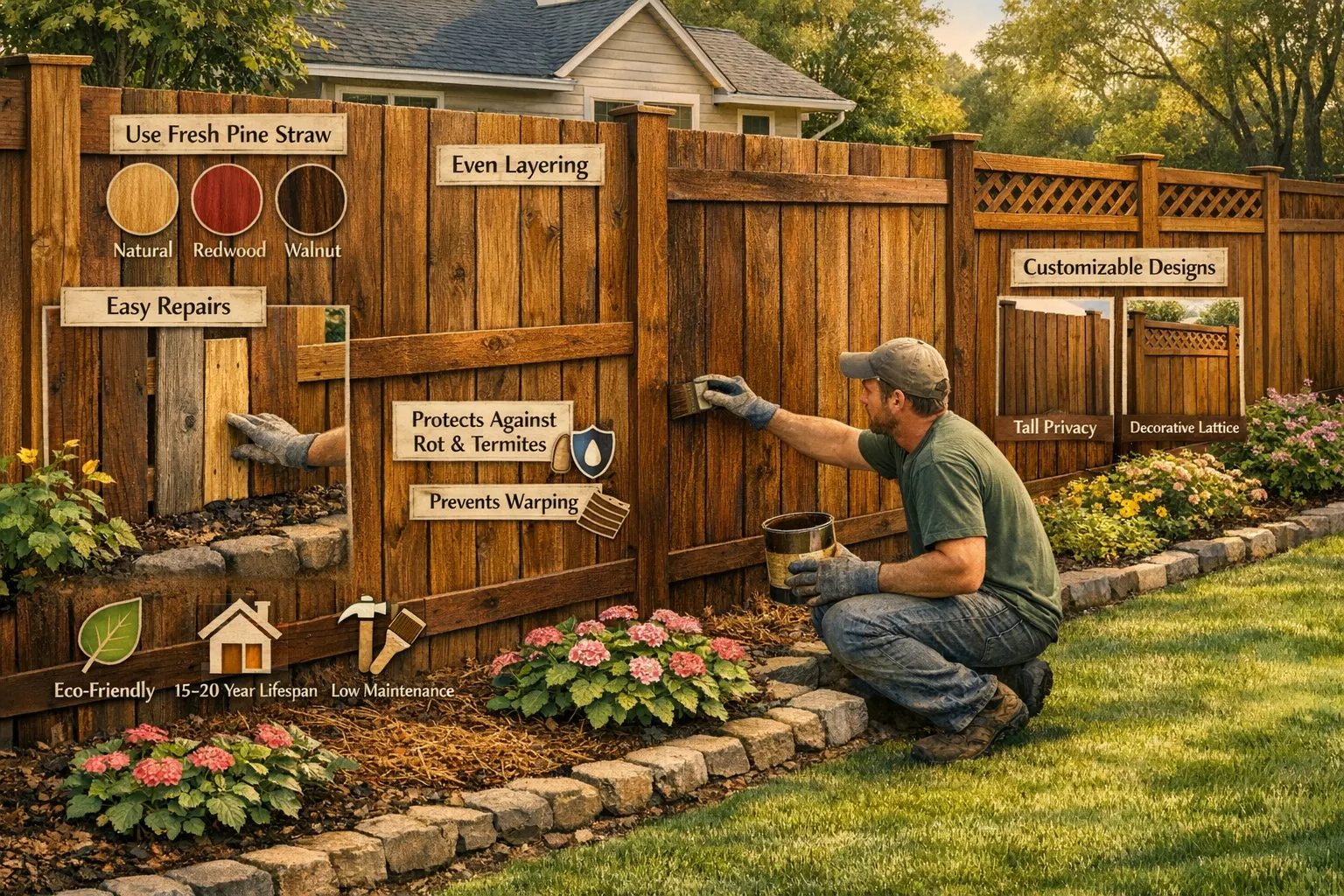
Wood fencing gives homes a classic and natural appearance. Common materials include cedar, pine, and redwood, known for strength and beauty. It allows customization with stain colors, design patterns, and board heights.
Maintenance is essential; regular staining and sealing prevent rot, warping, and termite damage. Repairs are simple; individual boards can be replaced without redoing the whole fence.
Ideal for traditional homes, large properties, and DIY enthusiasts who enjoy hands-on care. Lifespan typically ranges between 15–20 years, depending on upkeep and weather exposure.
Wood fencing remains a renewable, eco-friendly choice for homeowners seeking timeless charm.
Benefits of Wooden Fencing
- Timeless aesthetic appeal: Wooden fencing naturally complements any landscape.
- Strong privacy: Provides privacy and enhances security for children, pets, and property.
- Cost-effective: Often cheaper upfront than vinyl or metal fencing.
- Eco-friendly & biodegradable: Made from renewable wood, requiring less energy to produce.
- Custom designs: Options include picket, privacy, and lattice fences to match home styles.
- Durable & long-lasting: With proper installation and maintenance, wood fences last for decades.
- Wind & sound barrier: Reduces street noise and creates peaceful outdoor spaces.
- Easy repairs: Simple board replacements instead of fixing the entire fence.
- Enhances property value: Blends with surroundings while offering practical functionality.
Popular Wood Types for Fencing
- Cedar: Naturally resists rot and insects, has a reddish hue and pleasant aroma, ideal for picket and privacy fences.
- Pressure-Treated Pine: Affordable, widely available, chemically treated to resist moisture and pests, commonly used for posts.
- Cypress: Offers natural pest resistance, distinctive grain, good durability, excellent for decorative and functional fencing.
- Redwood: Strong, rot-resistant, premium color, higher upfront cost, ideal for long-lasting privacy fences.
- Spruce: Budget-friendly, suitable for prefabricated panels, less durable in wet climates.
- Douglas Fir: Strong, versatile, moderately rot-resistant, visually appealing, and works well for various fence styles.
Common Wood Fence Styles
Wood fence styles vary in design, privacy, and functionality, offering solutions for every home and yard.
- Stockade Fence: Vertical boards packed tightly, often pointed, provide full privacy and security.
- Tongue & Groove Fence: Boards fit snugly for a smooth privacy barrier, sometimes finished with trim.
- Shadowbox (Board-on-Board) Fence: Alternating boards allow airflow and partial visibility while keeping good privacy.
- Horizontal Slat Fence: Modern look with planks running horizontally, offering a contemporary aesthetic and privacy.
- Picket Fence: Classic style with evenly spaced vertical slats like dog-ear, gothic, or flat-top, ideal for front yards.
- Lattice Fence: Crisscrossed panels that allow light and air, perfect for gardens and climbing plants.
- Louver Fence: Angled slats provide privacy while letting light and air pass through.
- Post & Rail Fence: Rustic style with horizontal rails notched into vertical posts, suitable for large properties.
- Split Rail Fence: Natural, rural feel using split logs, defining boundaries and acreage.
Comparison: Vinyl vs Wooden Fencing
| Category | Vinyl Fencing | Wooden Fencing |
| Installation Process | Vinyl fence installation is often straightforward with pre-made panels, requiring posts, rails, and secure fittings. Great for DIY fence installation. | Wooden fence setup may need cutting, measuring, and securing individual boards. DIY fence installation is possible but more labor-intensive. |
| Maintenance Requirements | Very low upkeep. Only occasional vinyl fence cleaning tips, like soap and water needed for a low-maintenance fence. | Needs regular wood fence care, including staining, sealing, and painting. Prone to rot and pests if neglected. |
| Durability and Lifespan | Durable vinyl fence lasts 25–30+ years. Resistant to rot, insects, and UV damage, ensuring long fence longevity. | Long-lasting wood fencing lasts 15–20 years with proper maintenance. Susceptible to weather and pests, with shorter fence longevity. |
| Cost Comparison | Higher initial cost but low upkeep results in better long-term value. Fits fence pricing guide for those seeking affordable fencing options over time. | Lower upfront cost, but regular maintenance increases lifetime expense. Compare vinyl vs wood fence cost to see the total investment. |
| Consideration | Key Points & Options |
| Purpose & Style | Privacy: Solid wood, vinyl, or composite fences for complete seclusion; lattice tops add elegance. Security: Steel or aluminum fences with self-latching gates for safety. Aesthetics: Wood offers natural beauty (e.g., cedar, redwood), aluminum mimics iron without rust, modern combos include corrugated metal + wood. Traditional Style: Picket fences provide curb appeal; modern variations are available. |
| Budget & Longevity | Affordable Options: Chain-link, split rail, and pallet wood fences for short-term savings. Best Value: Vinyl lasts 25+ years with minimal maintenance. Durable & Low-Maintenance: Aluminum, quality capped composites last for decades. Premium: Brick or stone fences are elegant but costly. |
| Pets & Family Safety | Pet Containment: Solid, gap-free wood or vinyl fences prevent pets from escaping; chain-link fences contain pets but offer less privacy. Child Safety: Strong materials prevent climbing or breaking; avoid gaps. Material Benefits: Vinyl won’t splinter; metal is hard to climb; wood requires upkeep but is customizable. |
| Material Comparison | Wood: Warm, customizable; needs sealing/painting; can rot or infest. Vinyl: Low-maintenance, resists rot/fading; higher upfront cost; can become brittle in extreme cold. Composite: Blend of wood/plastic, durable, low-maintenance; higher cost. Metal (Aluminum/Steel): Strong, modern, rust-resistant (aluminum); higher installation cost. |
Pros & Cons of Vinyl and Wooden Fencing
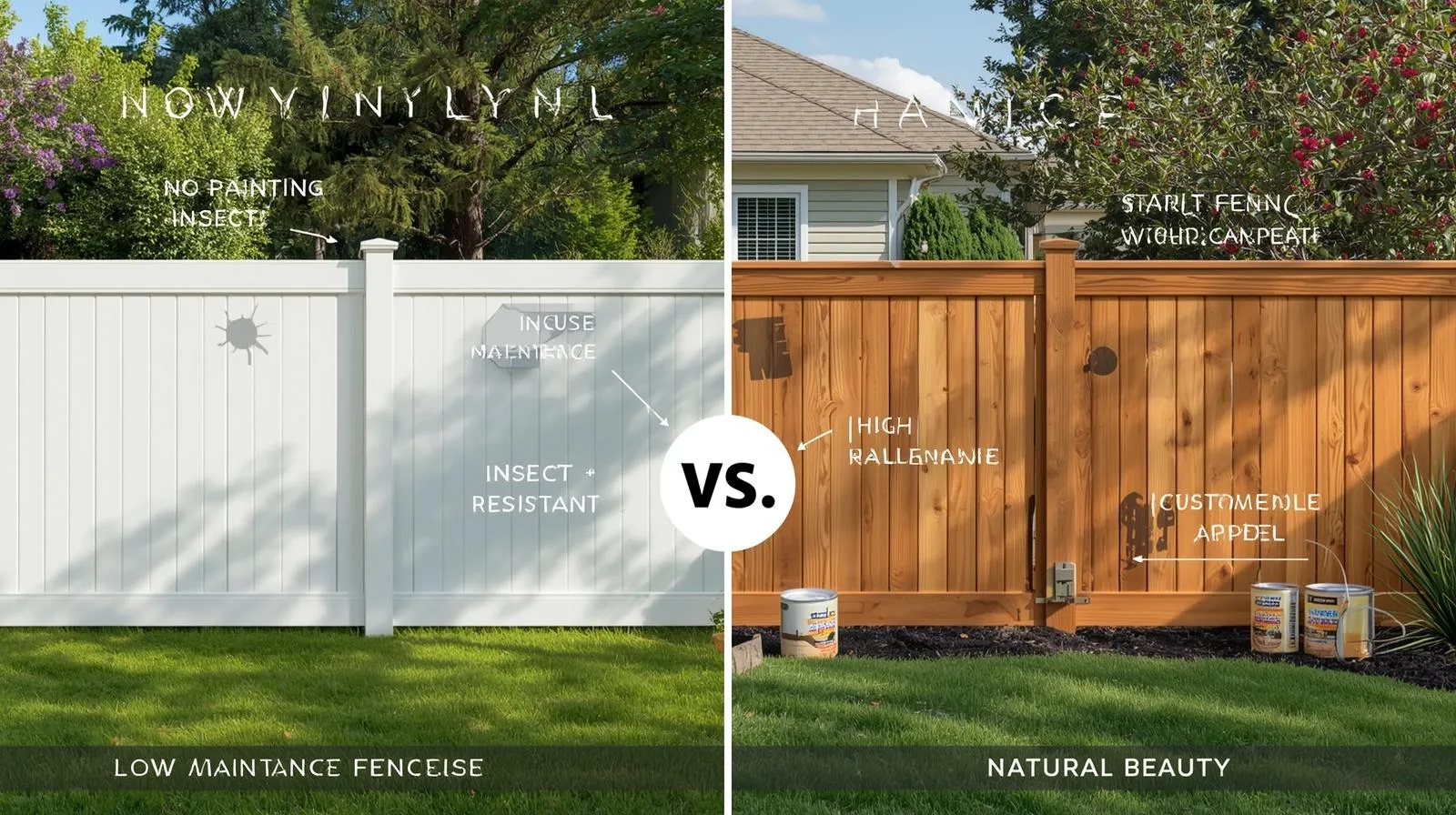
Vinyl Fencing
Pros:
- Low Maintenance Fence: Requires no painting or staining; just occasional cleaning.
- Durable Vinyl Fence: Resistant to rot, insects (termites), warping, and fading.
- Long-Lasting: Can last 20–30+ years, offering excellent fence longevity.
- Easy to Clean: Quick rinse with water keeps it looking new.
- Good ROI: Lower long-term cost despite higher upfront price.
Cons:
- High Upfront Cost: More expensive than wood initially (vinyl vs wood fence cost).
- Tricky Repairs: Damage often requires replacing whole panels.
- Less Natural Look: Lacks the warm, rustic feel of real wood.
Wooden Fencing
Pros:
- Natural Beauty & Customization: Warm, classic look; paint or stain any color.
- Lower Initial Cost: Cheaper upfront (fence pricing guide).
- Easy Repairs: Individual boards can be replaced.
- Versatile Styles: A Wide range of designs is possible for stylish backyard fencing.
Cons:
- High Maintenance: Needs staining, sealing, and painting regularly.
- Prone to Damage: Susceptible to rot, insects (termites, carpenter bees), warping, cracking, and splintering.
- Shorter Lifespan: Degrades faster than vinyl without constant care.
- Recurring Costs: Maintenance adds to long-term expenses.
Conclusion
Choosing the right fence ultimately depends on your priorities and lifestyle. If you value low maintenance, long-term durability, and minimal upkeep, vinyl fencing is the better choice, offering resistance to rot, pests, and weather with a clean, modern look.
On the other hand, if you prefer natural beauty, customizable designs, and a classic aesthetic while being willing to perform regular care like staining or sealing, wooden fencing may be ideal.
Consider factors such as budget, property value, privacy needs, and pet or family safety when making your decision.
Both options have unique advantages, so the best fence is one that aligns with your style preferences, maintenance commitment, and long-term goals.
FAQs
Which fence is better, wood or vinyl?
It depends on your priorities. Vinyl fencing is better for low maintenance, durability, and long-term value, while wood fencing is ideal if you prefer a natural, customizable look and don’t mind regular upkeep.
What lasts longer, vinyl or wood?
Vinyl fences typically last longer, often 20–30+ years, while wood fences usually last 15–20 years, depending on type and maintenance.
What are common vinyl fence problems?
Vinyl fences can sometimes crack in extreme cold, fade over time from UV exposure, or require panel replacement if damaged.
Is a vinyl fence good or bad?
Vinyl fencing is generally good, offering durability, pest resistance, and low maintenance, but it has a higher upfront cost and may lack the natural look of wood.
Do vinyl fences last?
Yes, vinyl fences last decades with minimal maintenance, resisting rot, pests, and weather damage, making them a long-term investment.